
Wild and wonderful Kenya and Tanzania
When deciding where to go for my 40th wander, I was looking for somewhere bucket-list and memorable. Kenya and Tanzania certainly delivered.
I’d decided I was ready for an African wander after my first safari in Sri Lanka two years ago. Add in a lot of advice from my travel industry connections, and Kenya and Tanzania soon became the frontrunners. Initially, I was also travelling to Rwanda and Uganda for the gorilla trek – which was set to be a highlight – but Ebola had other ideas. It means I will just have to come back!
As I was travelling this portion solo, group touring was always on the cards. After comparing a few options and needing to rearrange my original itinerary, I chose an overland trip with Intrepid from Nairobi to Arusha with an independent portion in Zanzibar. The lead-up brought both nerves and excitement as it was set to be my wildest wander yet, but I eased up as soon as I heard my first ‘hakuna matata’.
We left Nairobi during morning peak hour in three 4WD safari vehicles – I was delighted with our wheels and not to be travelling in one big bus. Along the way our trip leader pointed out the various neighbourhoods between middle class and the slums, and shared tribal differences from food rules to ceremonies, languages and circumcision. We picked up a few Swahili words along the ‘pole pole’ way.
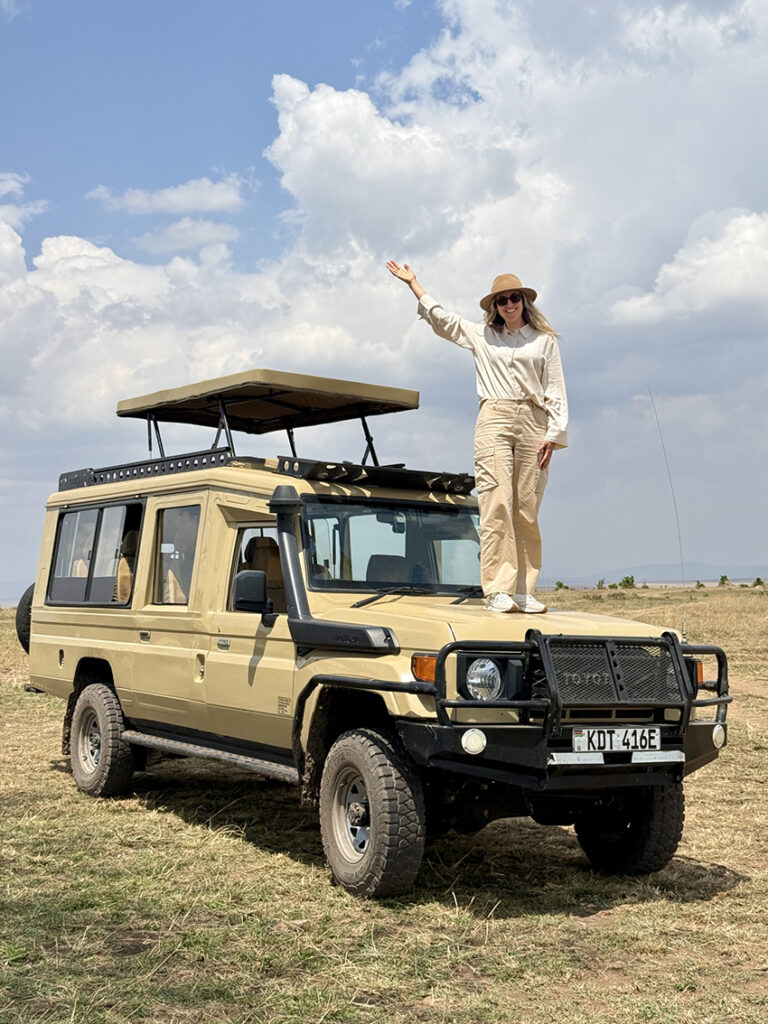
Our Intrepid safari vehicles
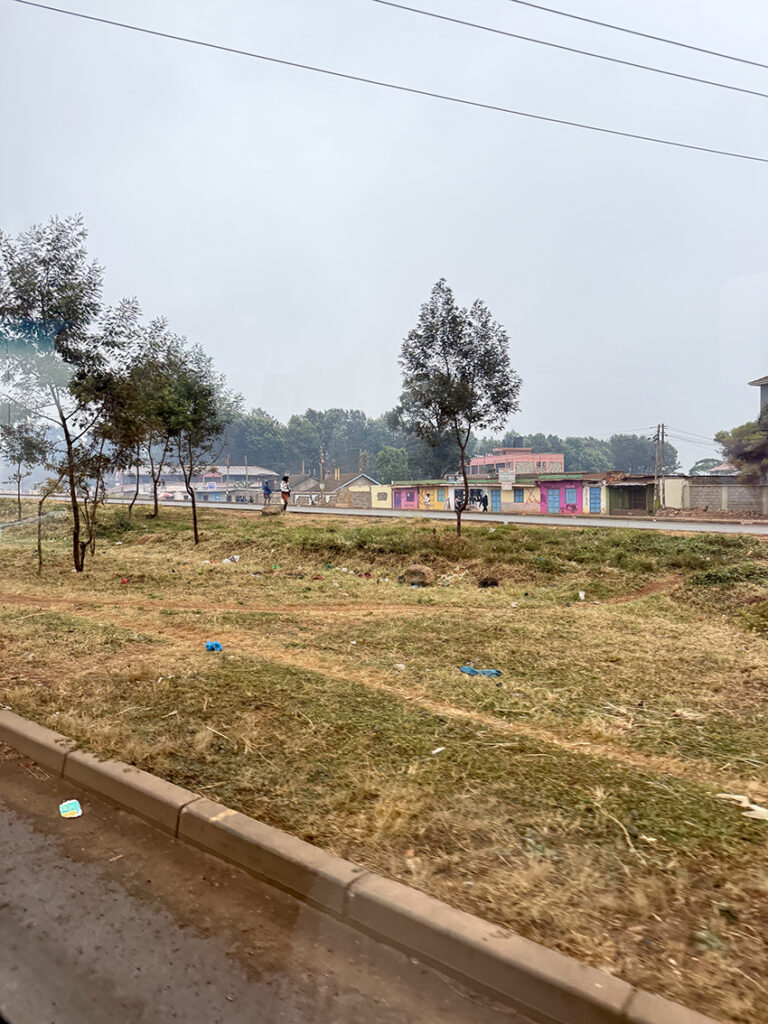
Driving out of Nairobi
We stopped at the Great Rift Valley, which stretches from Mozambique to Lebanon, to take in the view. It was misty but very green. The highway we travelled was busy with trucks from land-locked countries travelling to the Port of Mombasa.
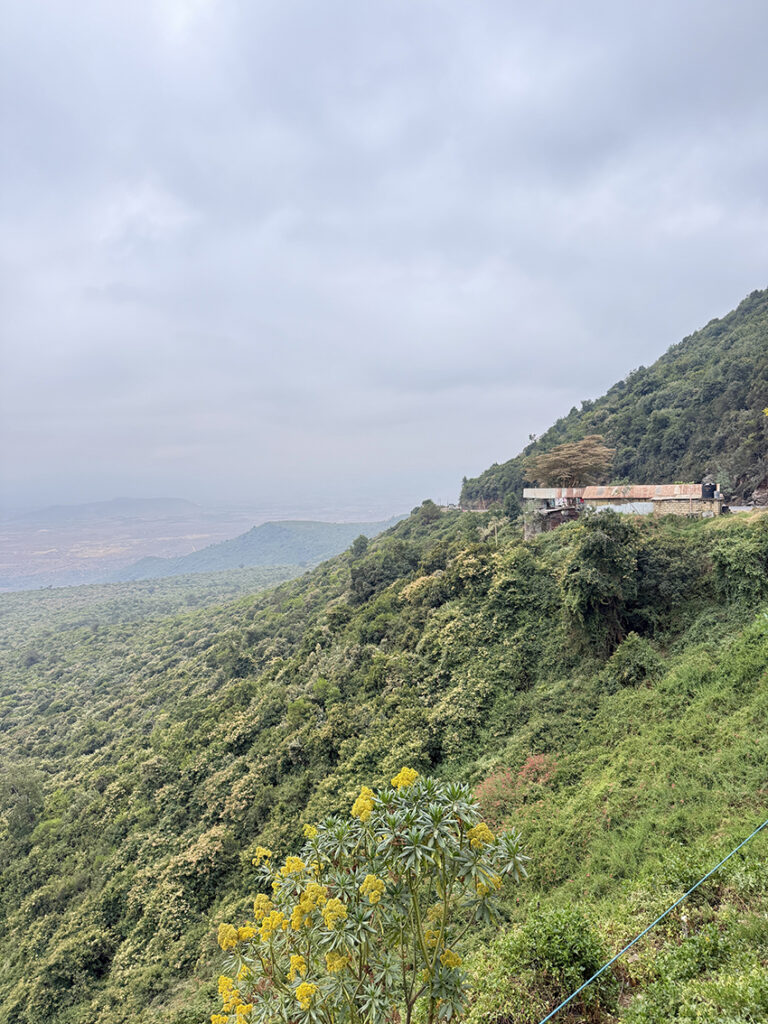
The Great Rift Valley, Kenya
Snacks are an essential part of any African overland trip and it’s best to grab them before you’re out of major towns. We stocked up at a supermarket in the main town of Maasai. We also stopped at a shop in Loita selling handmade products from all Maasai tribes.
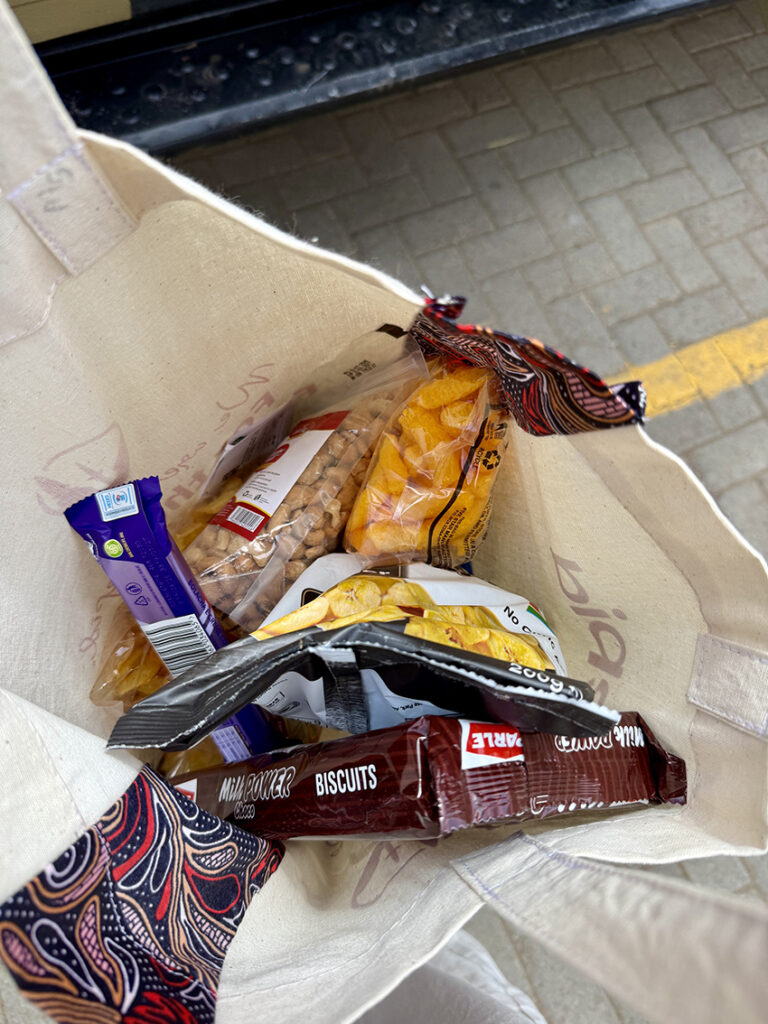
All snacked up!
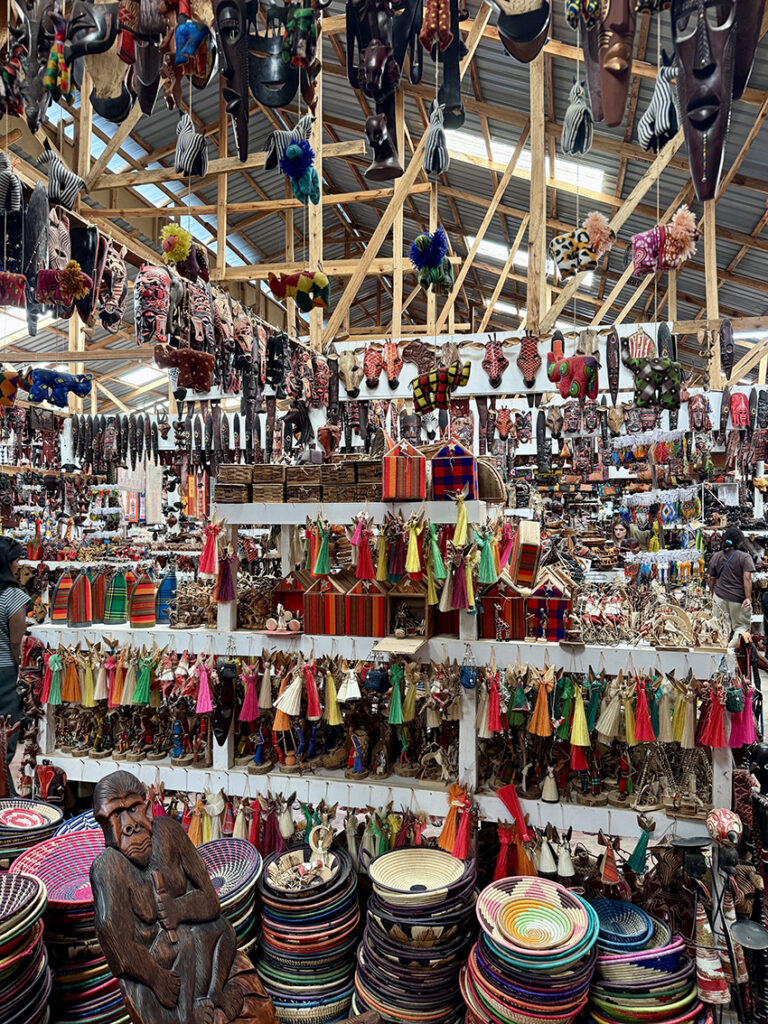
A massive shop of Maasai souvenirs in Loita
The further we drove, the worse the potholes became and the dustier it got, with our drivers constantly referring to the bumpy roads as ‘African massage’. Surprisingly, there were only two flat tyres across the trip. We passed small villages, livestock being herded, goats on motorbikes, trucks that had gone off-road, random speed bumps and sadly a lot of plastic litter.
We arrived to Tepesua community village and were greeted by Hellen who is supported by Intrepid for the work she does. She set up the school and business to help vulnerable girls from being forced into circumcision and arranged marriage for livestock. It was inspirational to see the work she is doing and the girls she is supporting who are about to go to university.
The Maasai men welcomed us with dance, Hellen showed us around and we were seated in the dining room for lunch. After lunch, the men demonstrated using their spears and Maasai jumping. We also toured the village of widows’ homes and browsed their market of homemade wares.
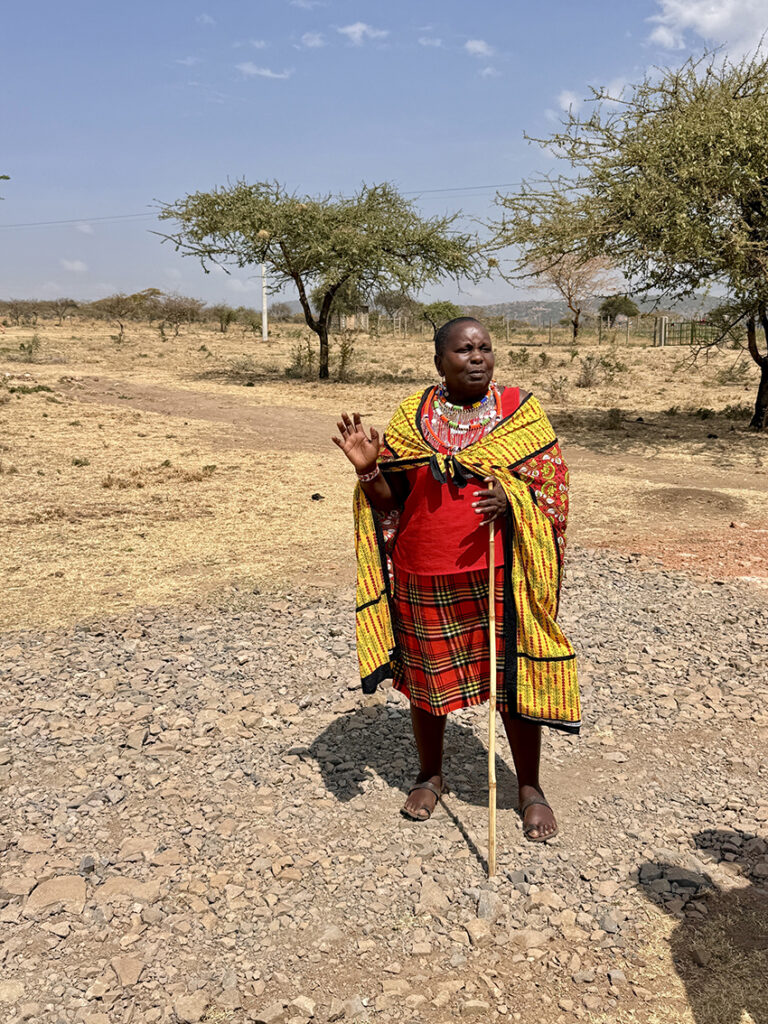
Hellen at Tepesua community village
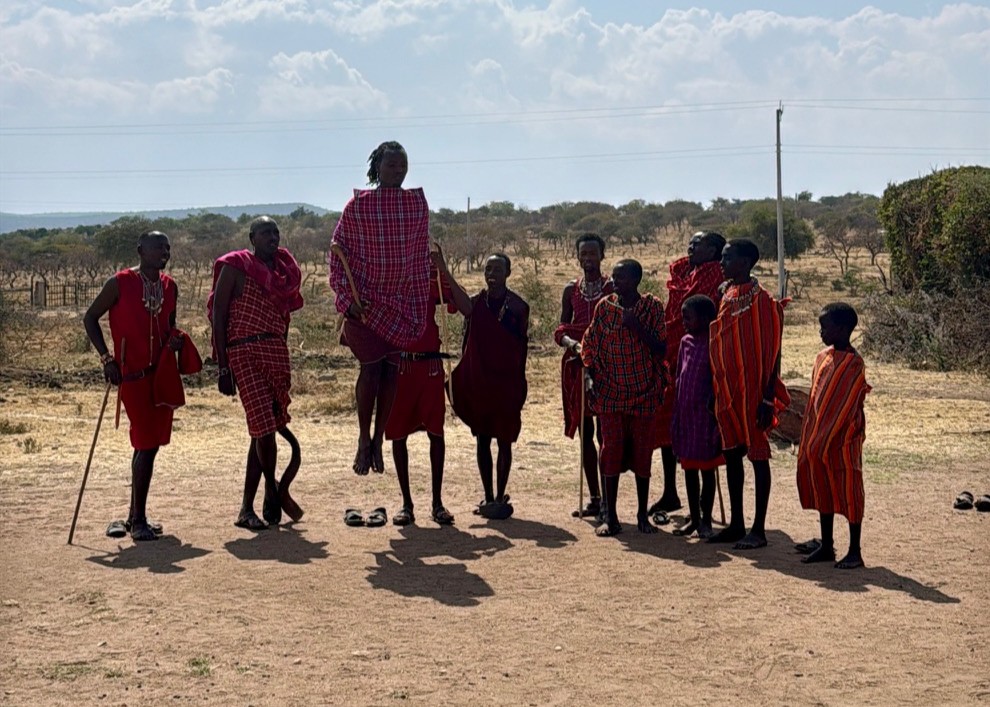
Maasai jumping
We stayed just outside the entrance to Maasai Mara National Reserve at Resian Mara Camp. After our game drive within the park, it was apparent there wasn’t an abundance of accommodation options inside.
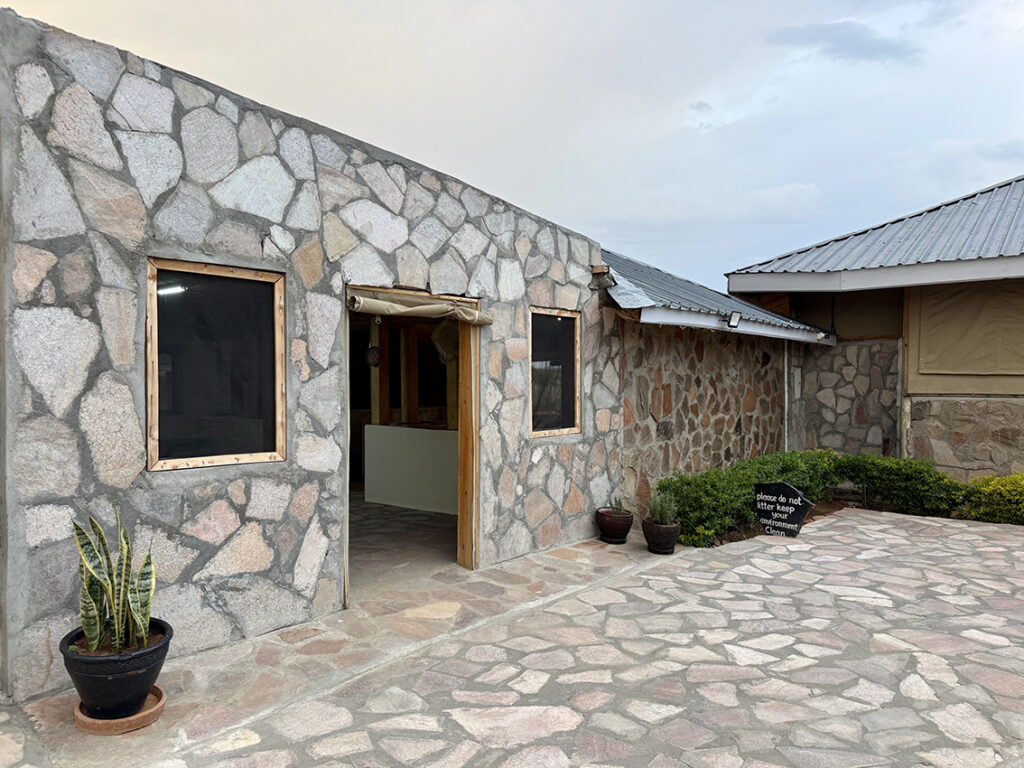
Resian Mara Camp
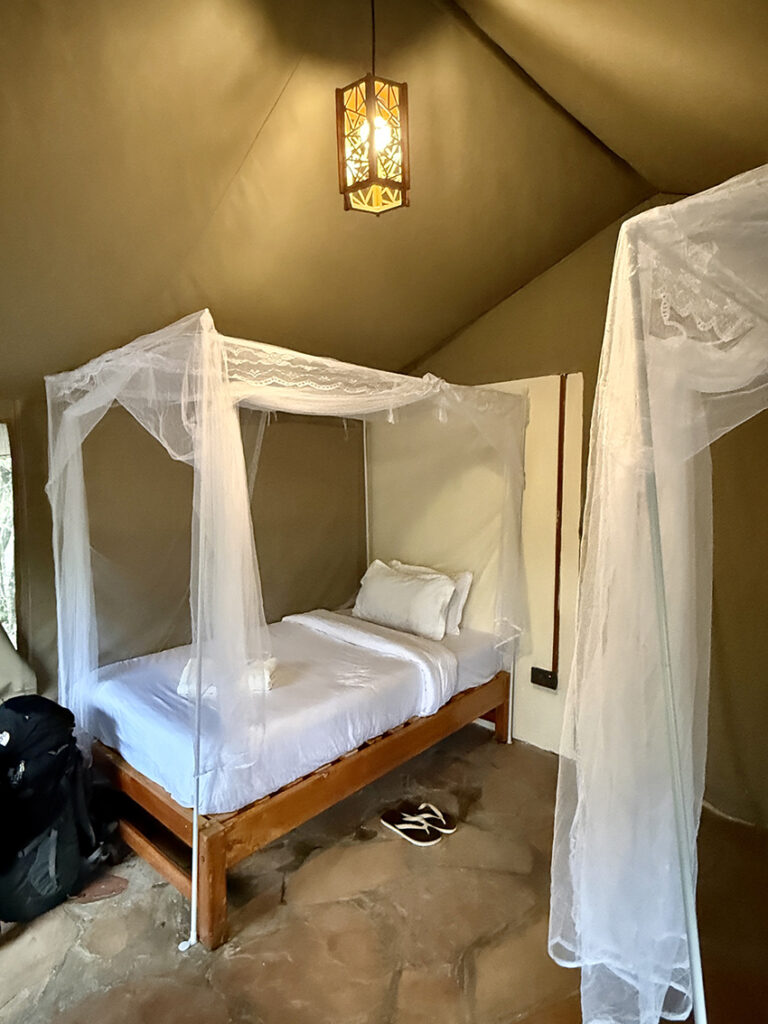
Our glamping tents with ensuite bathrooms
It was the start of our nightly buffet dinners that always begun with a pumpkin or sweet potato soup. Buffet-wise, there were a lot of meat and veggie stews, rice, ugali (likened to polenta), steamed vegetables, chapati and watermelon and pineapple as the reoccurring dessert.
It was also the introduction to our boxed lunches as we spent full days game driving and there weren’t independent dining options inside the parks. Every day was like opening a lucky dip, but there was always a boiled egg, yoghurt, fruit, crisps and a juice box. We ate outside in the national parks like there were no animals to worry about.
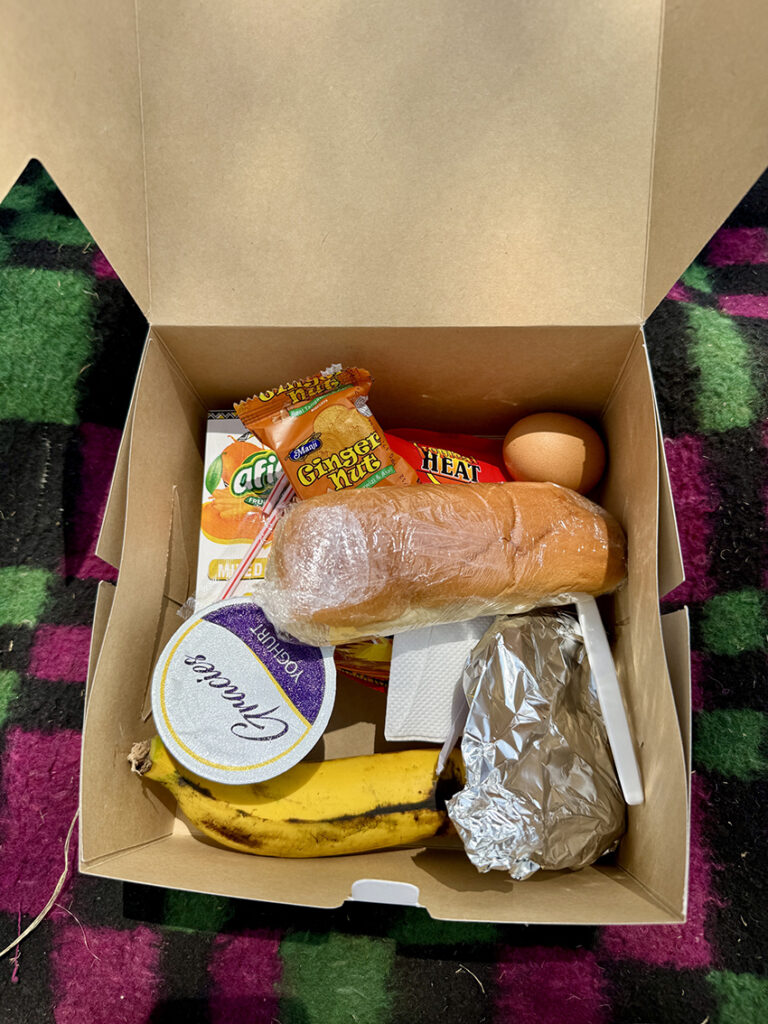
One of the many boxed lunches
Then it was almost five days of safari drives across Maasai Mara, Serengeti and Ngorongoro Crater. Maasai Mara was the perfect start, but I must say I started the day a little terrified, particularly of the lions.
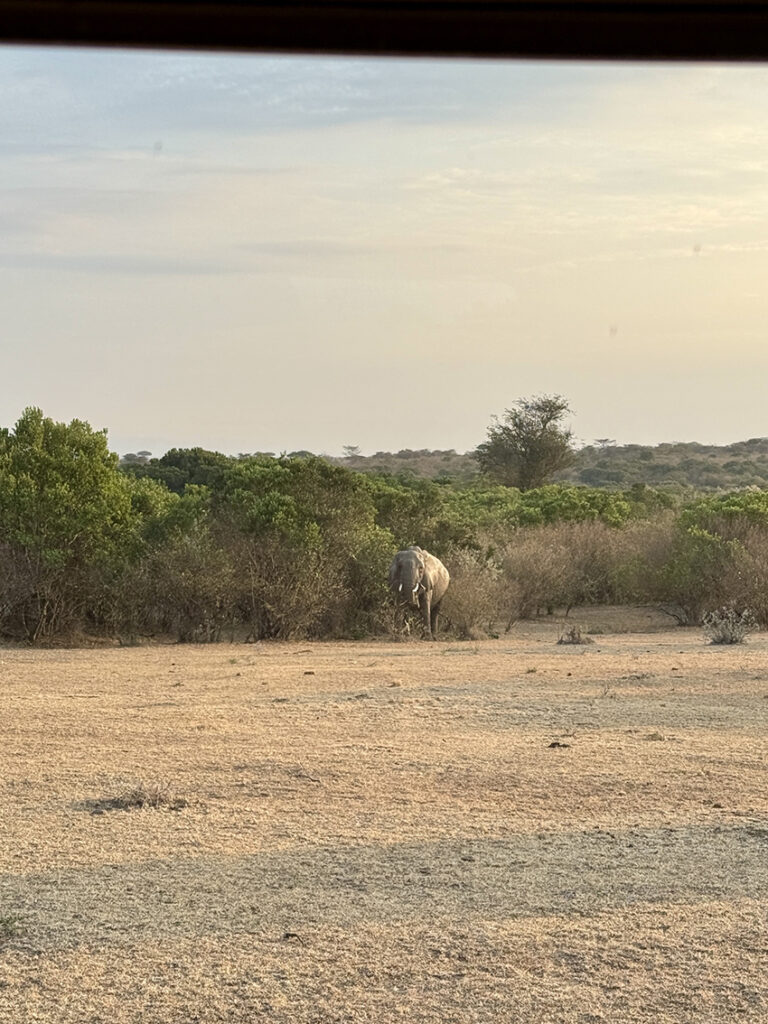
We spotted our first big five before we even entered the main reserve
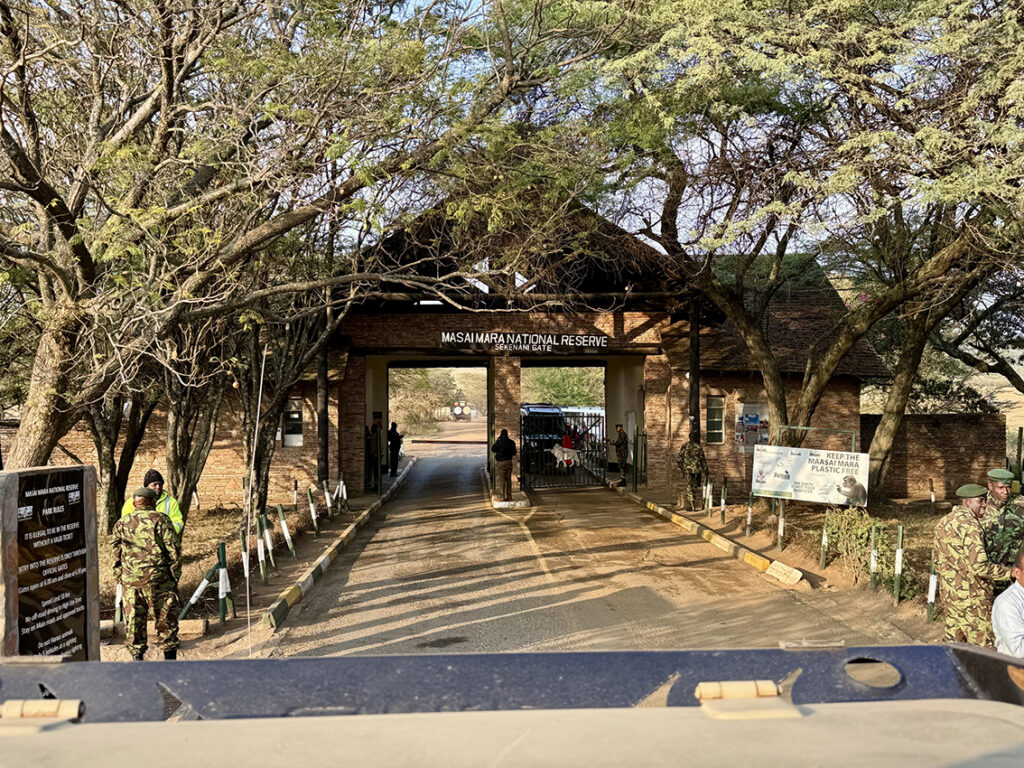
Entering Maasai Mara
The Great Migration had arrived in search of greener pastures with zebras, wildebeests, gazelles and antelopes in abundance.
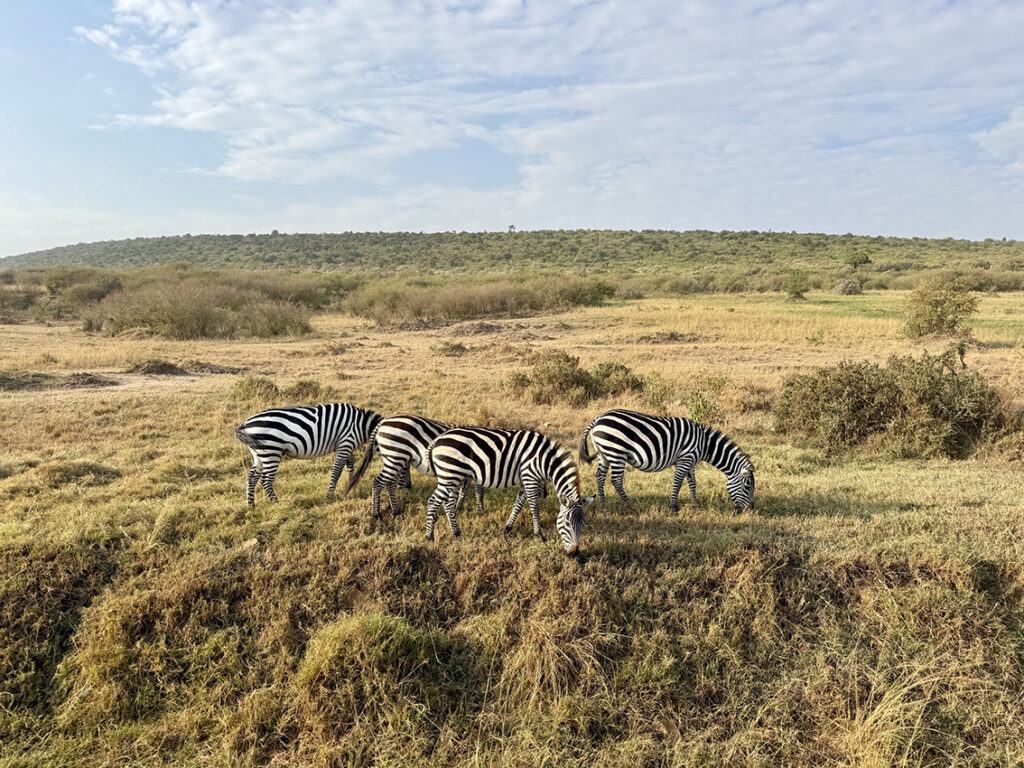
The first of many zebras in Maasai Mara – they really were so beautiful
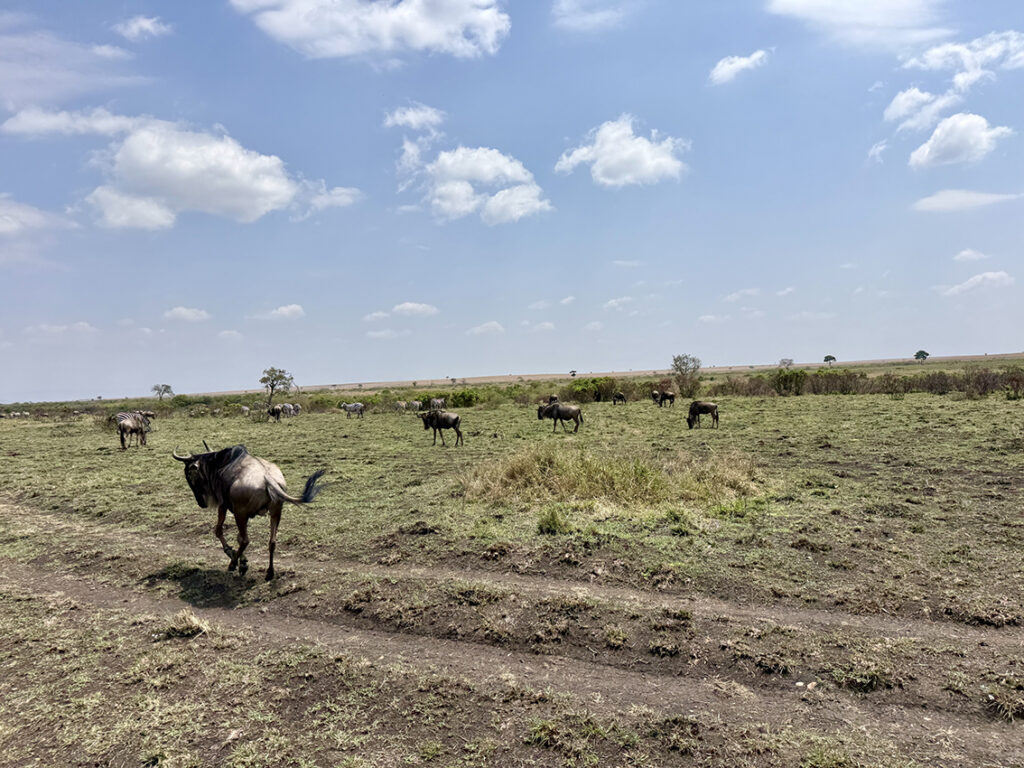
The poor wildebeests are consider one of the ugly five!
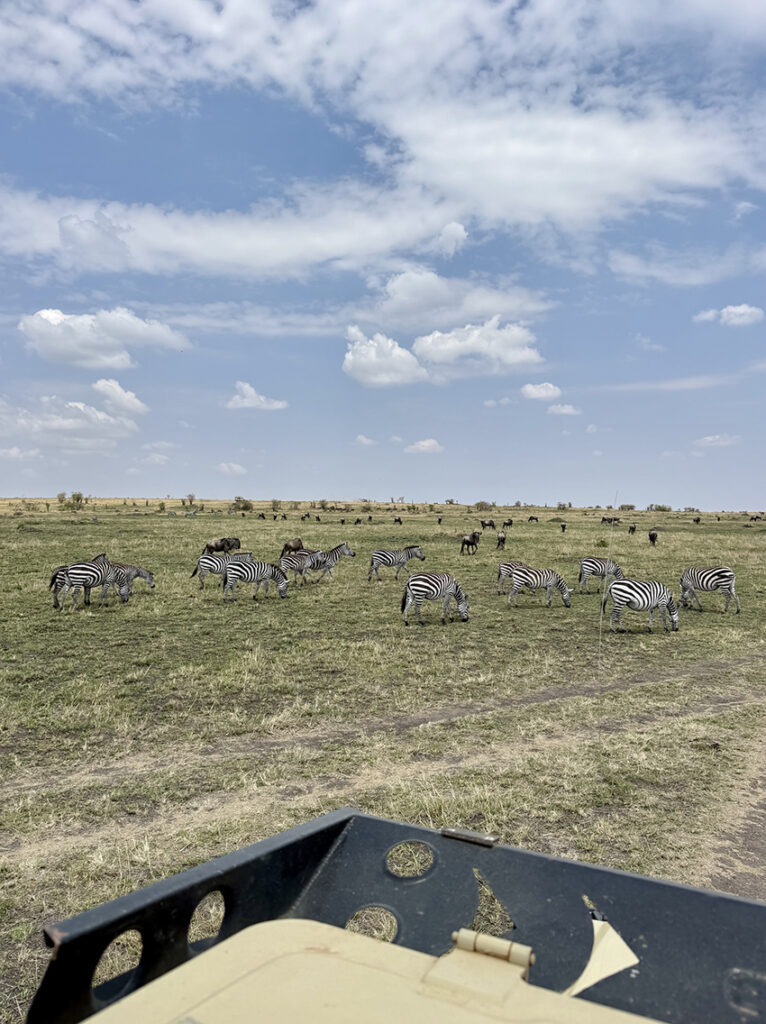
The Great Migration in Maasai Mara
We saw four of the big five (except the rhinos), including a spectacular sighting of a leopard up a tree with his prey in toe – a rhebok antelope. There was an orderly queue to catch a glimpse with the rangers and safari guides managing the wildlife respectfully.
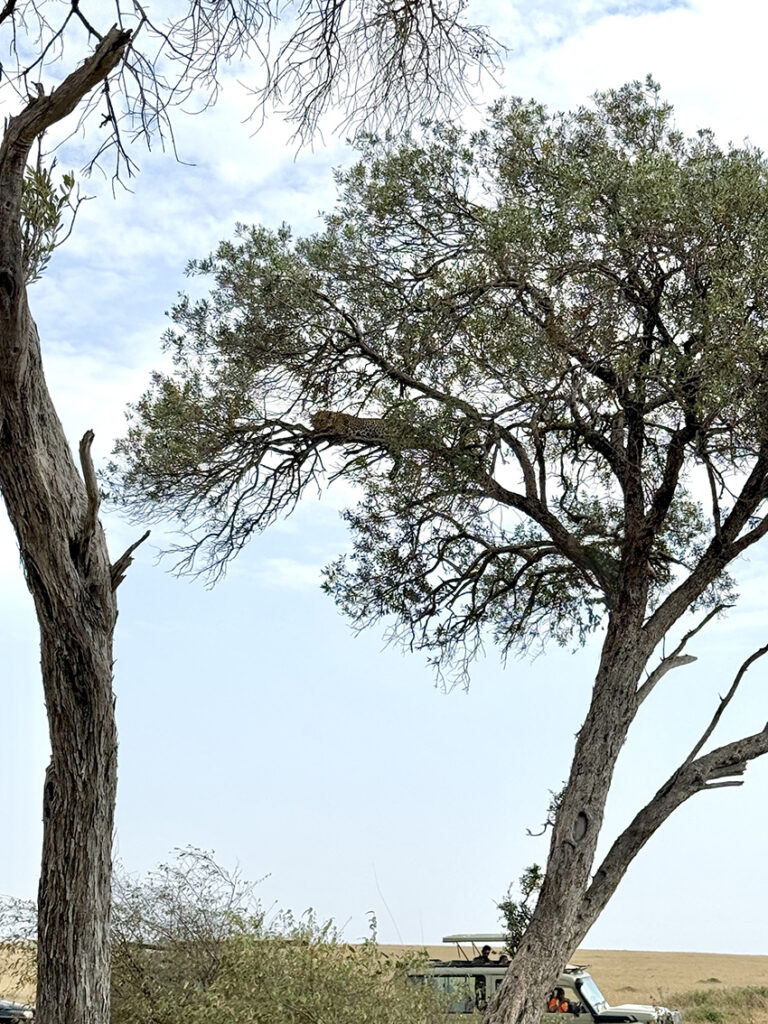
The leopard pretty satisfied after his feed (I removed the antelope)
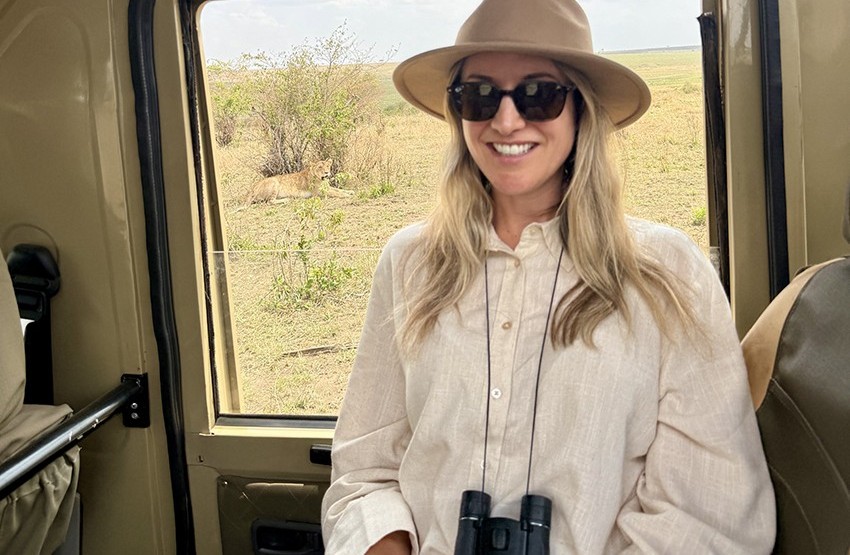
After my first couple of lion sightings, I stopped winding up my window and got comfortable. I even had a selfie with my namesake from The Lion King (pictured above). We also sighted the cuteness of a lioness resting next to her sleeping belly-up cubs, and we watched on as two other lionesses were on the hunt.
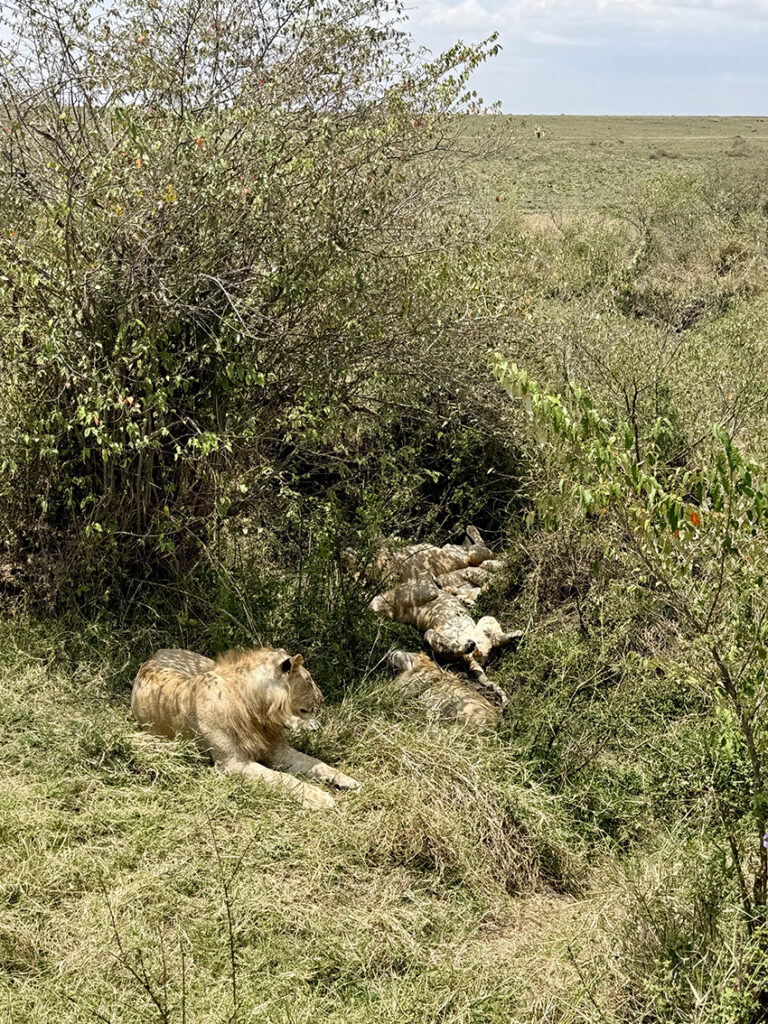
The cutest little lion pride
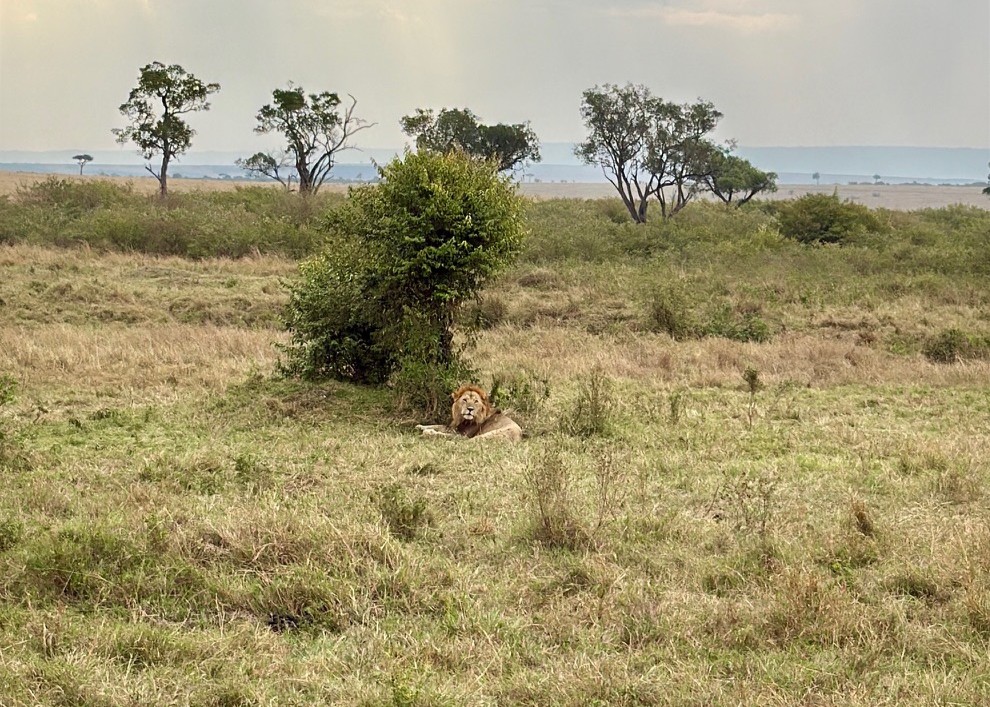
This beautiful king of the jungle!
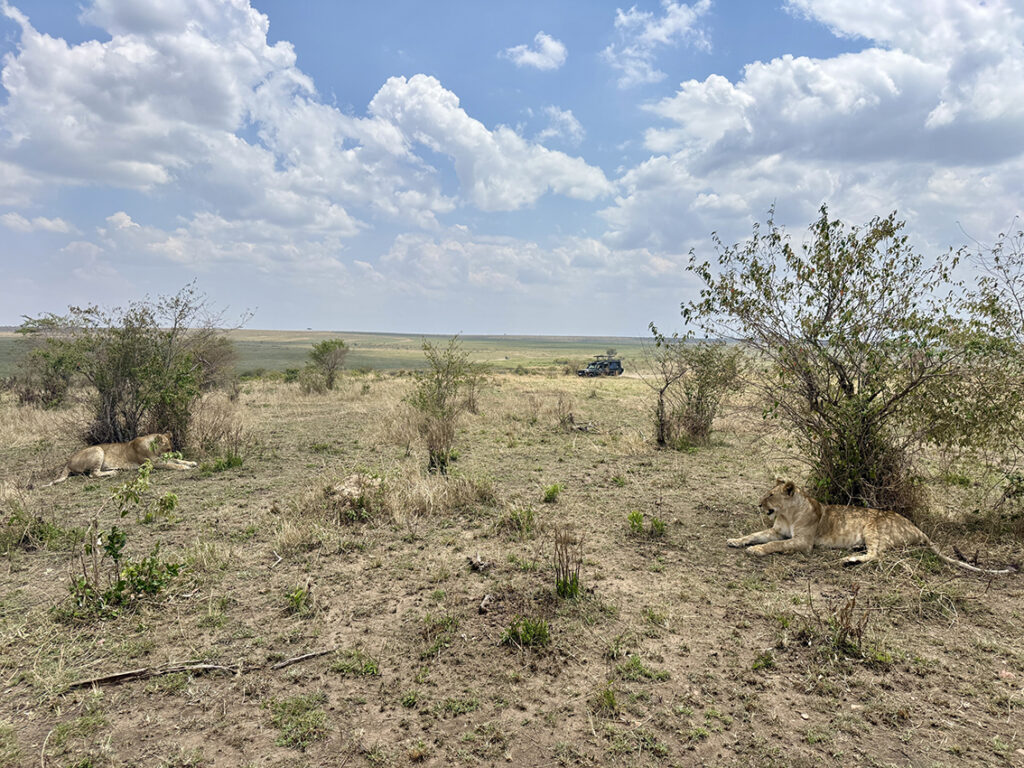
The buffaloes gave some serious evils, and the elephants are still one of my favourite to watch. We witnessed a herd of close to 40 cross in front of us with birds travelling on their backs as the sun was setting in the distance.
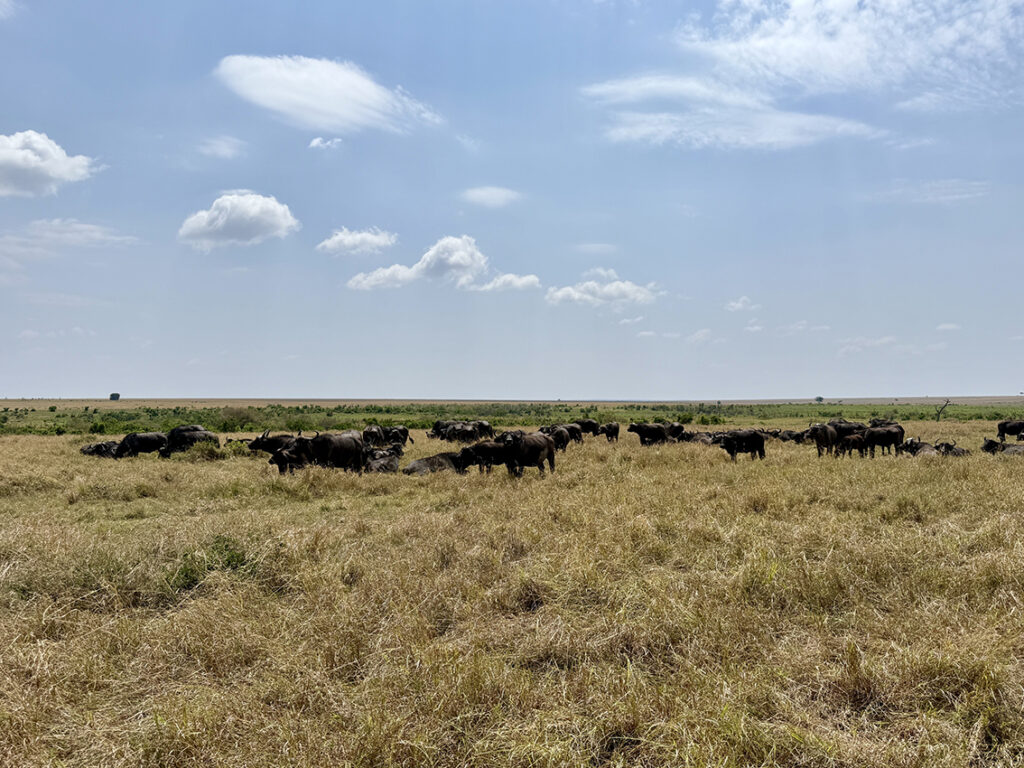
The buffaloes loved a death stare
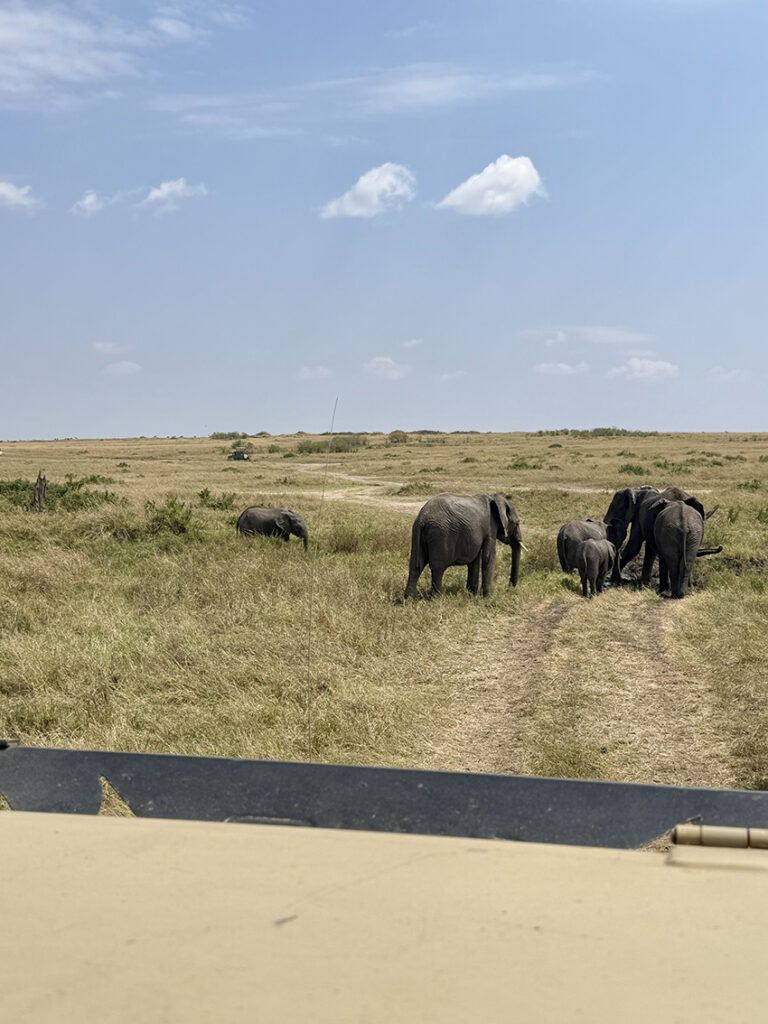
Elephants enjoying a mud bath
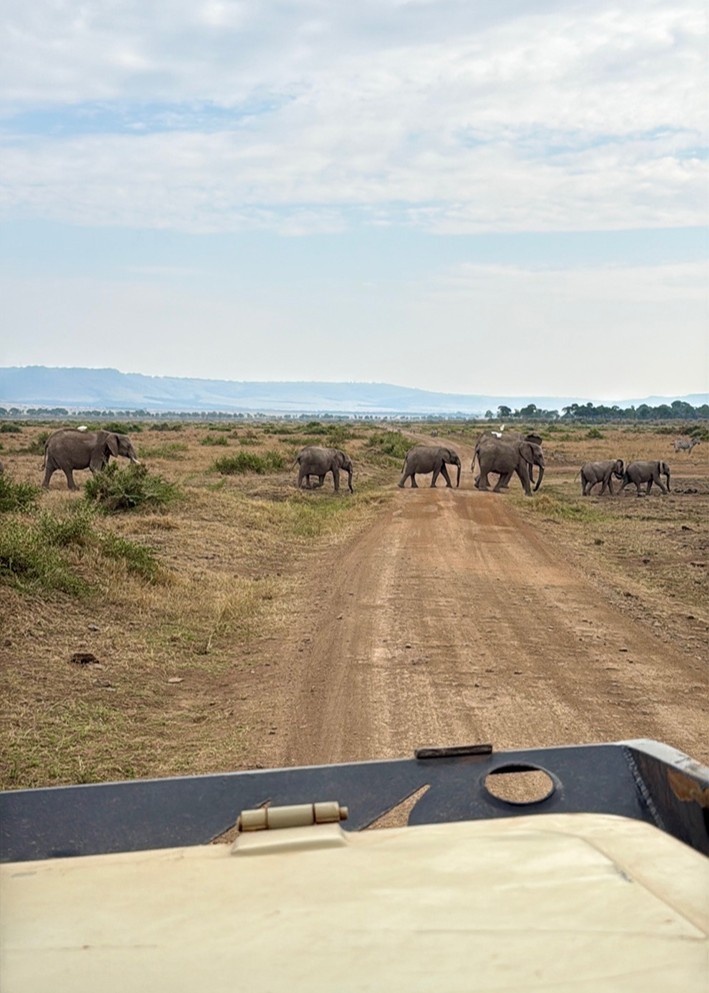
An elephant x bird crossing
Plus, there were Maasai giraffes, warthogs, hippos, an ostrich, cheetah, serval cat and more.
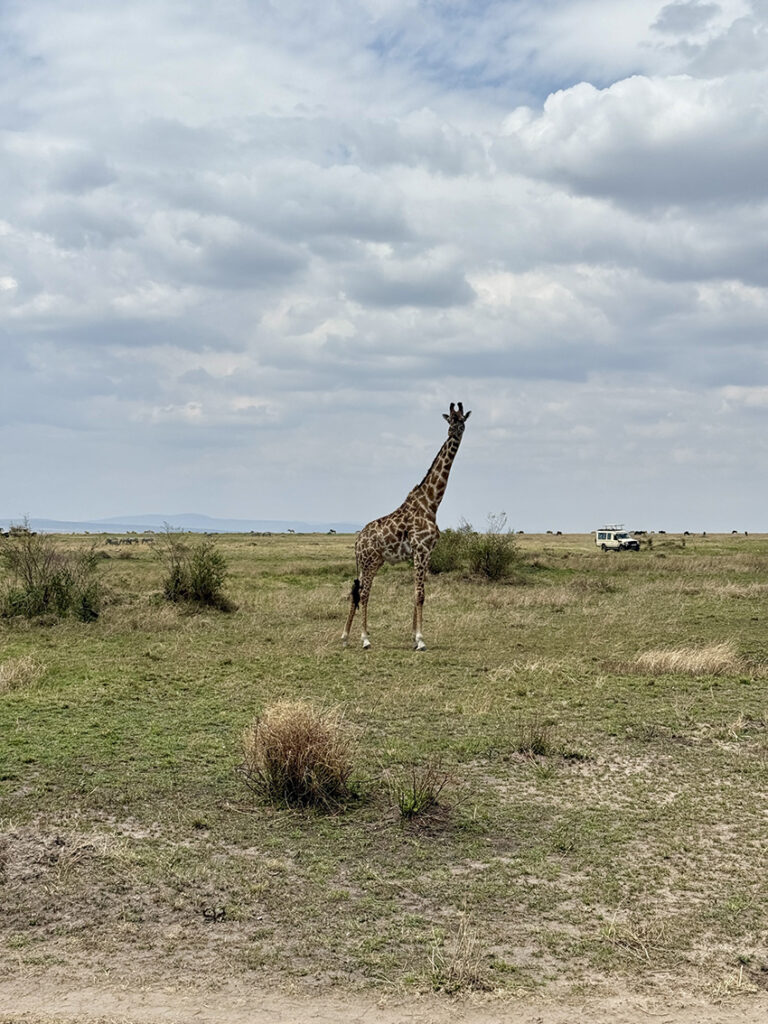
A Maasai giraffe
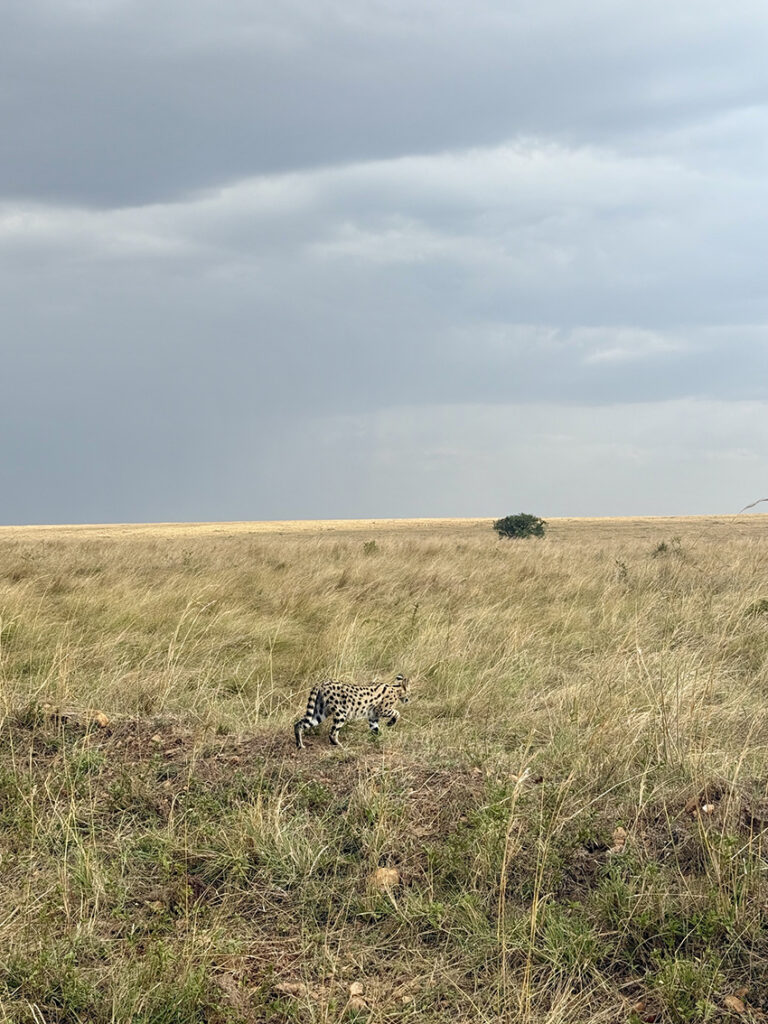
A serval cat – the smallest of the wild cats
We visited the Mara River which the animals migrate across trying to avoid crocodiles. There was plenty of ‘African massage’ and bush wees along the way, as the only facilities we came across were late in the day.
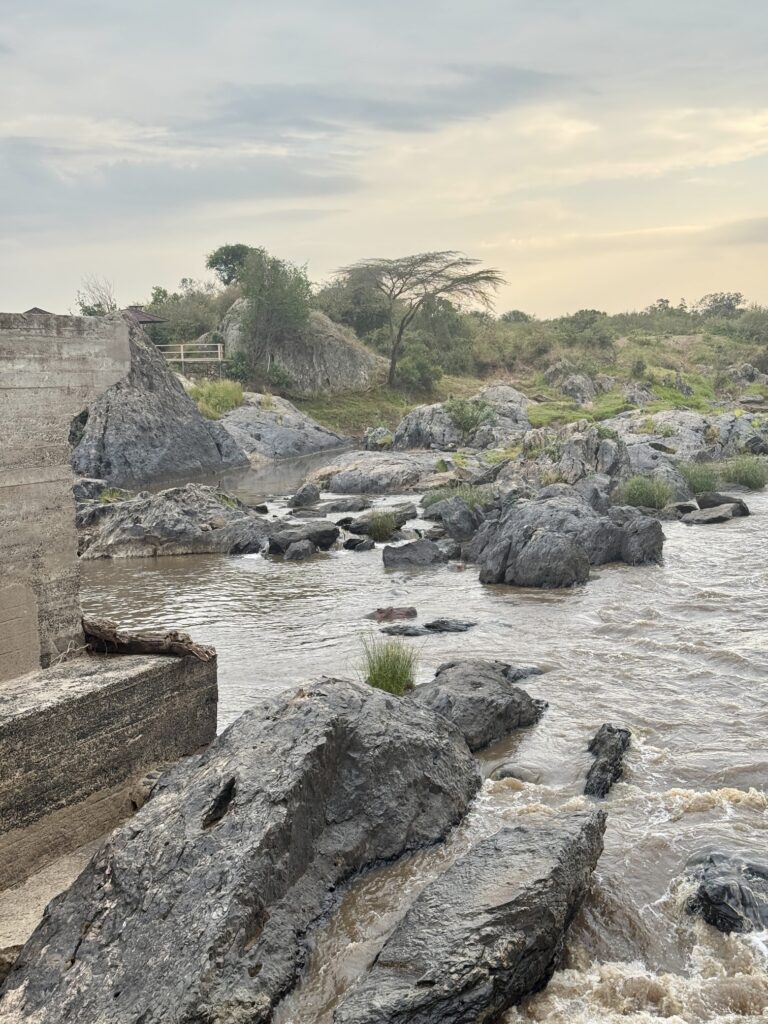
A hippo in Mara River
I must say it was everything and more for my first African safari.
We transitted through Maasai Mara – sighting more buffaloes, hyenas, hippos and a crocodile – to Mara Triangle Conservation Park and through off-road villages to reach the border of Tanzania. Things got very bumpy here. It was also soapstone country so we explored one of the local stores.
At the Migori County border crossing, we entered the Kenya side of the building and exited the Tanzania side. It was here we also changed to Tanzanian drivers and vehicles, making our way to the vast Lake Victoria for the night. It’s the largest lake in Africa shared with Kenya and Uganda, the largest portion of which is in Tanzania.
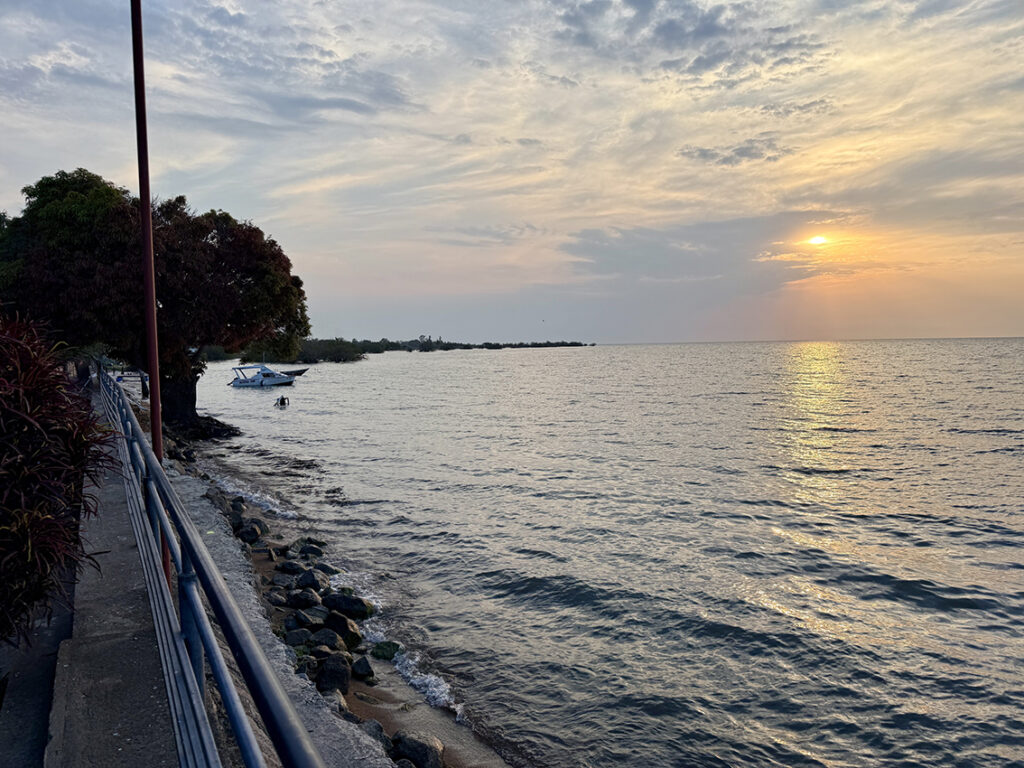
Enjoying a peaceful sunset on Lake Victoria before I became a celebrity with the locals
Serengeti National Park is almost ten times larger than Maasai Mara. Its sheer size meant the animals felt quite sparse as the migration had left and only the residents remained – those who didn’t migrate would be lucky to survive. This meant it didn’t bring the instant excitement of our previous game drive, but we were pretty spoilt in Maasai Mara.
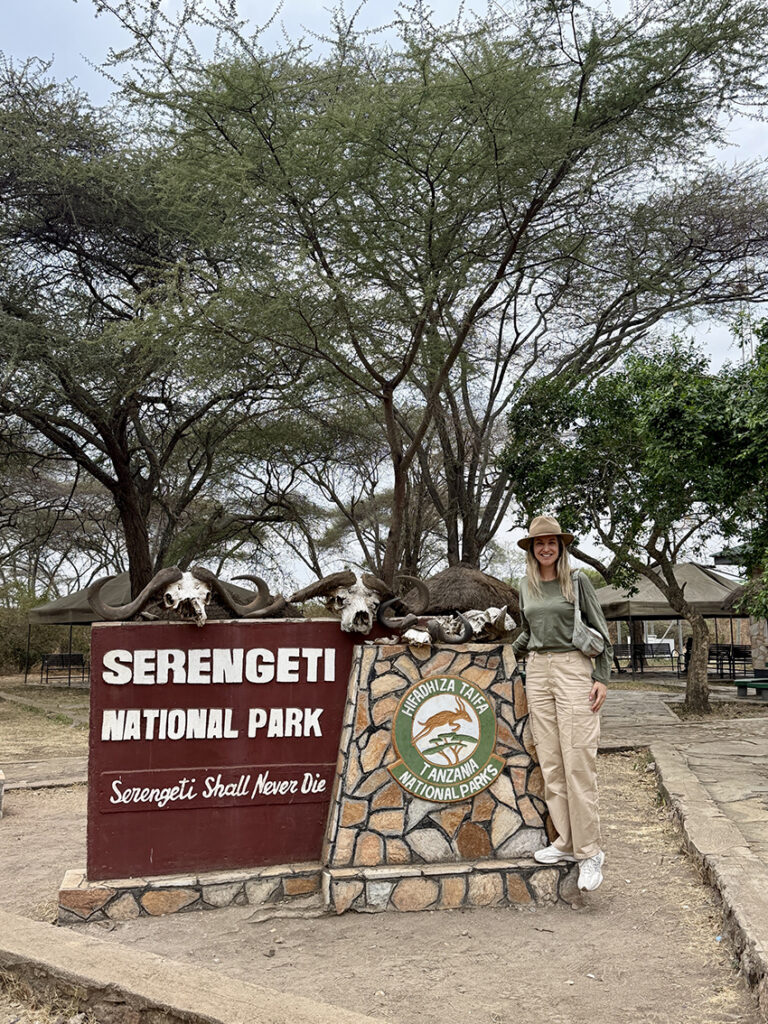
Serengeti felt more elevated in terms of entry point facilities, more accommodation, a range of rest areas with toilets (and toilet paper) throughout and numerous air strips to fly into.
One of the highlight encounters of Serengeti included the abundance of hippopotamus’ in the waterways. They sure put on a show, frolicking around and laughing at us.
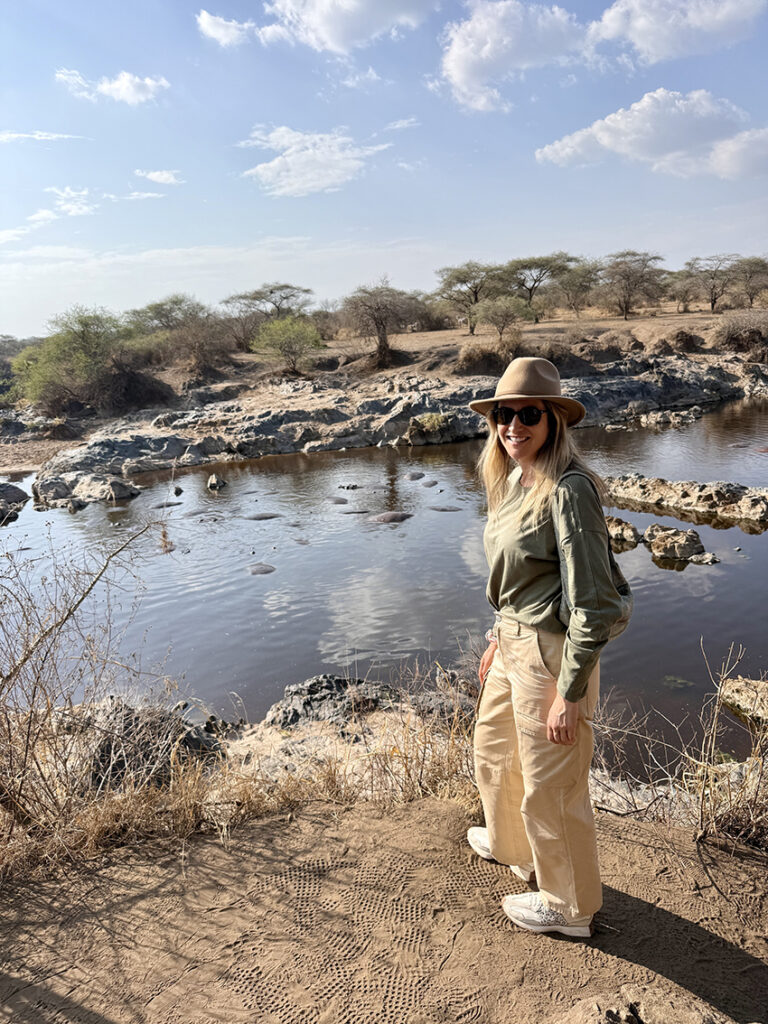
These were the most entertaining hippos. I’m just glad they stayed in the water
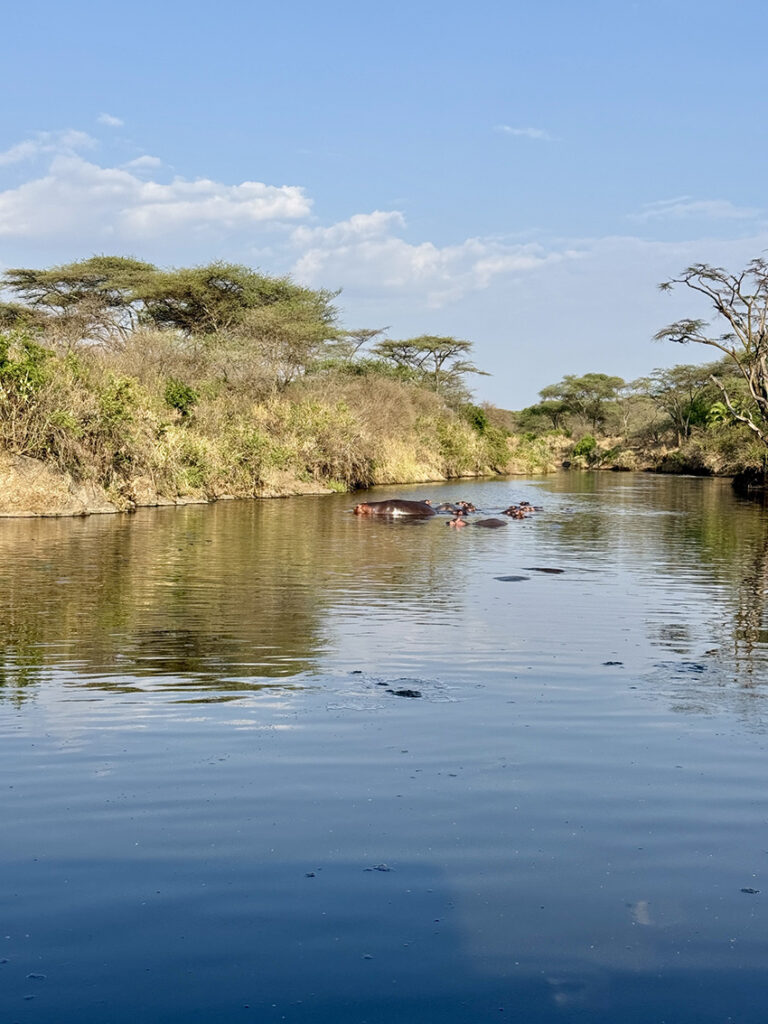
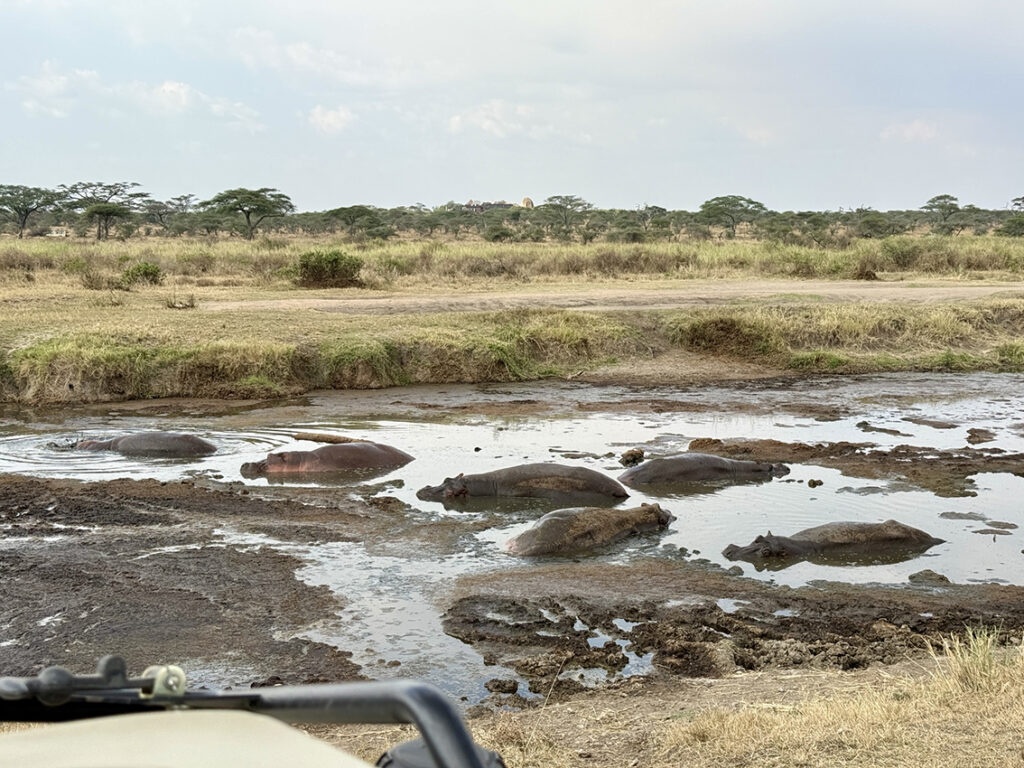
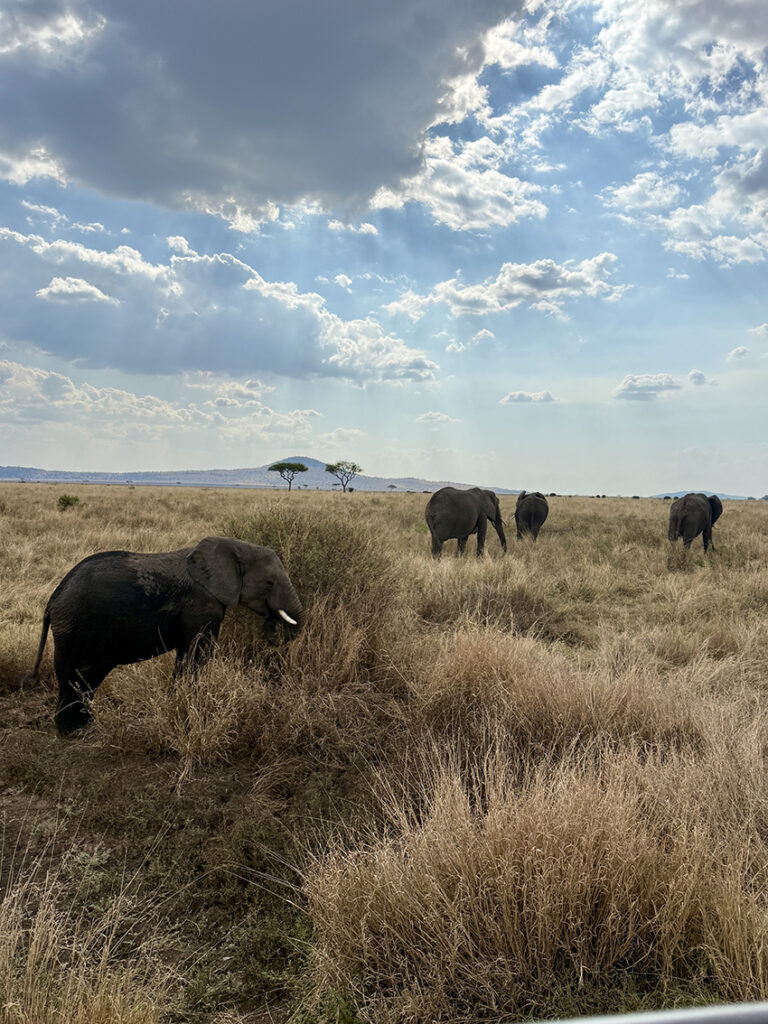
Then there was a large pride of lions enjoying breakfast, playful baboons, a range of antelopes from dik-diks to elands, herds of elephants, a leopard hiding up a tree (to no surprise), a close encounter with a giraffe, a lioness and her four cubs on the hunt, another pride of five lions, and two separate cheetahs on the move.
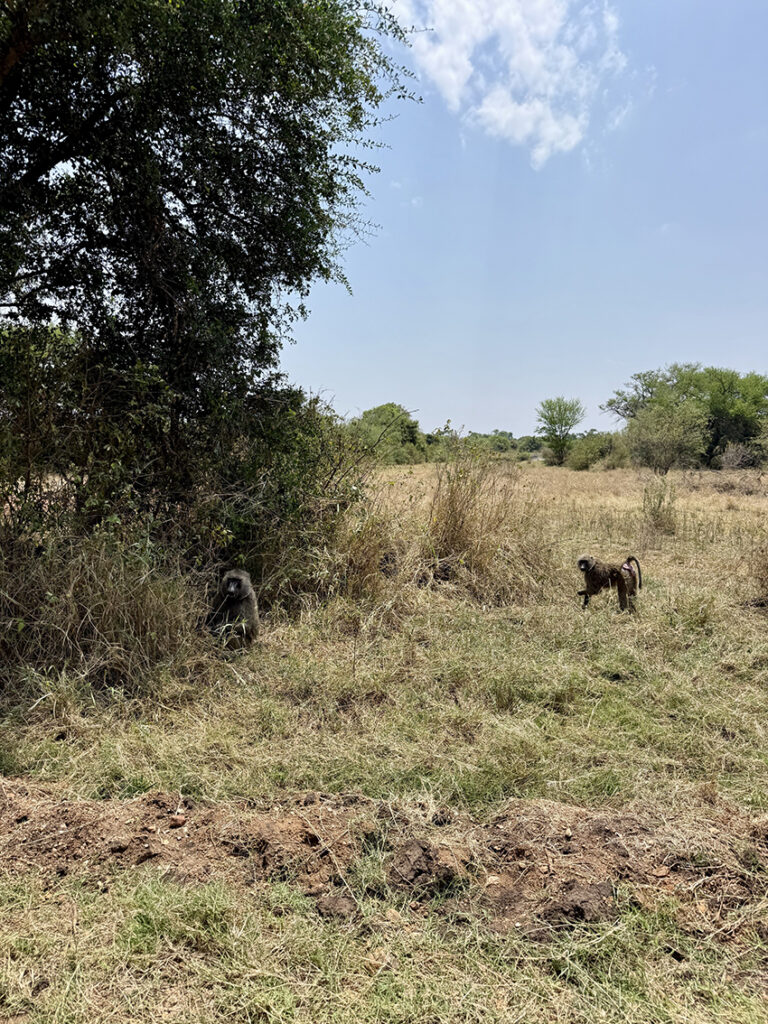
Baboons were more prominent in Serengeti
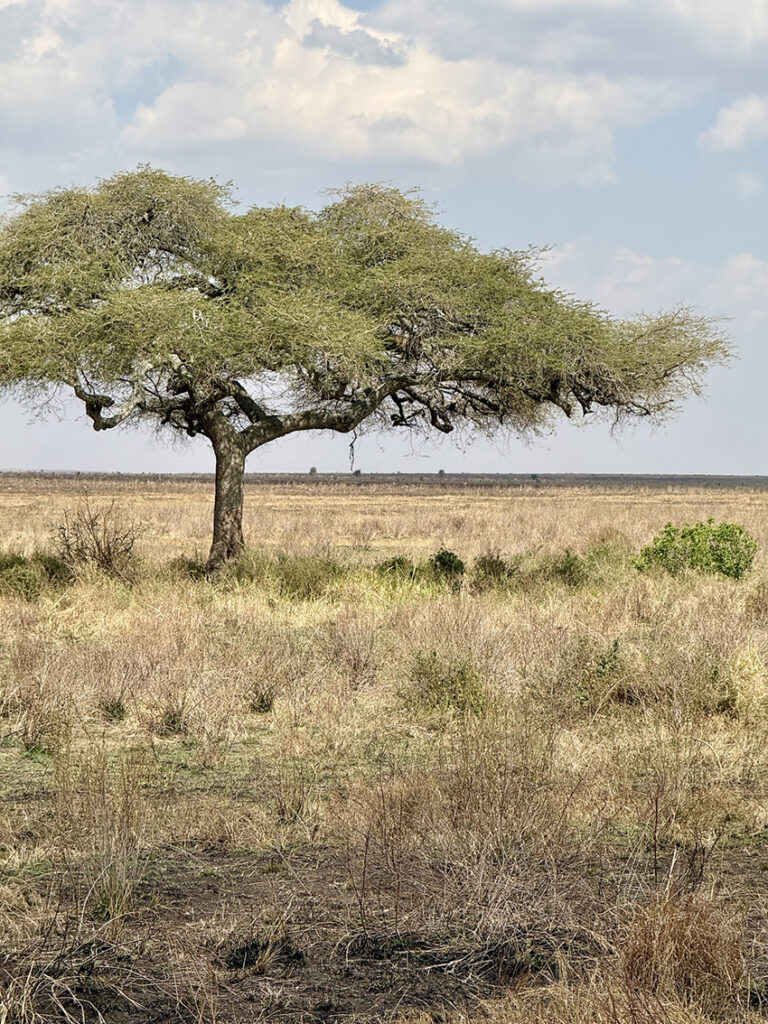
Spot the leopard
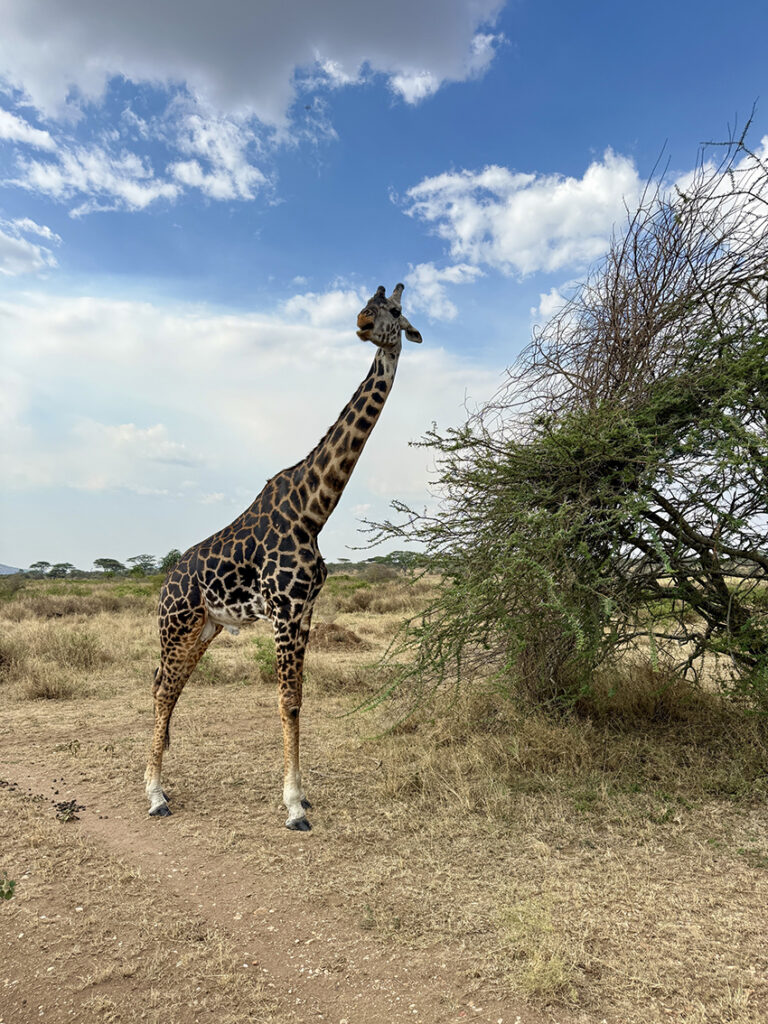
The giraffes were one of my favourites
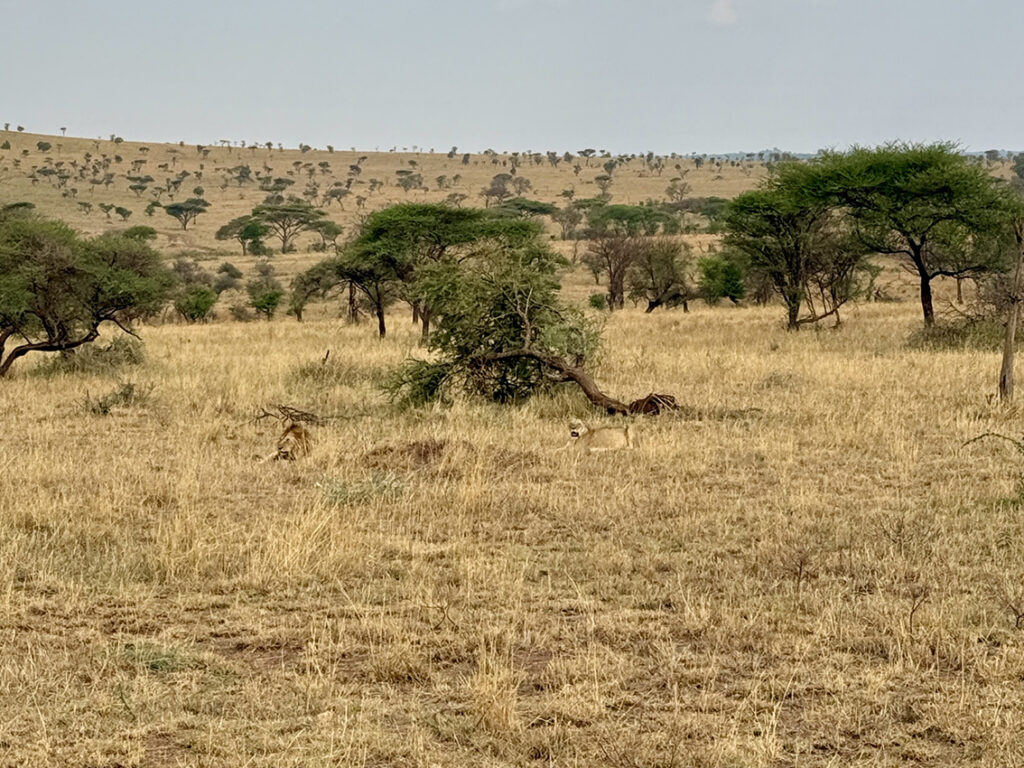
The king and his lioness
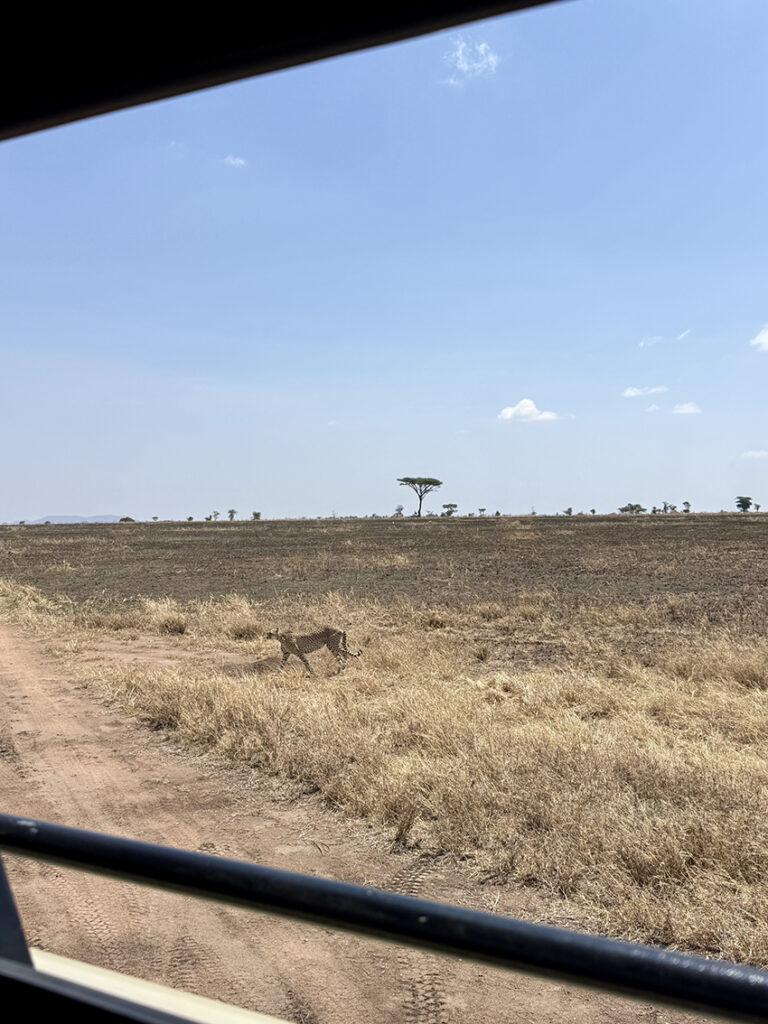
A cheetah on the move
We stayed two nights in the middle of Serengeti at Tukaone Serengeti Camps. The glamping style rooms were huge with beautiful timber features and ensuites. There was also a front door and a bathroom door (the previous glamping had zipped canvas throughout). It was the perfect spot for sunset, and we even had lions visit overnight which was unreal to listen to, but we didn’t dare open our door.
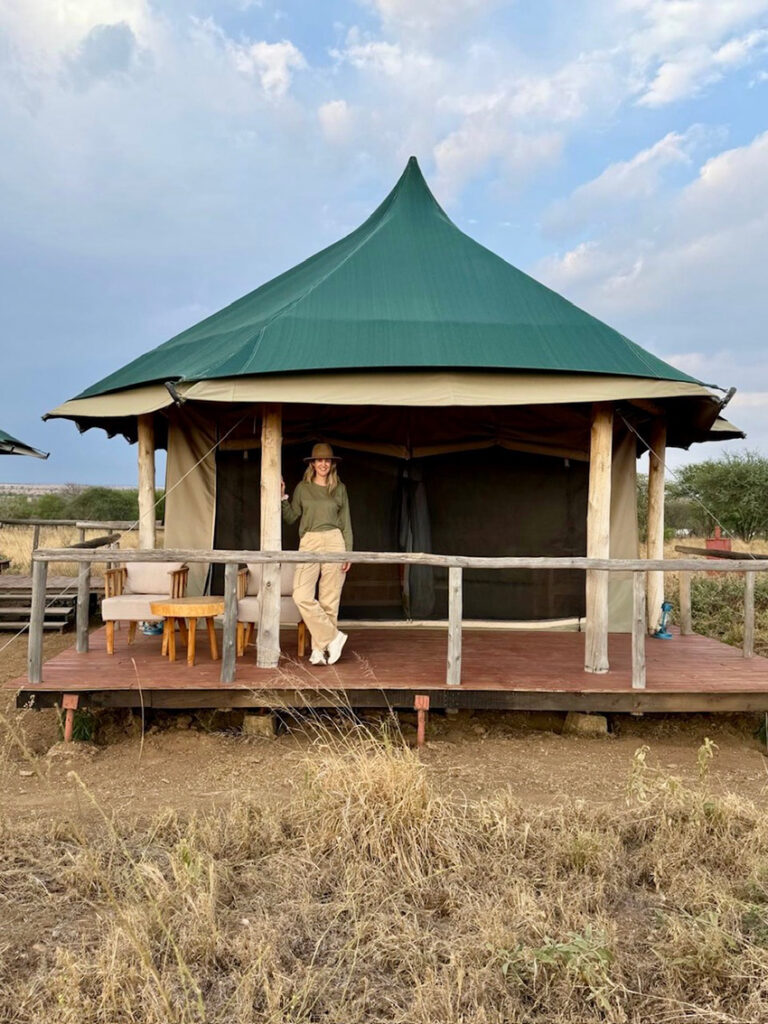
My favourite accommodation of the trip in the centre of Serengeti at Tukaone
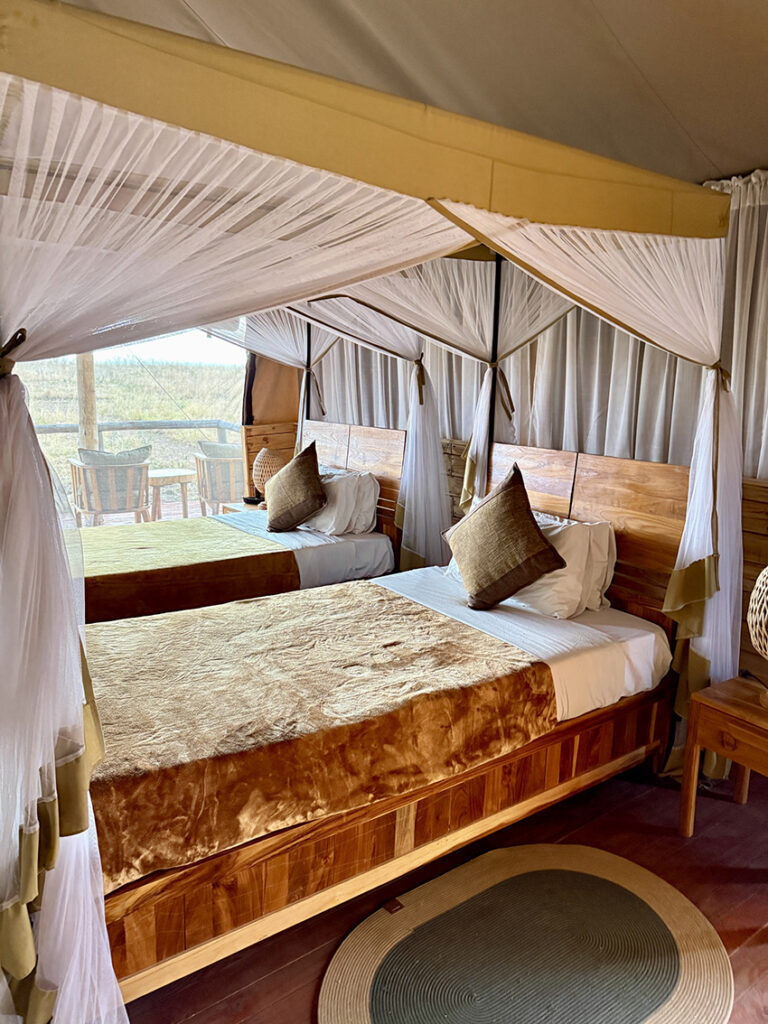
The gorgeous interiors of our eco tent
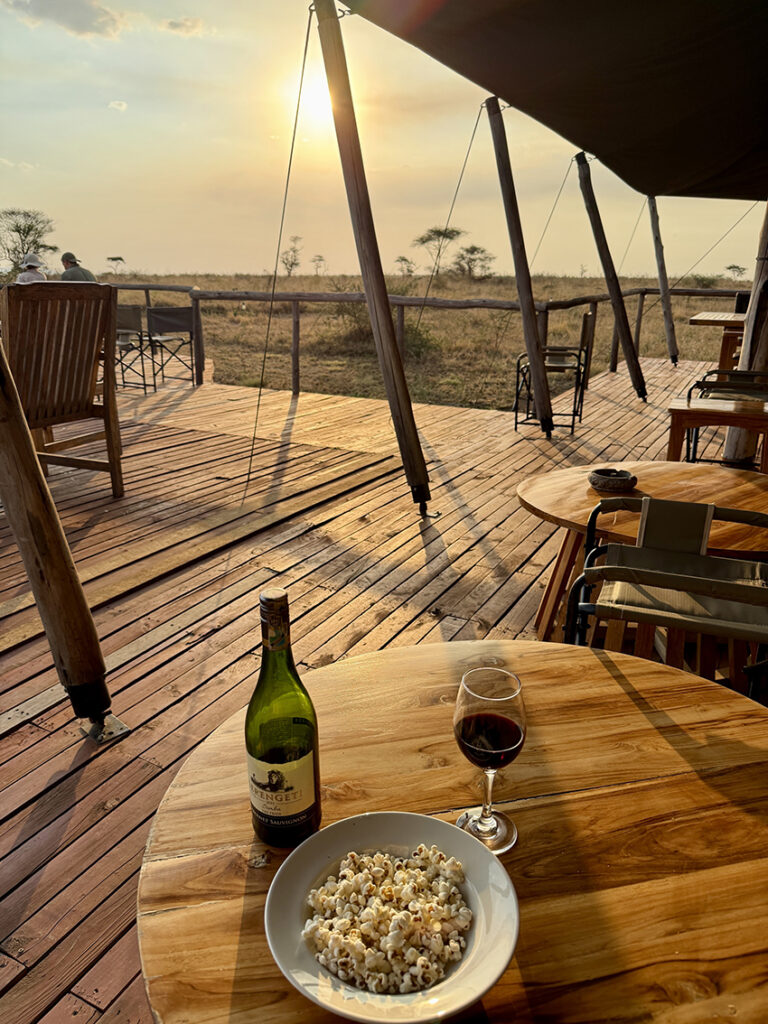
Sunset hour came with unlimited popcorn
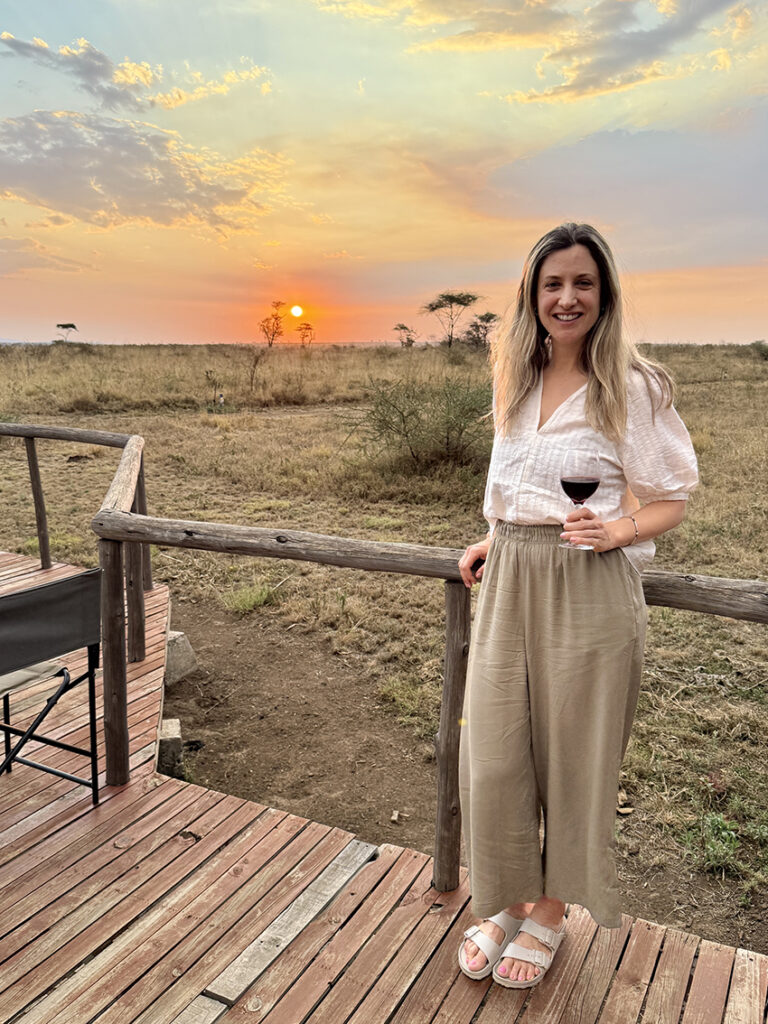
The best sunset of the trip!
The highlight of my trip was the optional sunrise hot air balloon over Serengeti with Serengeti Balloon Safaris. I was picked up and taken to the departure lounge where ginger coffee, tea and cookies were waiting. Our pilot gave us a briefing, we waited patiently while the balloon was inflated and then we boarded lying down. A bit of rocking back and forth, and we were up and away for our one-hour ride.
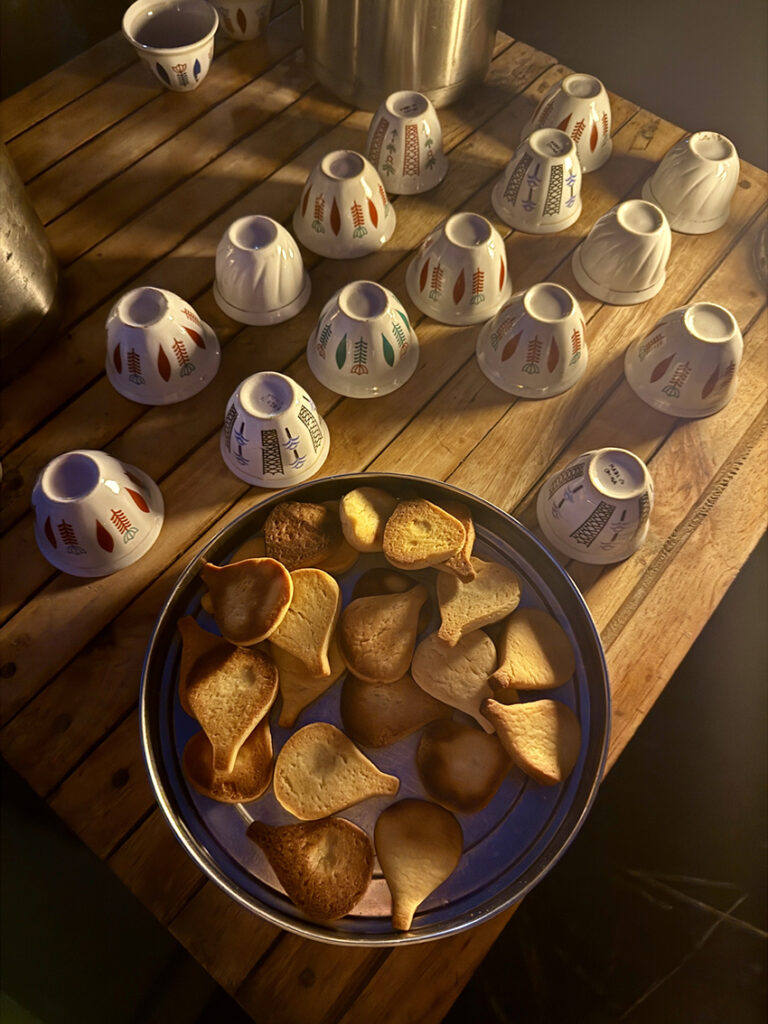
Ginger coffee and biscuits to calm the nerves
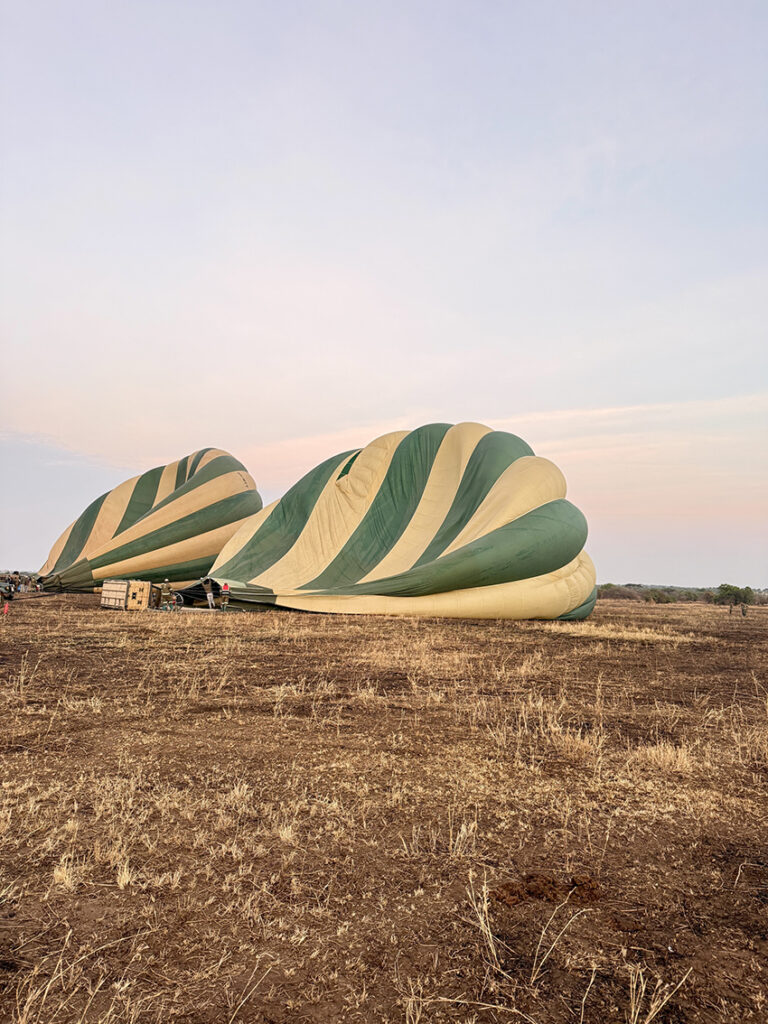
Getting ready to fly with Serengeti Balloon Safaris
From above we saw plenty of animals – elands, waterbucks, giraffes, zebras, wildebeests, hyenas, topi antelopes, buffaloes and more – but no big five unfortunately. There was something so peaceful about gliding through the air; it wasn’t bumpy at all as we moved up and down to different heights. The landing came with a bump and a slide until we slowly fell to the side.
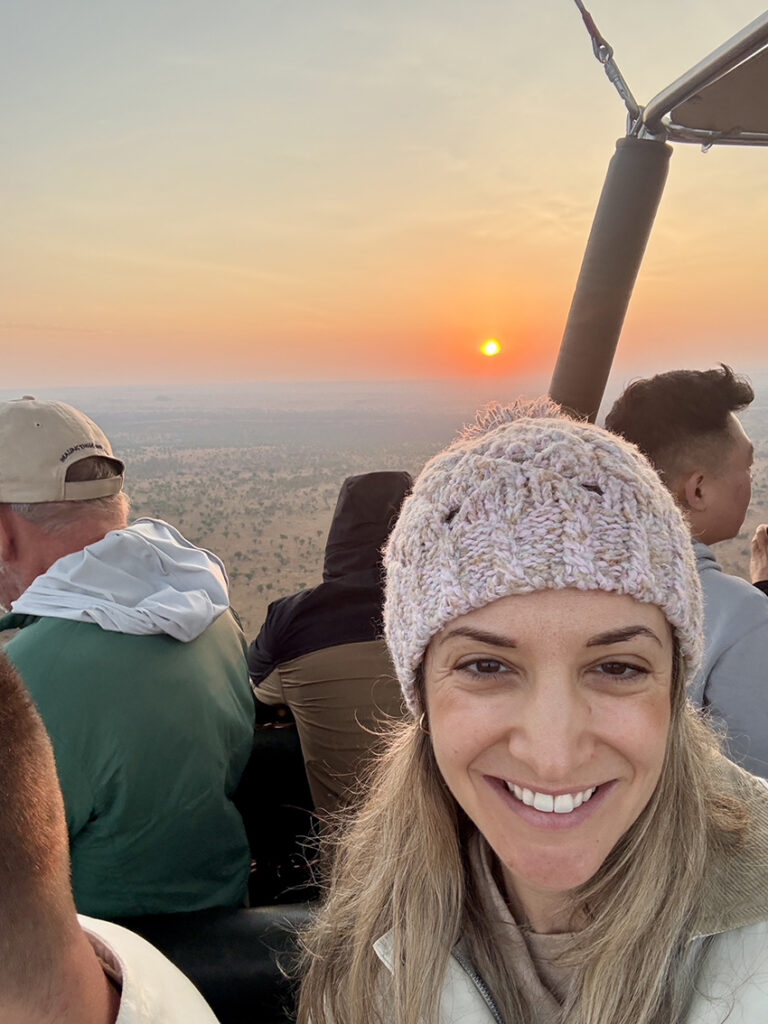
Sunrise hot air balloon ride
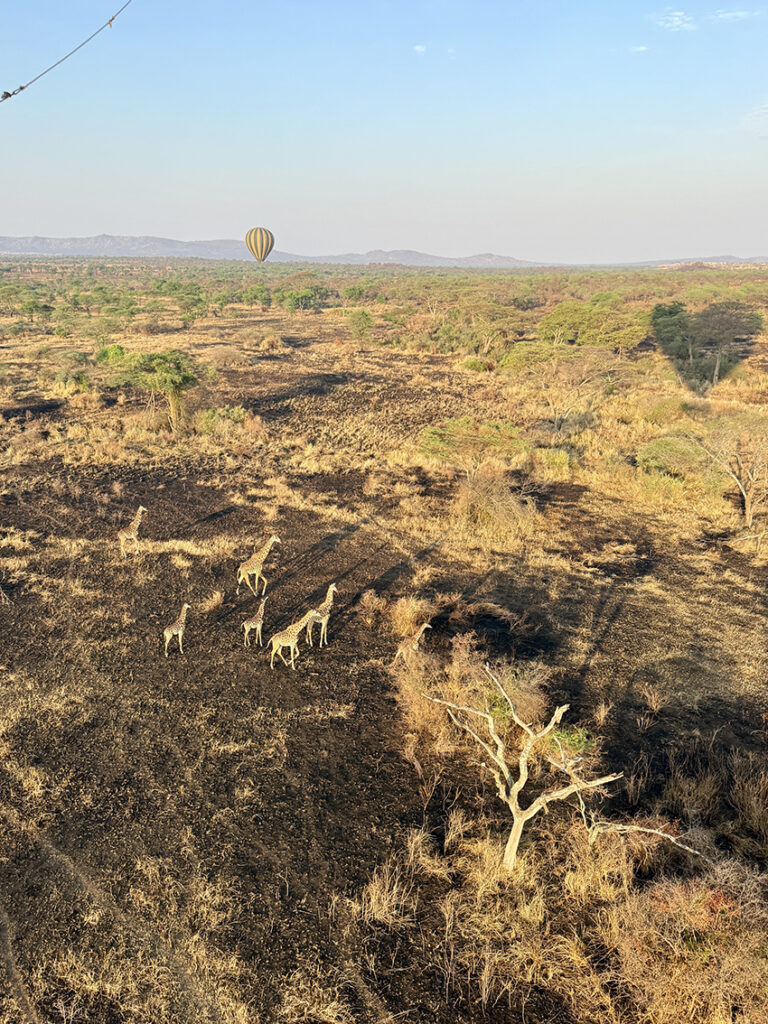
Giraffes from above
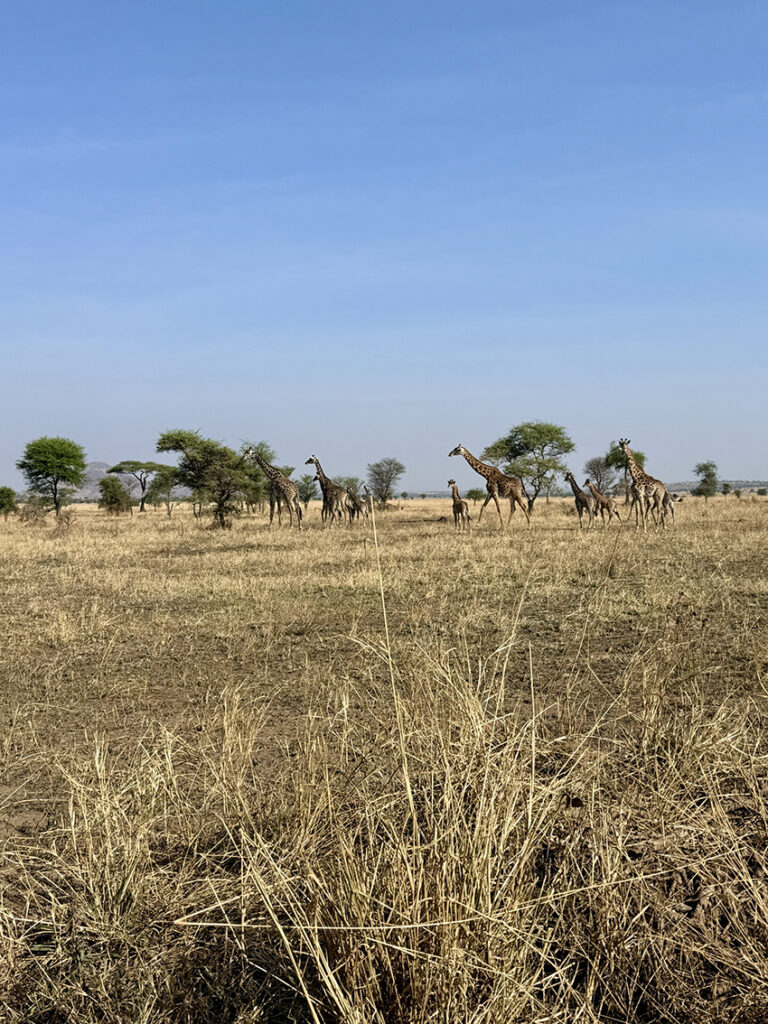
And from the ground
Once we landed, we were served Serengeti sparkling and were shared the history of the hot air balloon being the first flight in 1783. Back then champagne was used as a peace offering to the landowners of the grounds they were landing on.
We were driven to the breakfast location where three long tables were set up (one for each balloon ride group of 16) and chefs were cooking our breakfast made to order. There were even fancy bush loos. It was so surreal having a leisurely breakfast in the middle of Serengeti and was all worth the US$600 price tag.
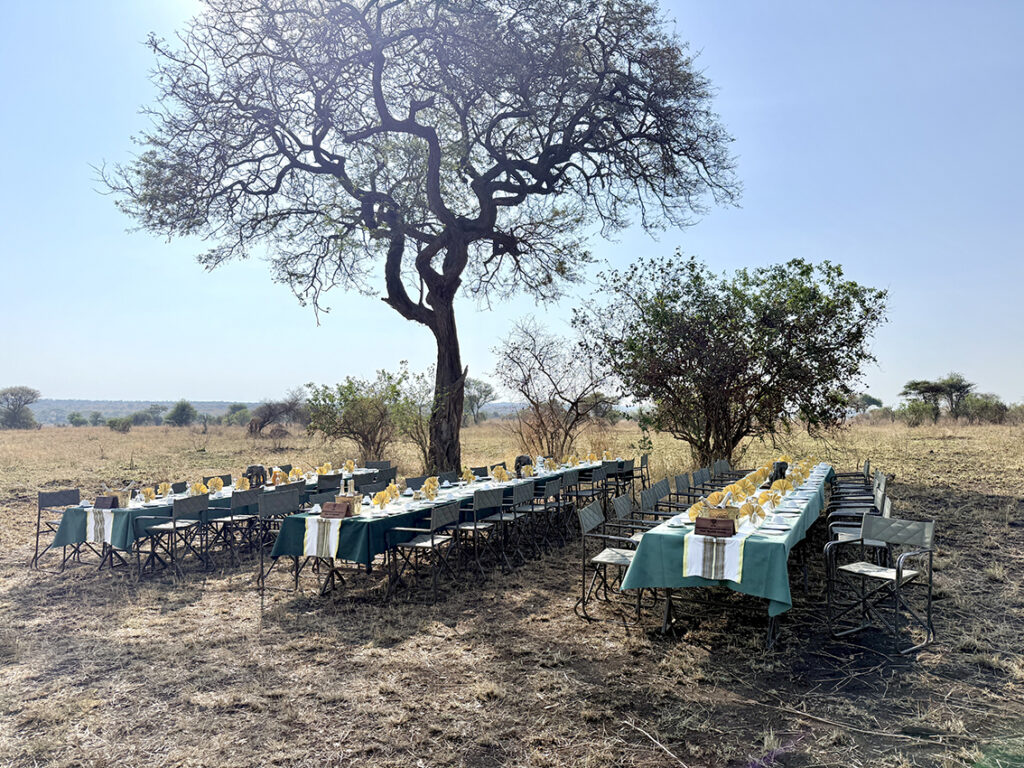
Our breakfast setting in Serengeti National Park
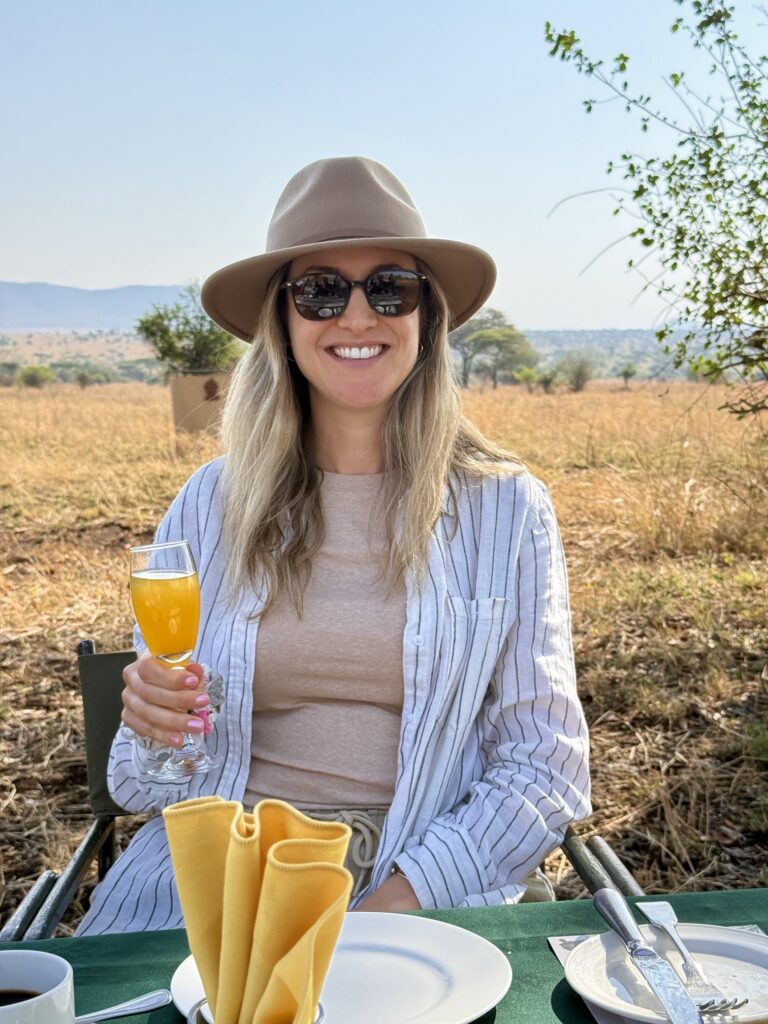
No complaints here
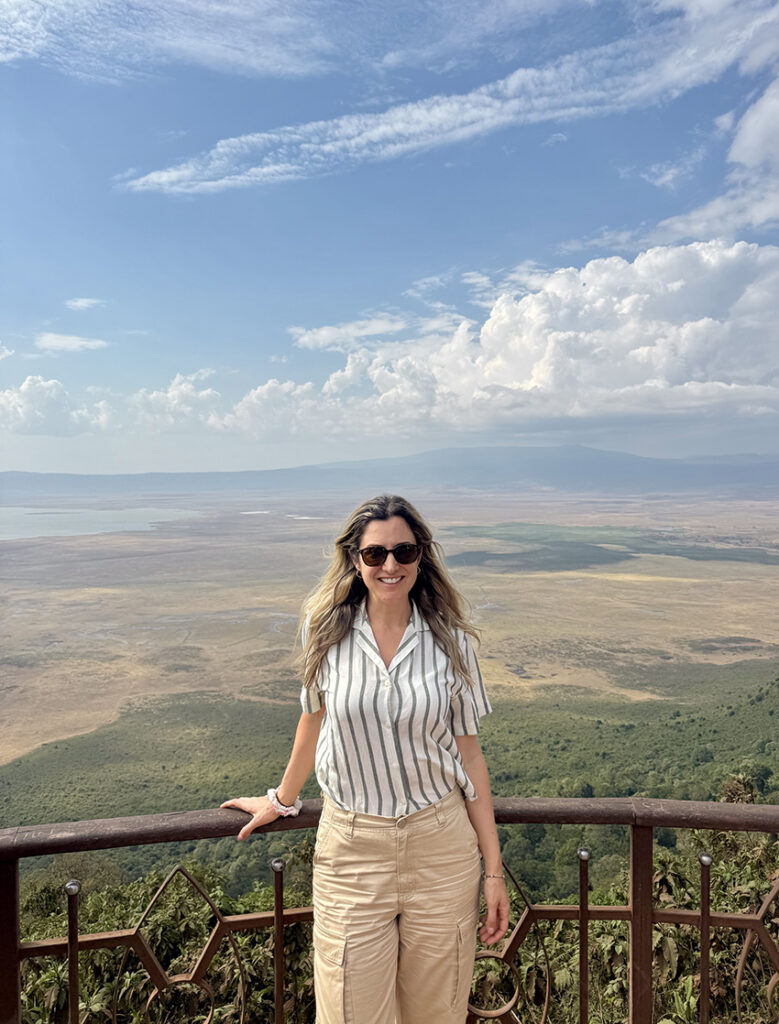
Ngorongoro Crater was our last game drive and our last chance to spot the endangered rhinoceros. We admired the view from the top before descending 600m to the bottom of what used to be a volcano before it erupted two-to-three million years ago.
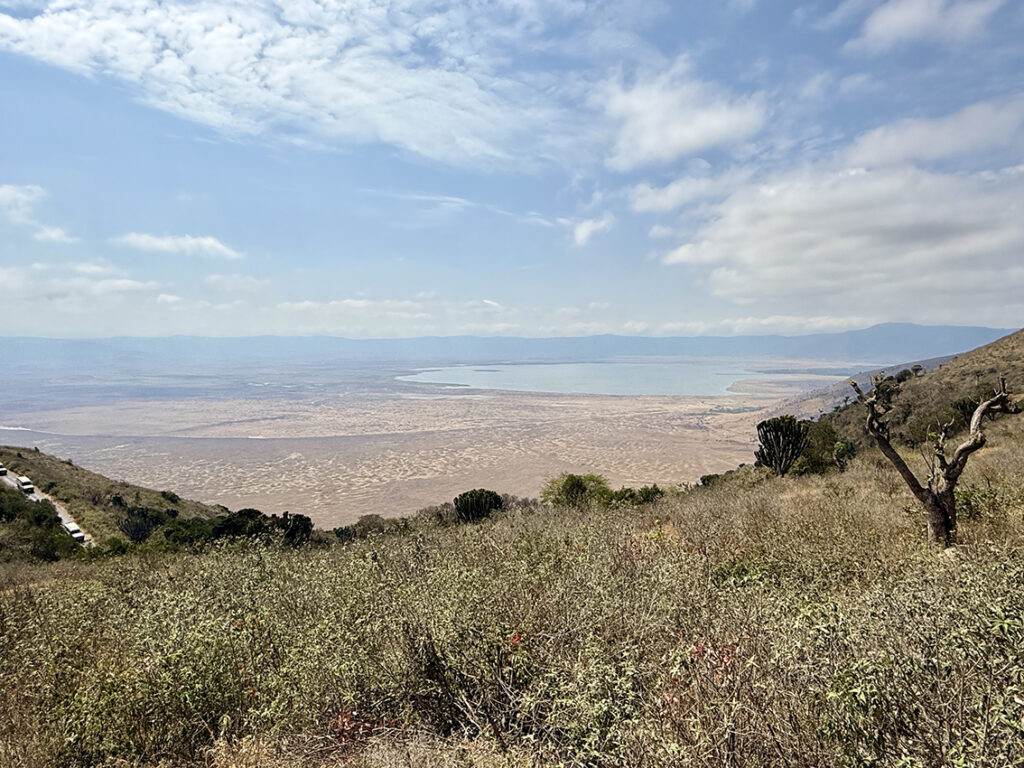
Ngorongoro Crater from above
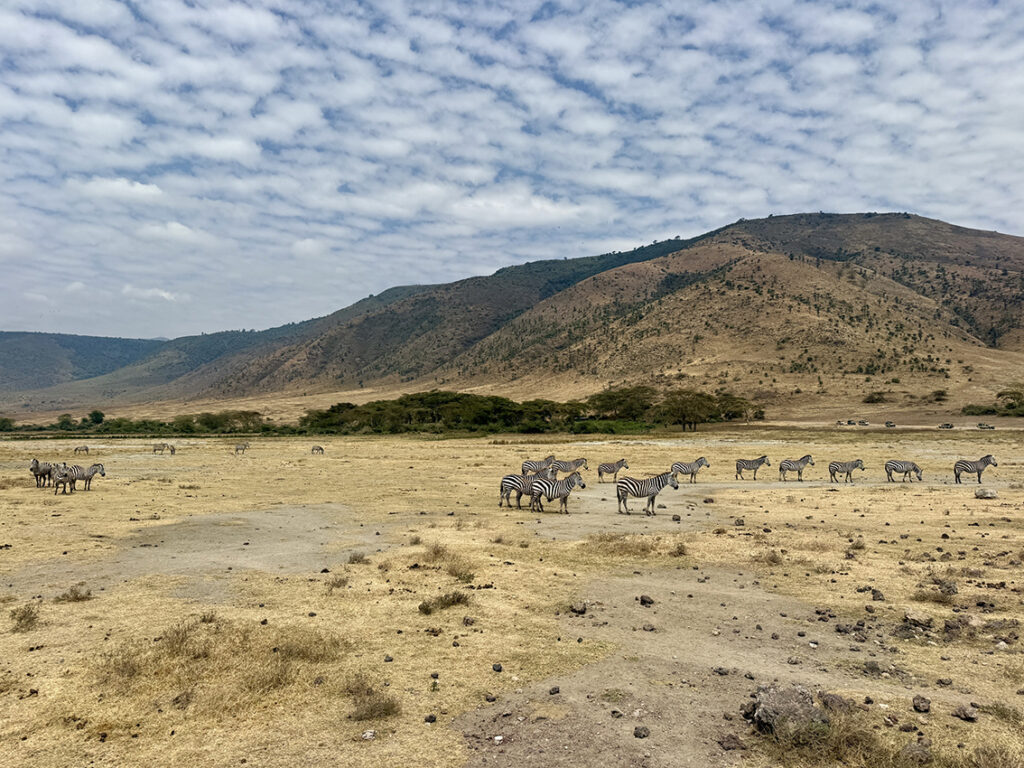
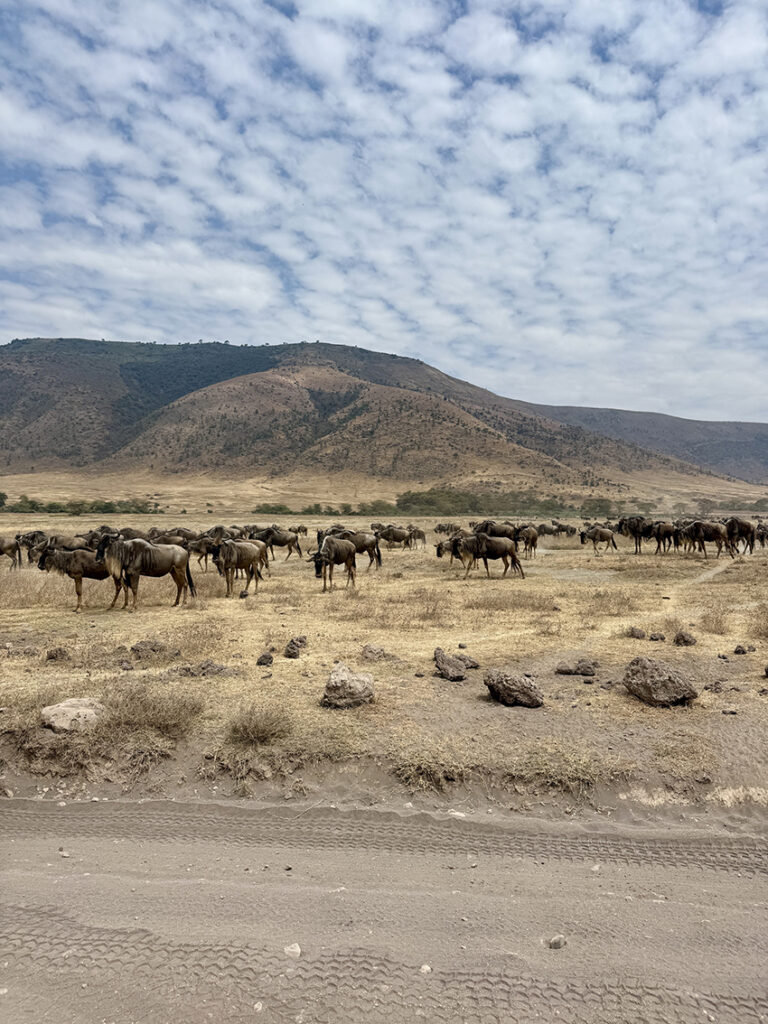
There were large herds of zebras and wildebeests again, and we eventually spotted two different groups of rhinos. They weren’t the black ones which are almost extinct, they were the southern white rhinos native to southern Africa.
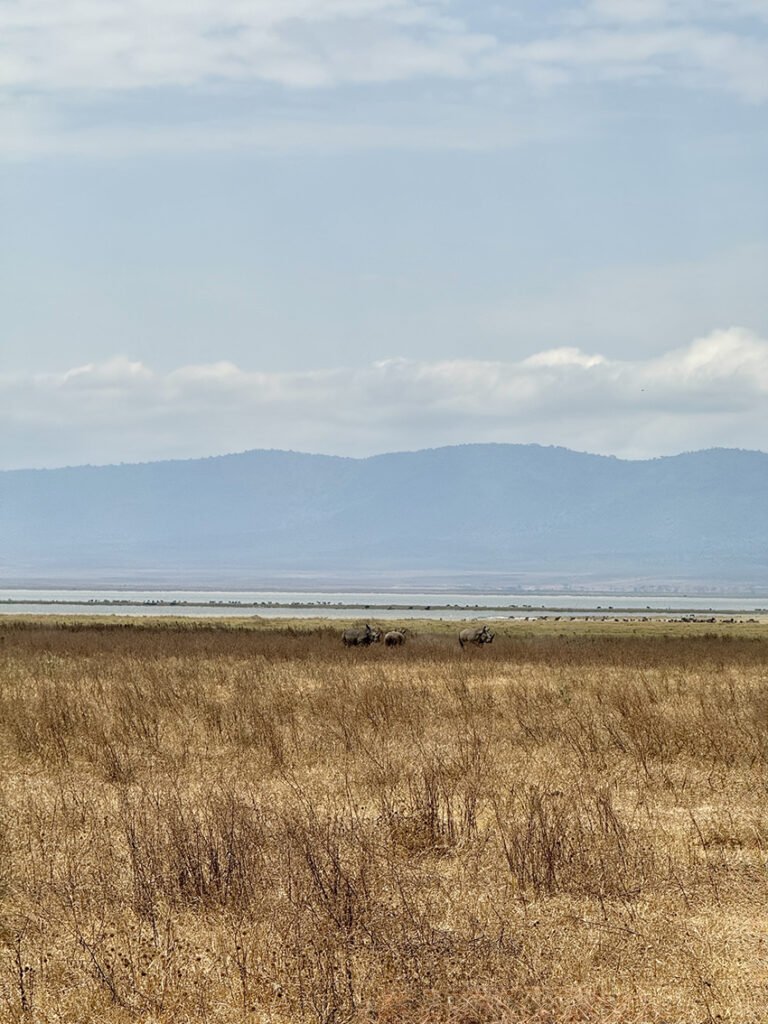
Ticking off the big five with these rhinos
We also saw our first flamingos of the trip which was pretty special watching them move about with their long legs and beaks in the lake. There was also one muddy lion and a nearby warthog. Another highlight was the zebra coffee truck, the first western luxury we’d come across in days. Great tasting coffee too.
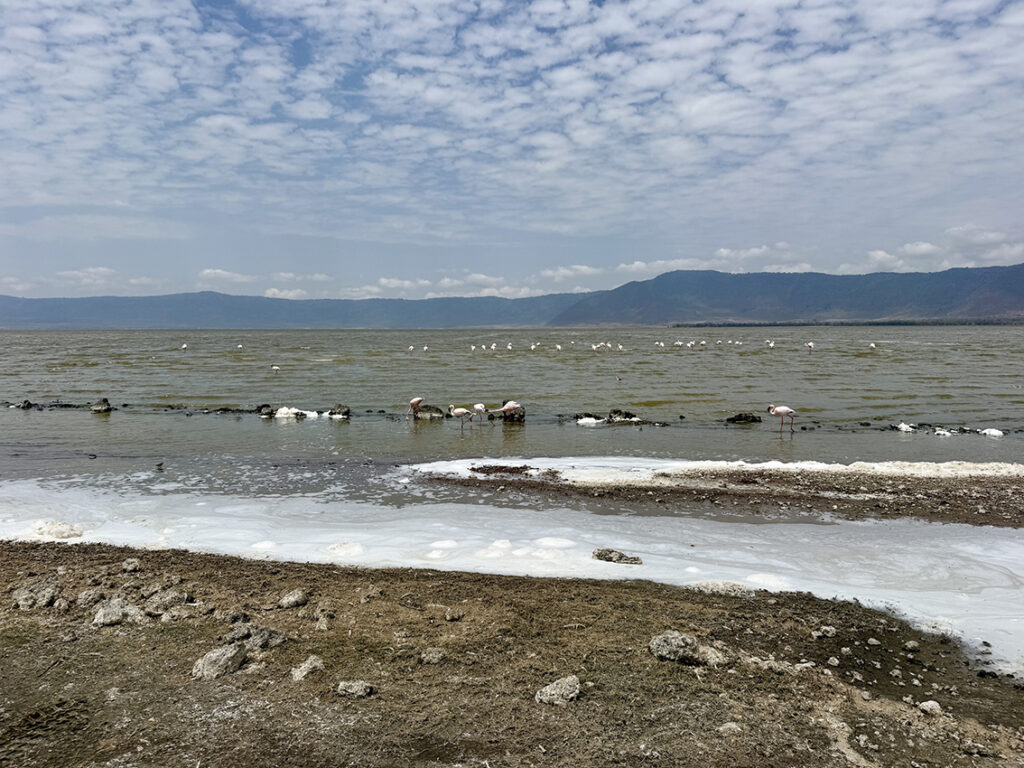
Flamingos in Ngorongoro
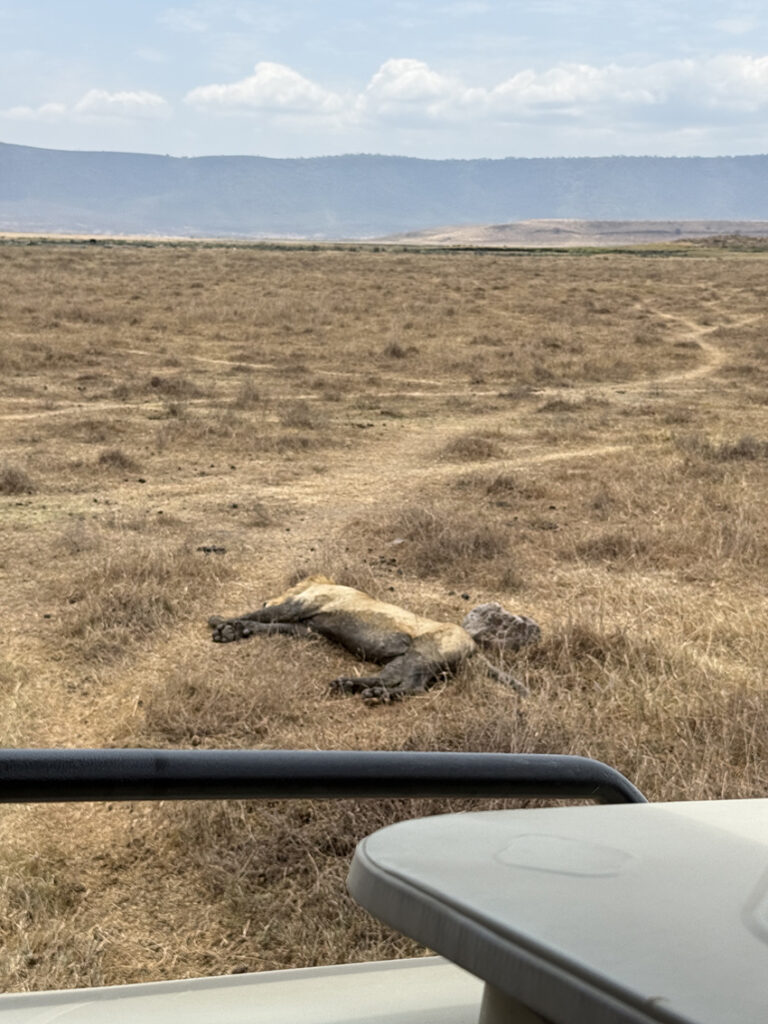
Not sure what mess he got into
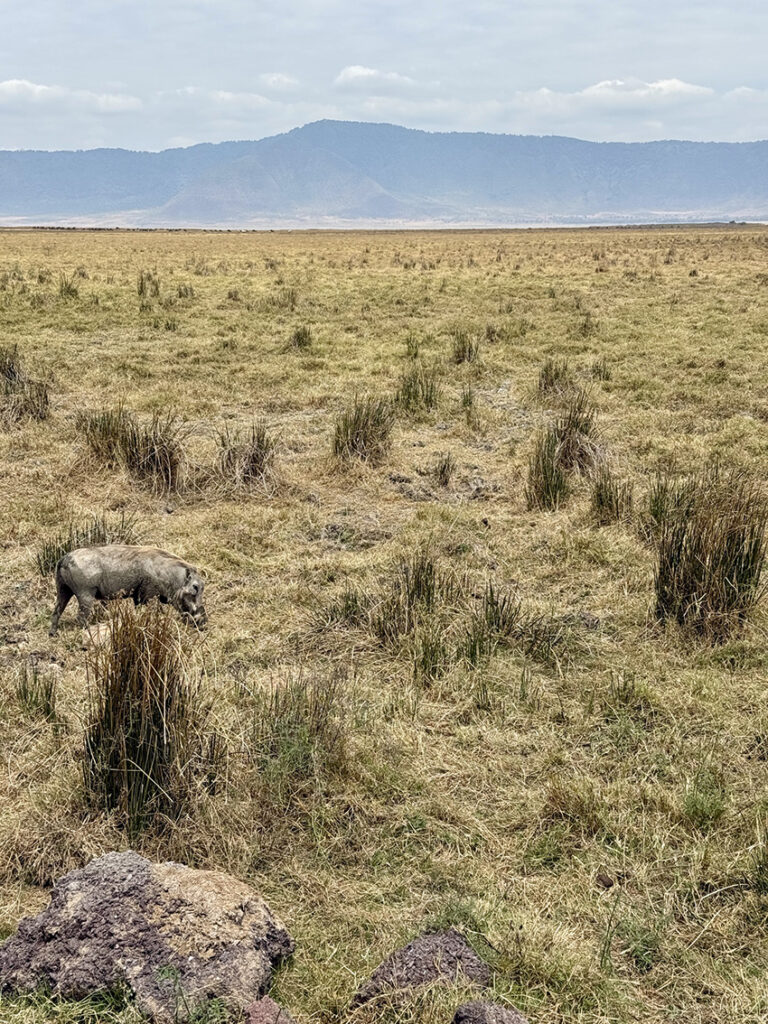
Pumba!
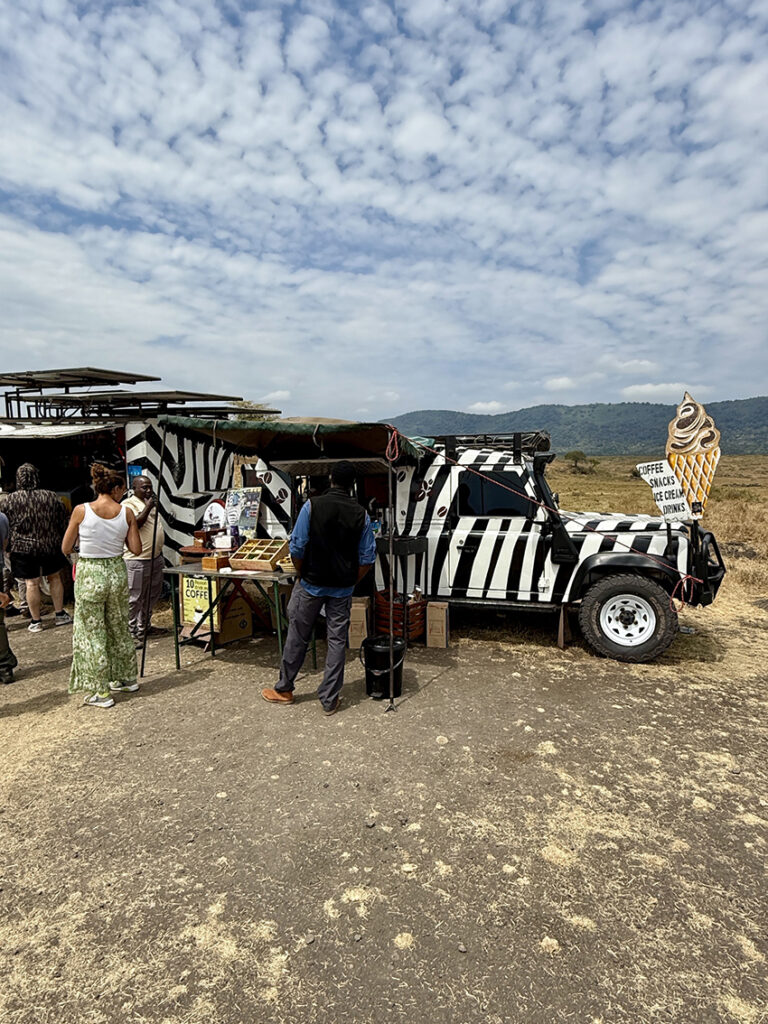
The luxury of the zebra coffee truck
In Karatu, we dusted off our safaris and had some unwind time.
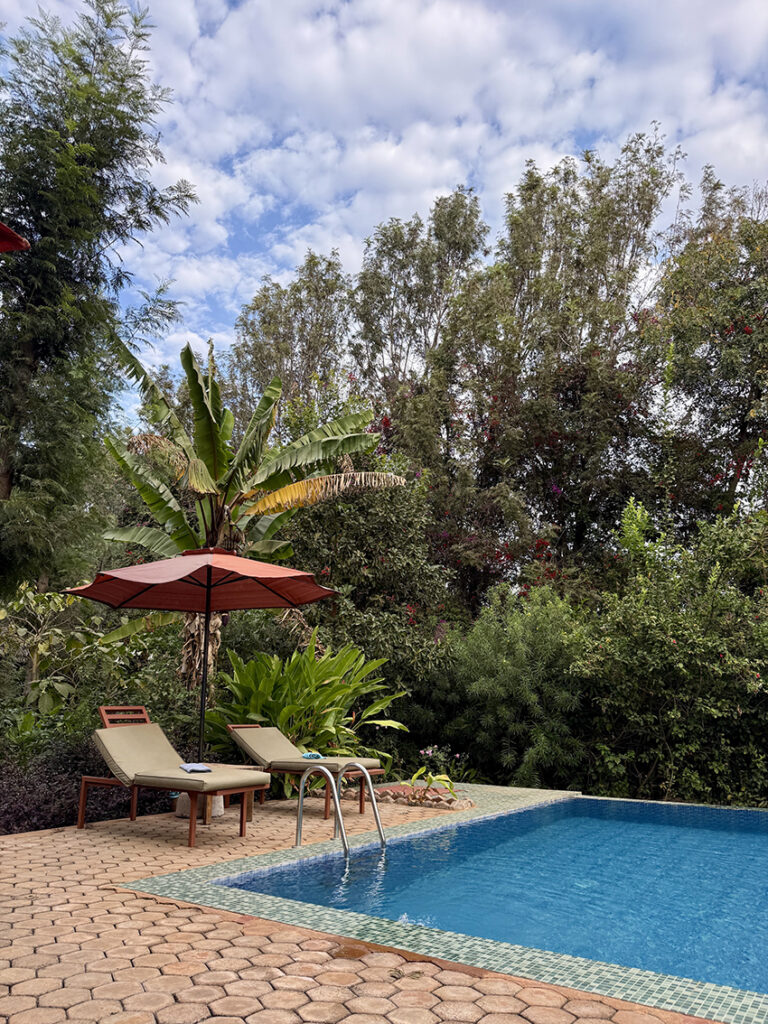
Finally relaxing at our lodge in Karatu
We visited the traditional Datoga tribe living in Lake Eyre. They demonstrated how they made arrows, brass and jewellery. Then we visited the Hadzabe bushmen who still only eat wild animals. They showed us the various spears for hunting depending on the animal size. They only stay in a location for one month at a time, and they hunt around a 5km radius from where they’re based.
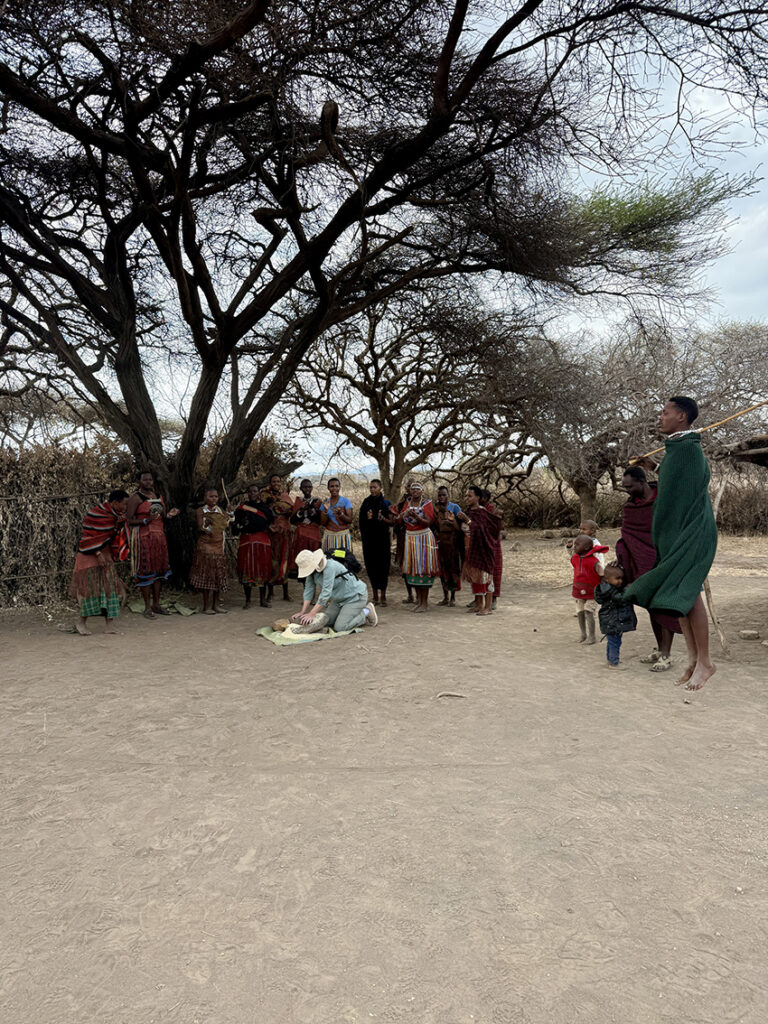
Visiting the Datoga tribe
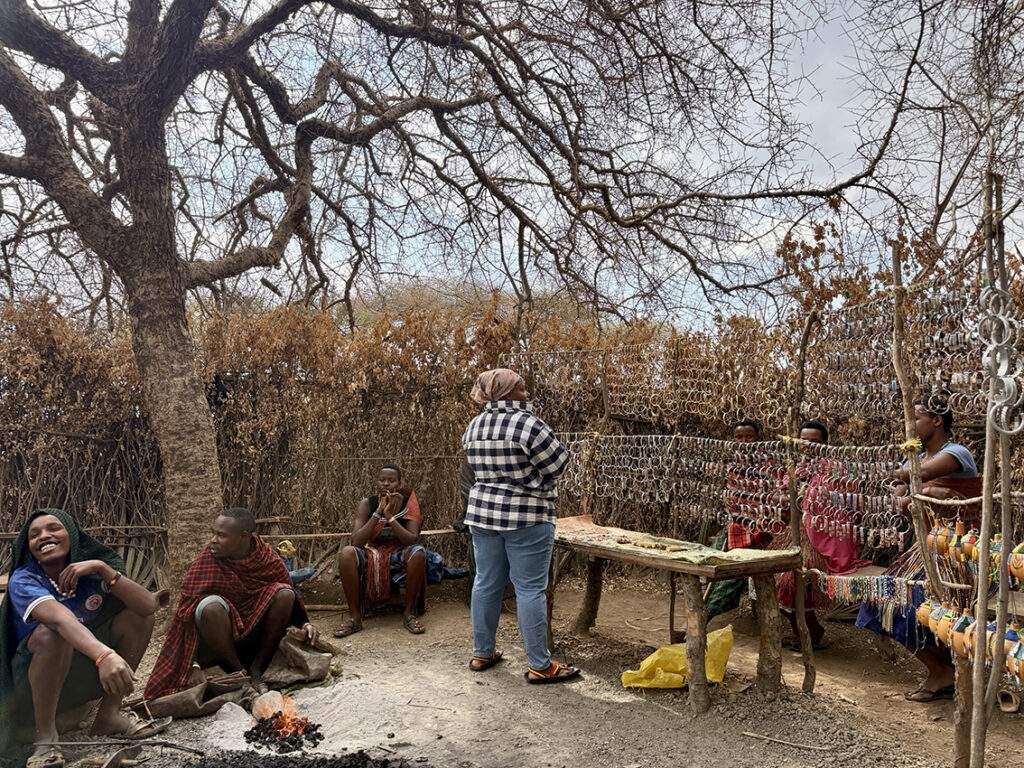
The Datoga tribe’s jewellery display
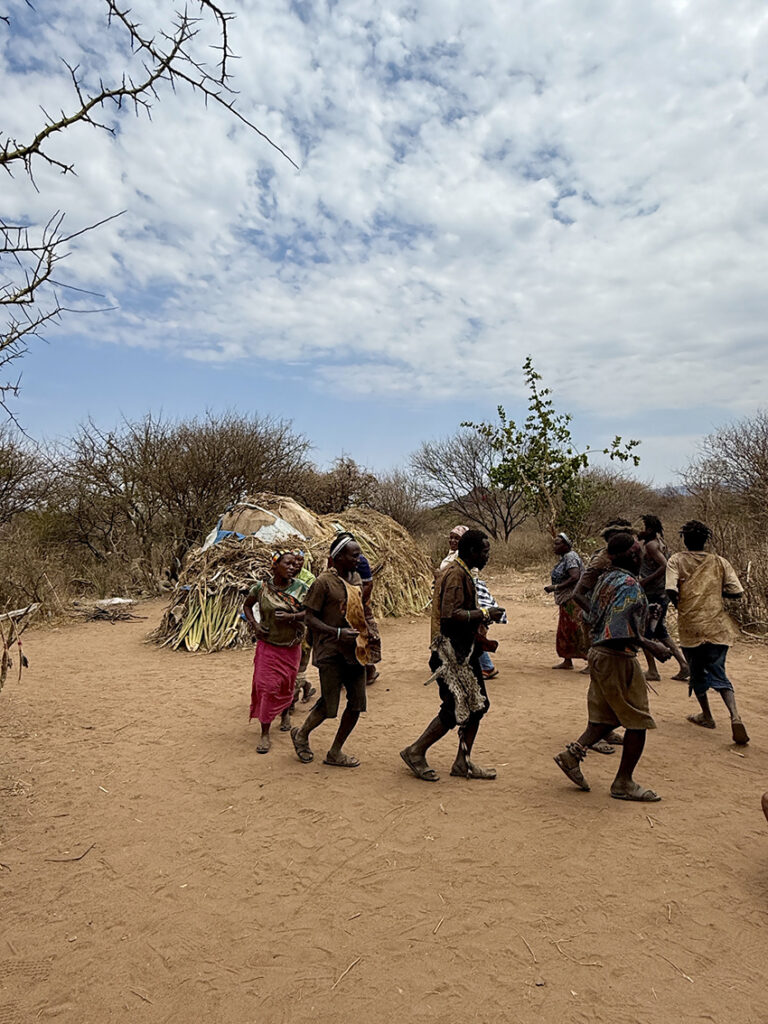
The Hadzabe bushmen dancing
I returned to the Ngorongoro Conservation Area for an elephant cave trek with some of my tour group, a local guide and armed ranger. It was a 45-minute tuktuk from our lodge to the entry point. We learnt the caves are dug out by elephants for minerals that help with digestion, pre-natal vitamins and for tusk health. It takes around two months for elephants to dig out a cave, and from June to September the elephants come in big numbers because the crater gets very dry.
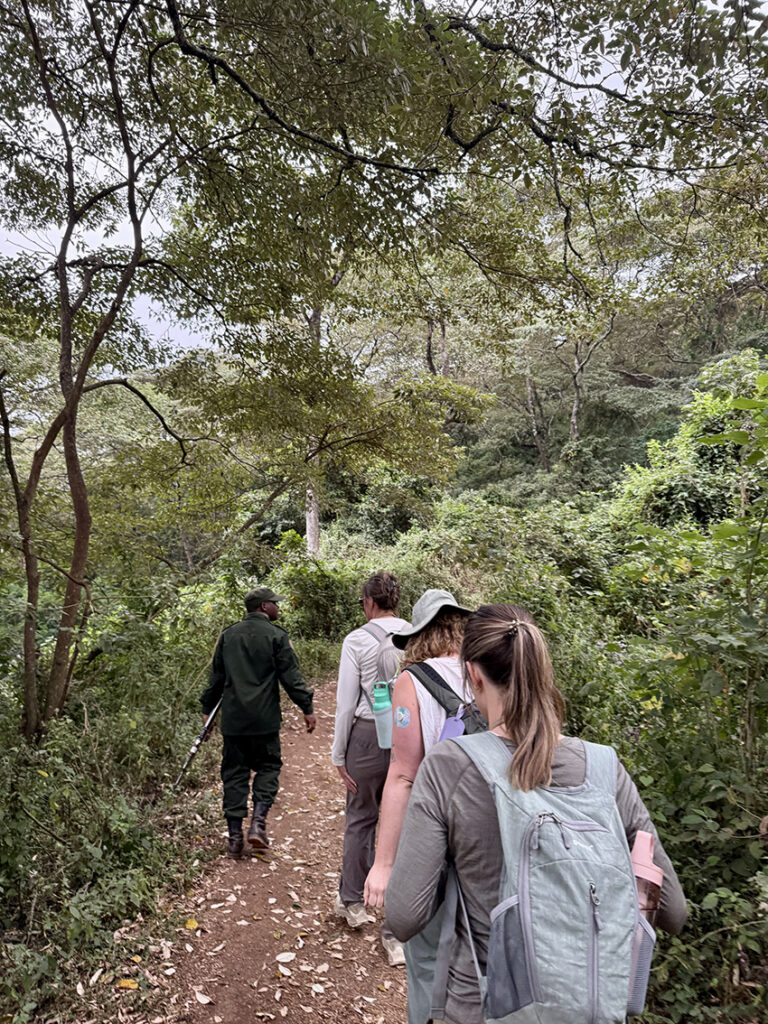
Trekking to the elephant caves with our ranger
The 3km return hike took approximately two hours and had a lot of elevation. On the way through we spotted one male elephant eating his way through the forest. We watched and waited for his movements before proceeding. Luckily, he wasn’t interested in us. Our ranger told us it can be a different story when you spot a mum and her calves. We proceeded to the caves where we found two caves dug out.
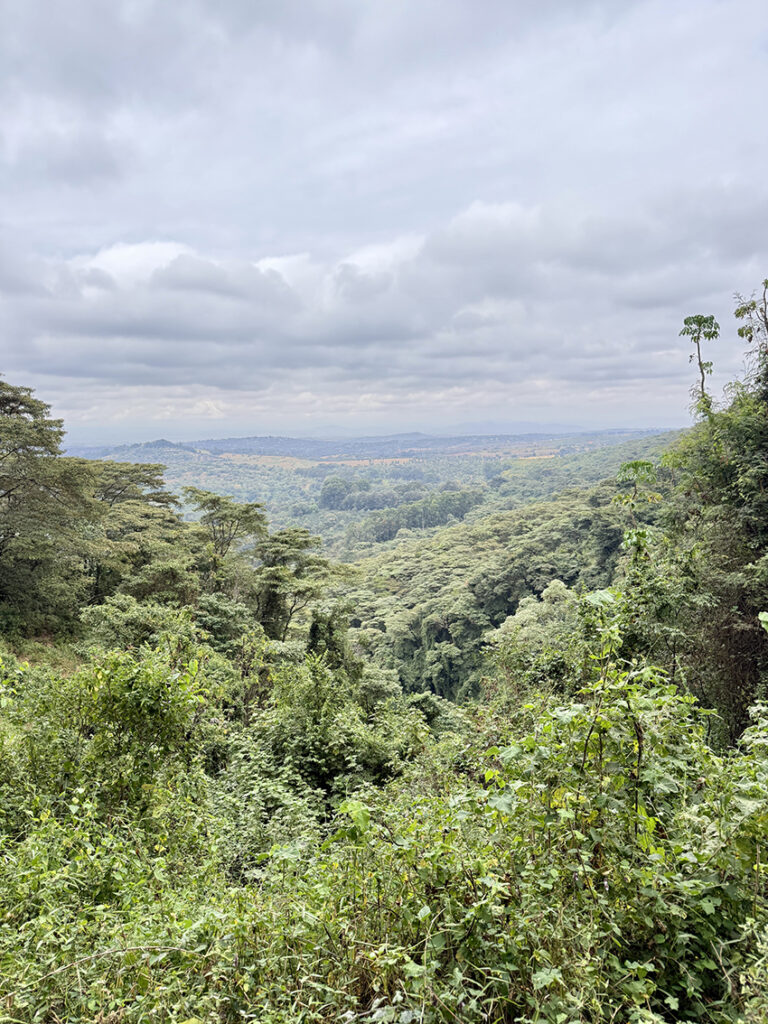
The view over Ngorongoro during the trek
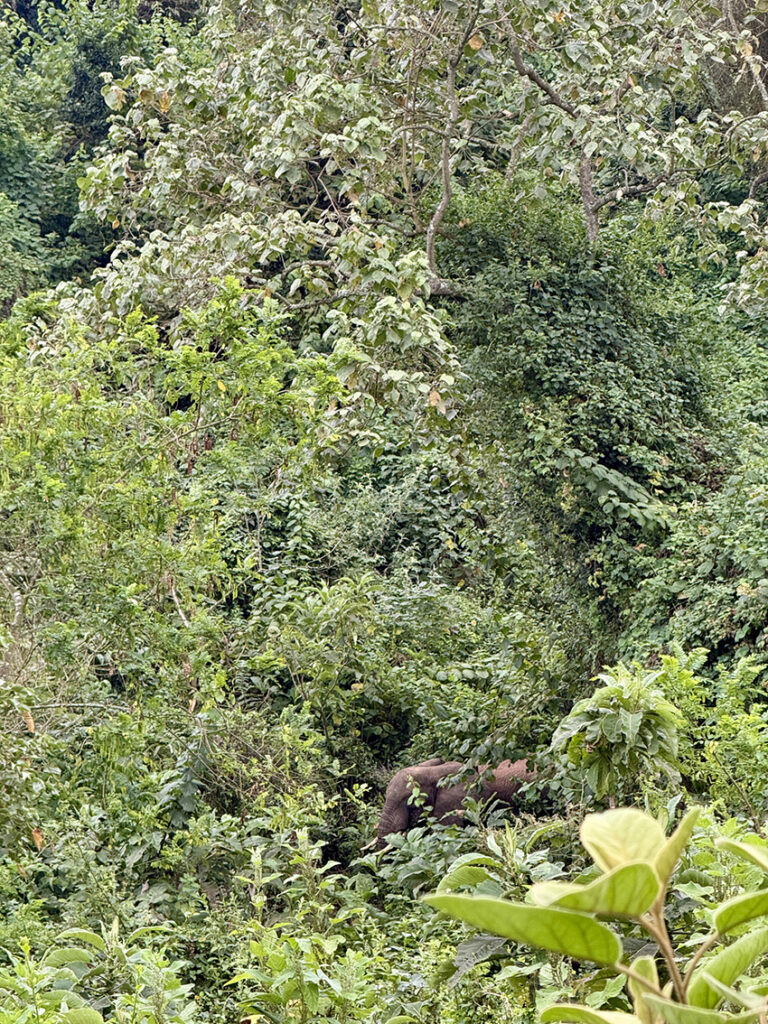
Spotting an elephant in the wild
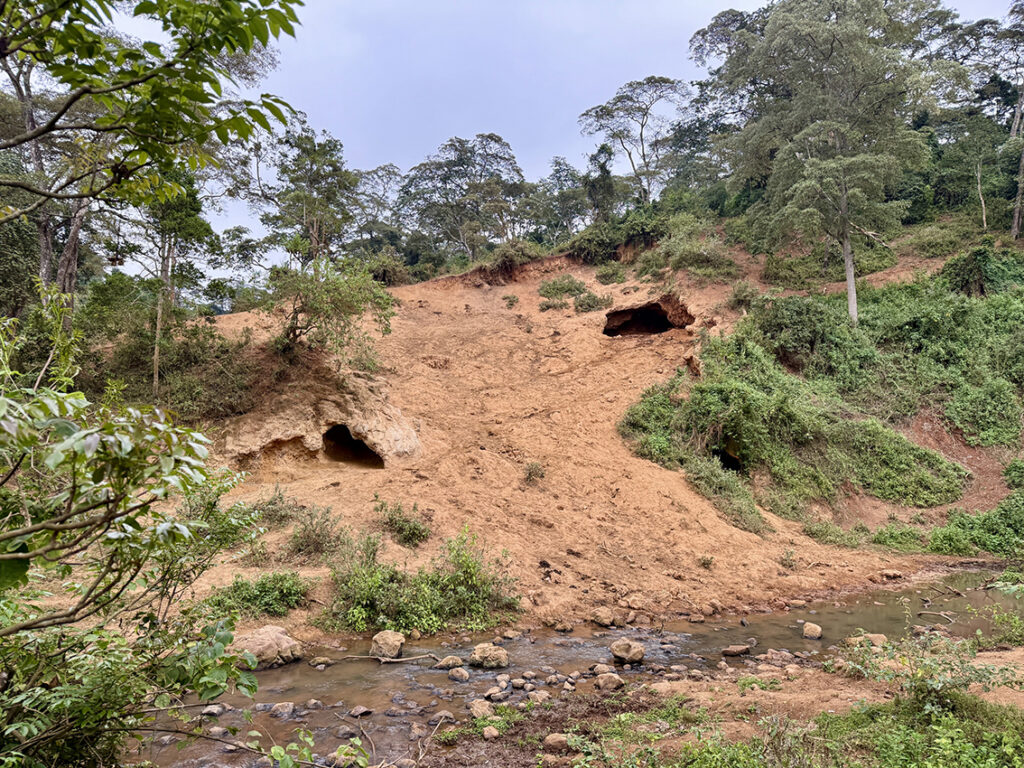
Elephant caves
On the way back, we explored the waterfall which was very beautiful and powerful across multiple levels. We also saw the same elephant. It was good to finally do some proper steps after the long days of sitting in our vehicles.
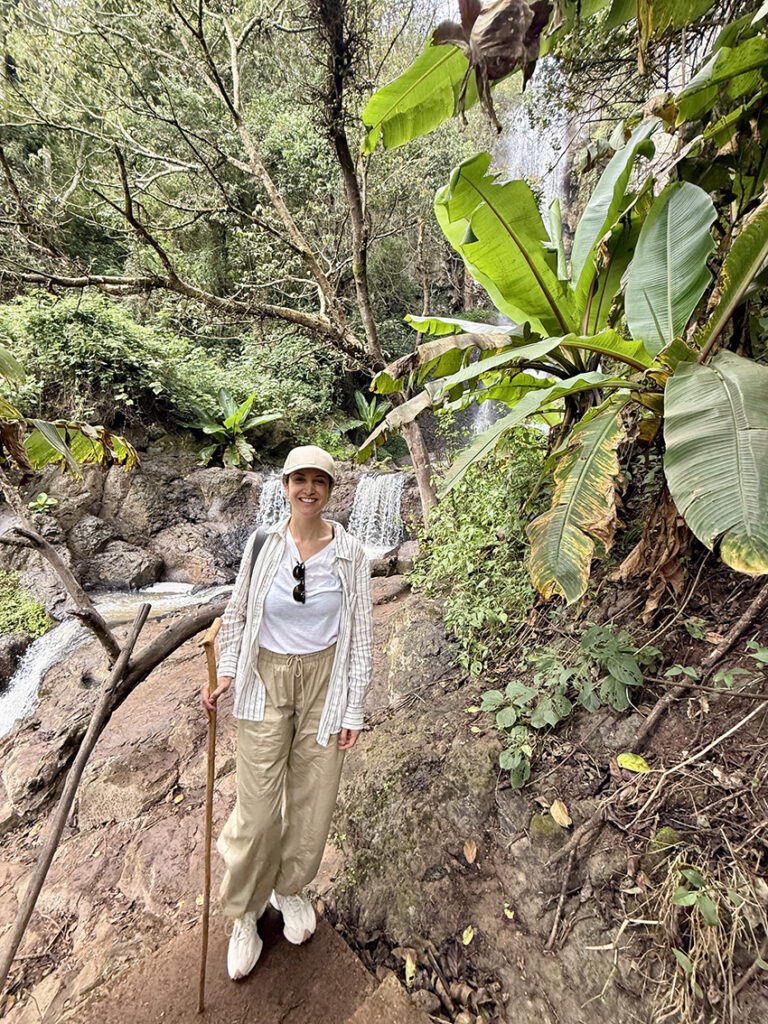
Visiting the waterfall
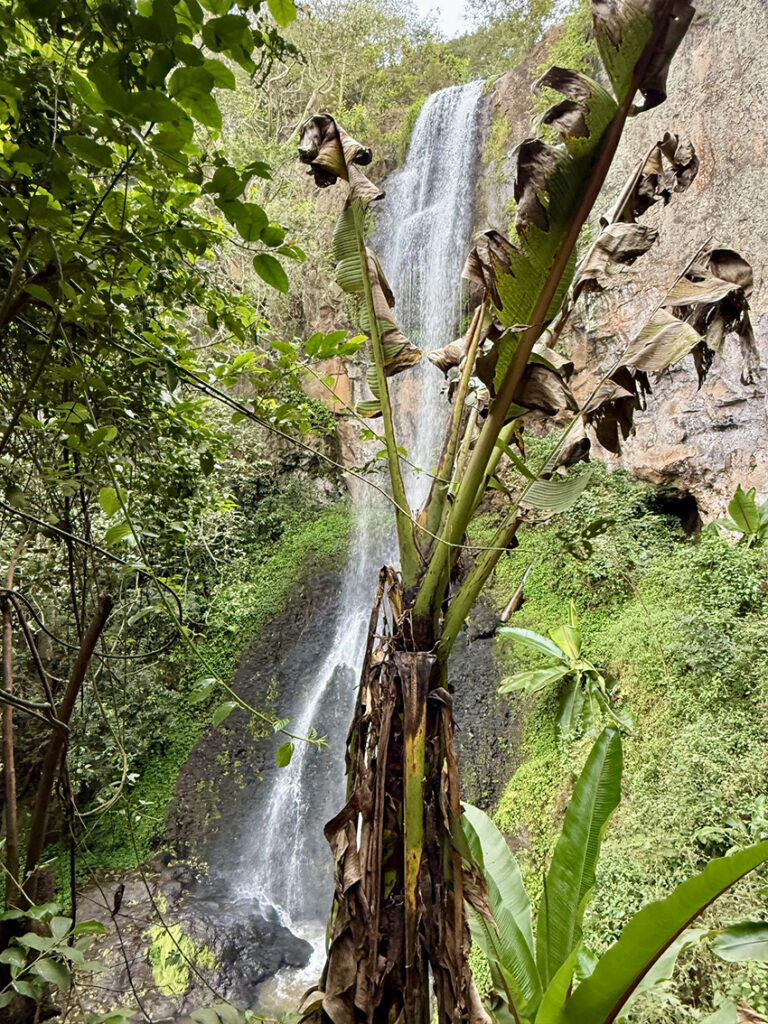
The surge from the top
We stopped at a wood carving and art stall on our way back to our lodge. I purchased two small paintings of giraffes and elephants at sunset by Tanzanian artist Nurdin. We also visited The Tanzanite Experience shop – I didn’t come home with one, but it’s just another reason to return.
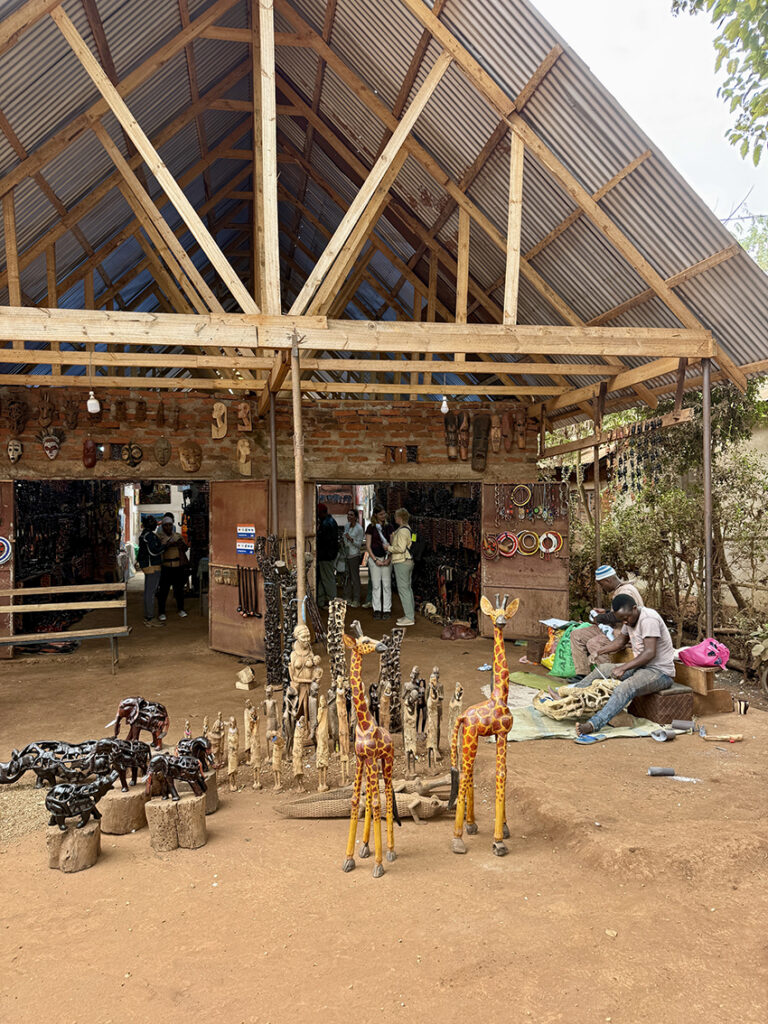
The wood carving and art store
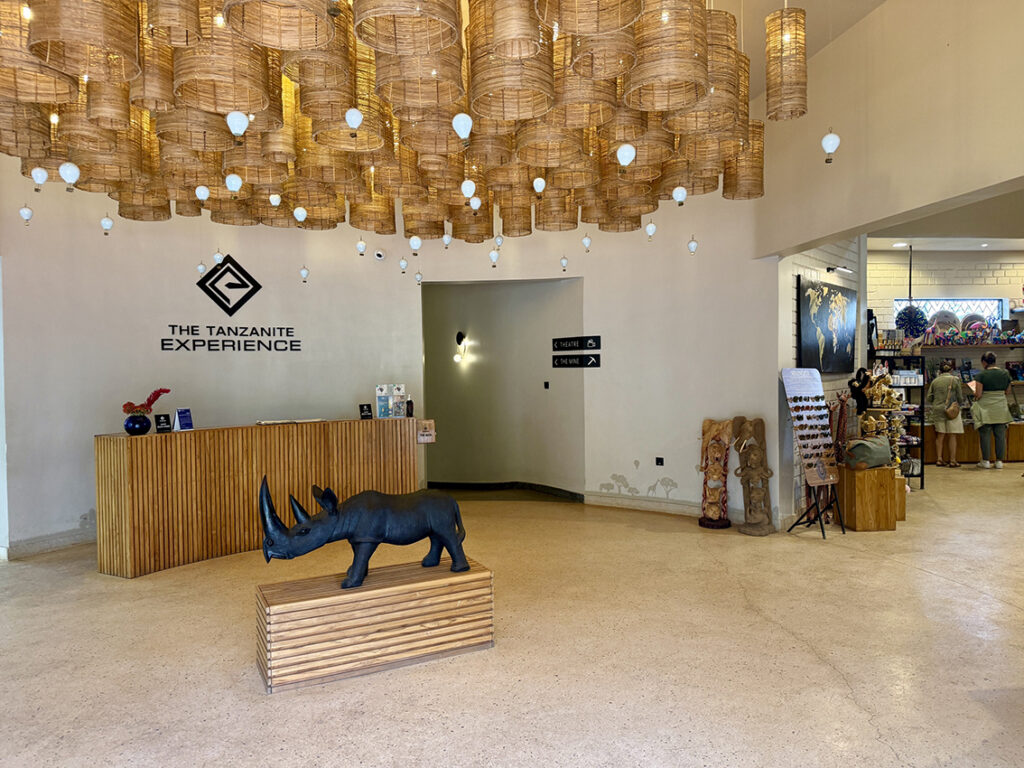
The official Tanzanite Experience store
The roads to Arusha were much better maintained than the roads out of Nairobi – there weren’t many potholes at all. On the way, we drove past Lake Manyara and the Rift Valley of Tanzania, stopping into Mto Wa Mbu village for lunch. The women cooked us 15 local dishes including their version of brown rice made with capsicum, beef stew, beans, ochre, spinach, cabbage, sweet potato, pumpkin, corn, fried and steamed bananas, donuts, chapati and ugali.
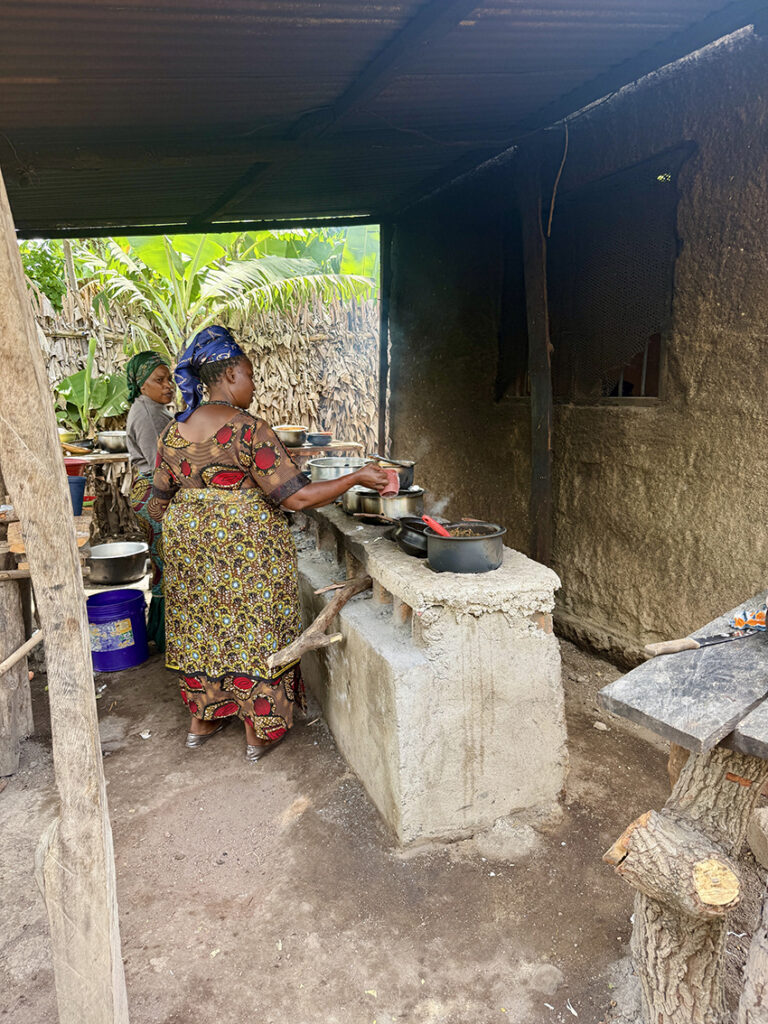
The women of Mto Wa Mbu cooking our dishes
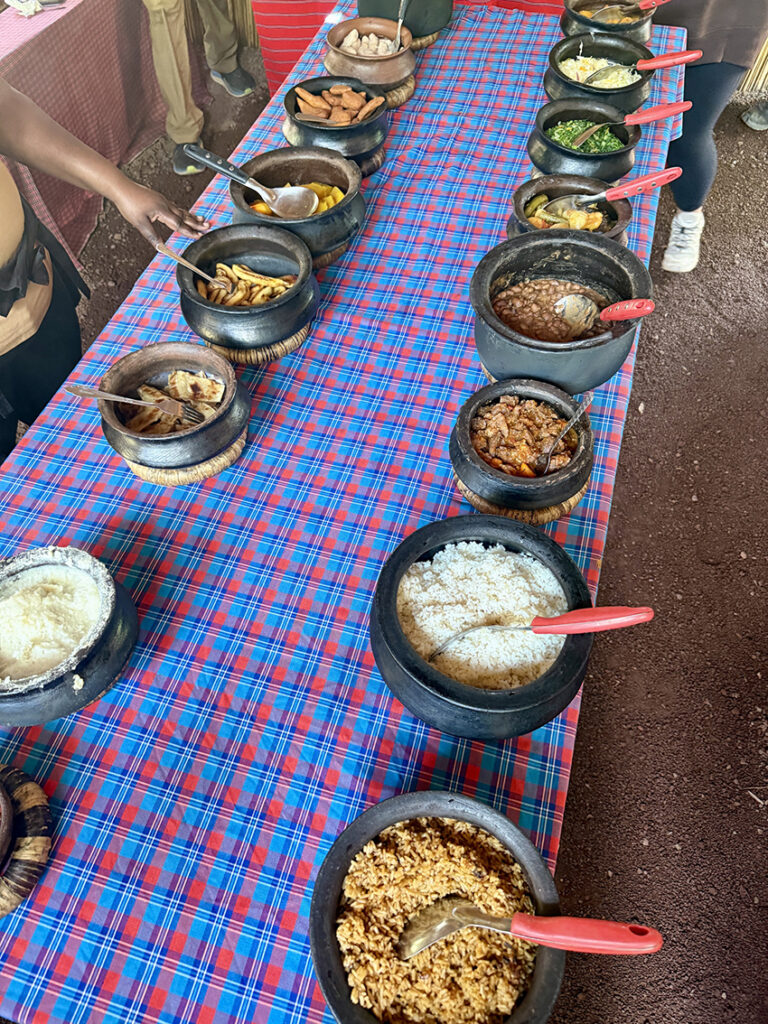
Our 15 local dishes
Arusha is a small gateway town to Serengeti and Zanzibar, so it was a quick overnight and group farewell dinner under the stars before a one-hour flight to Zanzibar.
Zanzibar was the perfect way to unwind after ten days of dusty overland touring. We spent our first night in Stone Town and I definitely didn’t do my research about Zanzibar being a mostly dry destination.
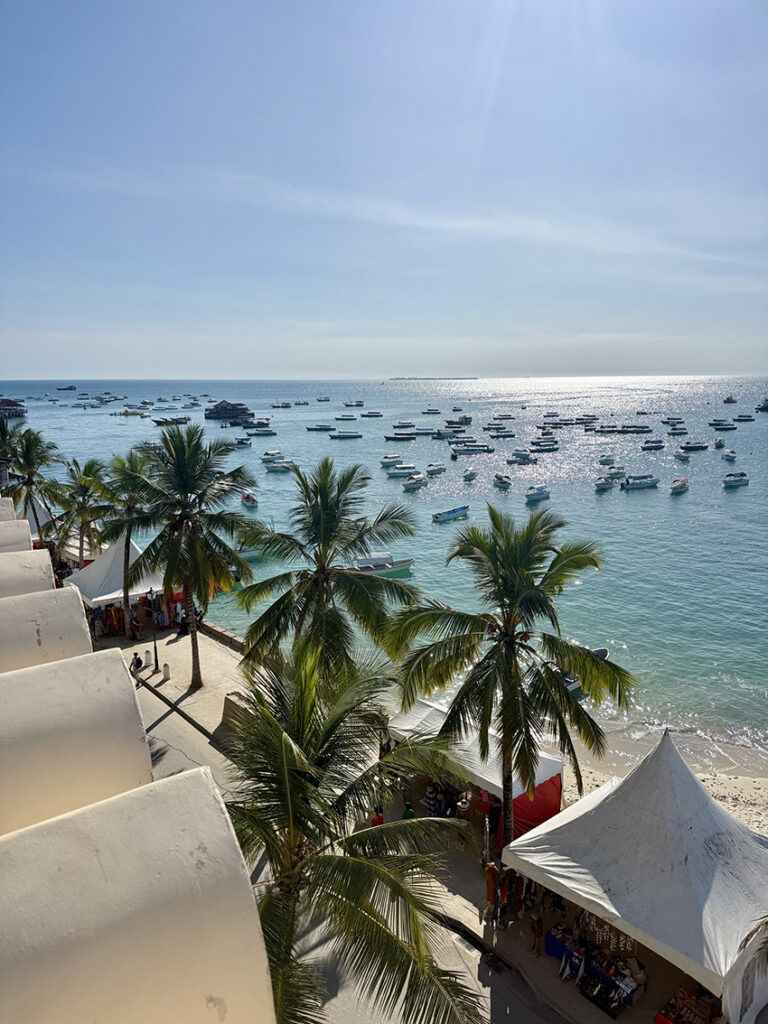
Welcome to Stone Town
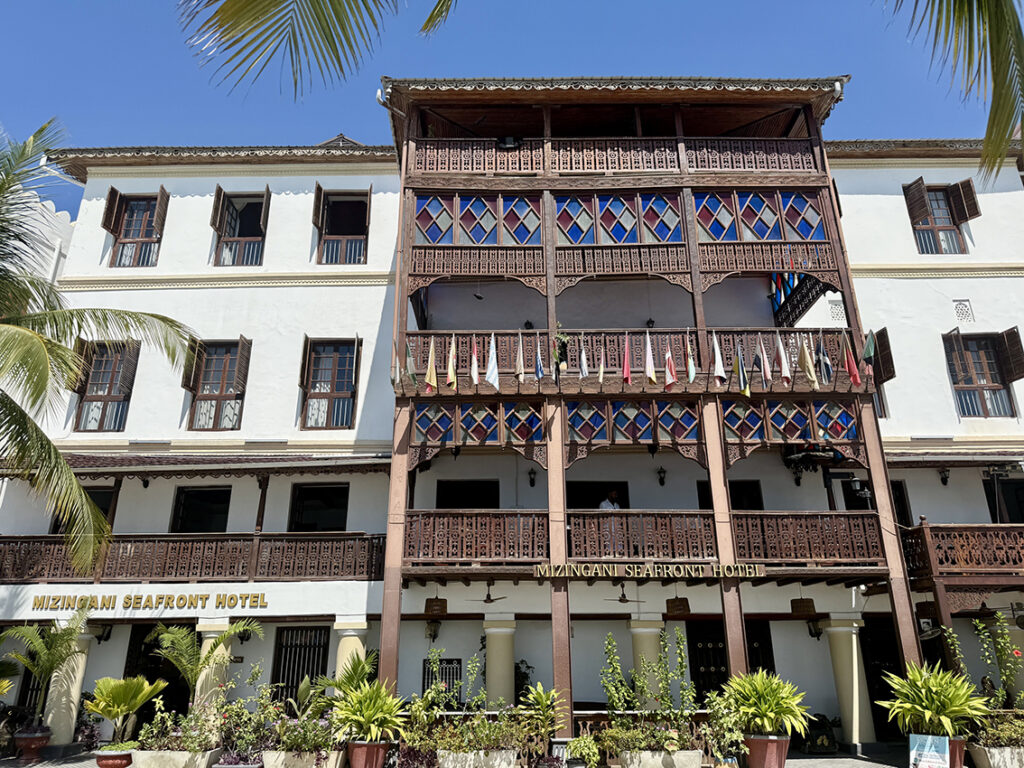
Our beachfront hotel in Stone Town
We joined a city walking tour and explored the laneways and door carvings representing the wealth and heritage of their owners. We visited the spice and fish market, the Cathedral and East African Slave Trade Exhibit, Forodhani Gardens Night Market and walked by the Freddie Mercury Museum. We tasted sugar cane juice and Zanzibar pizza which was like a stuffed crepe.
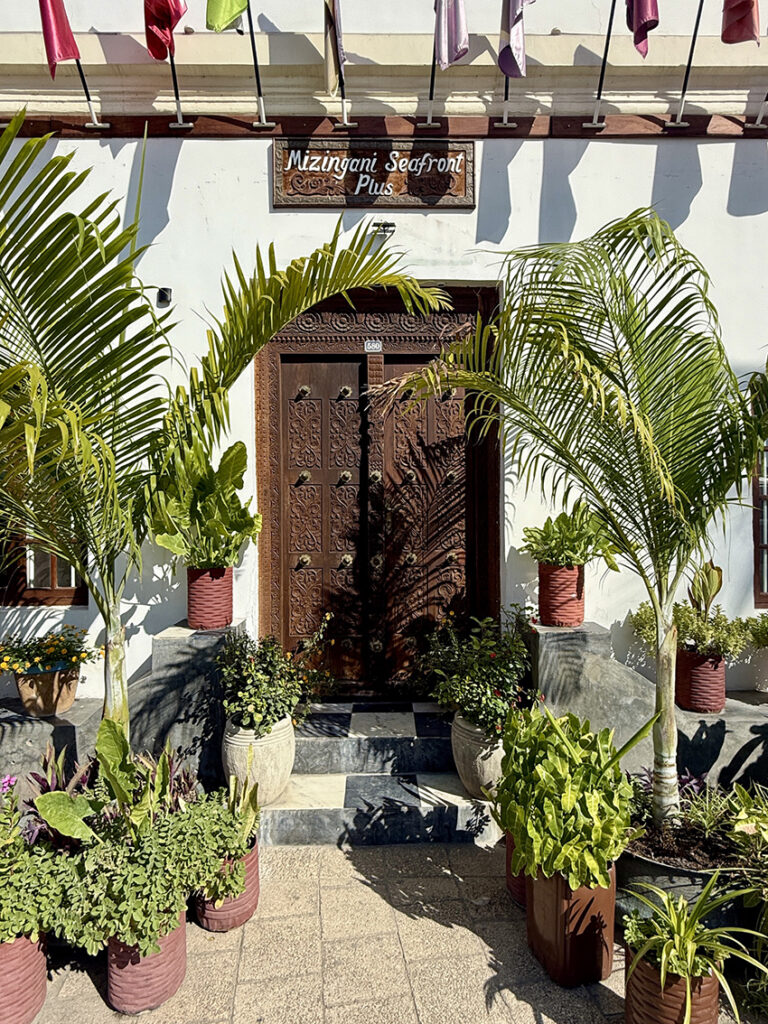
One of the hand-carved doors of our hotel
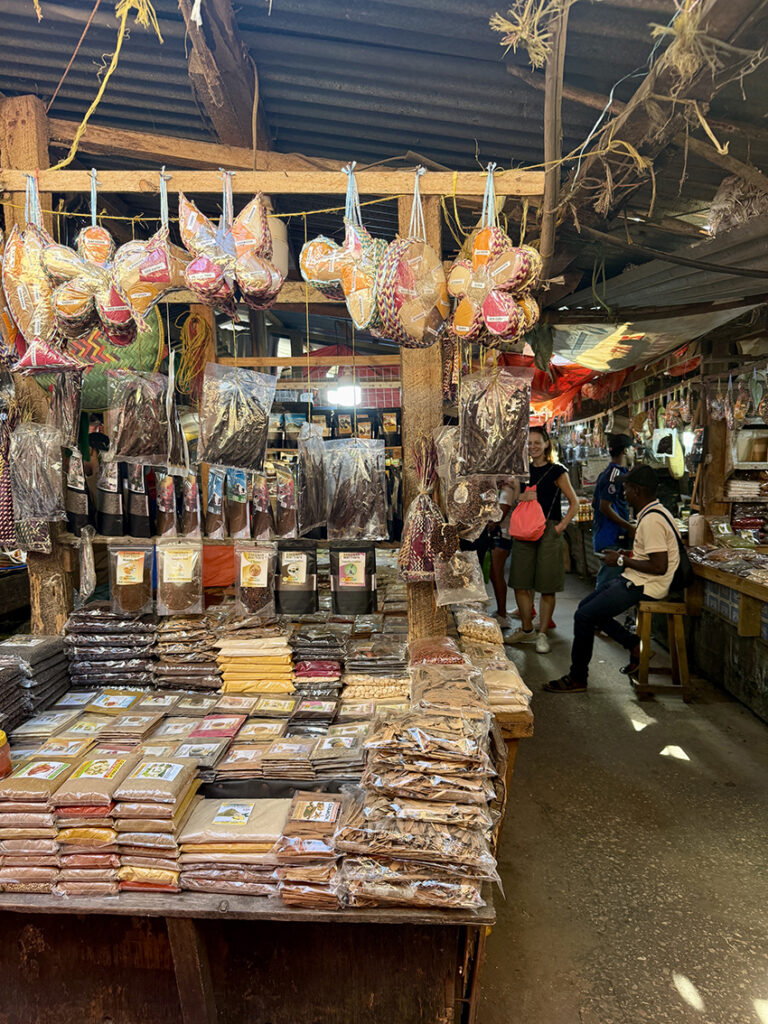
The spice market
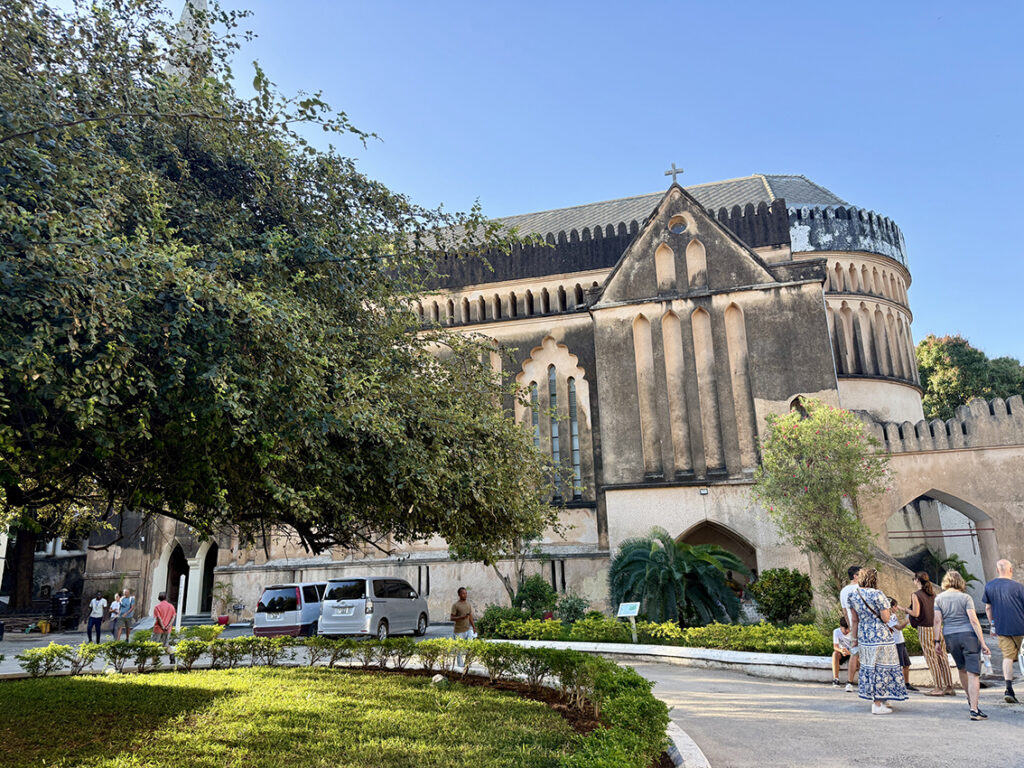
The Cathedral and East African Slave Trade Exhibit
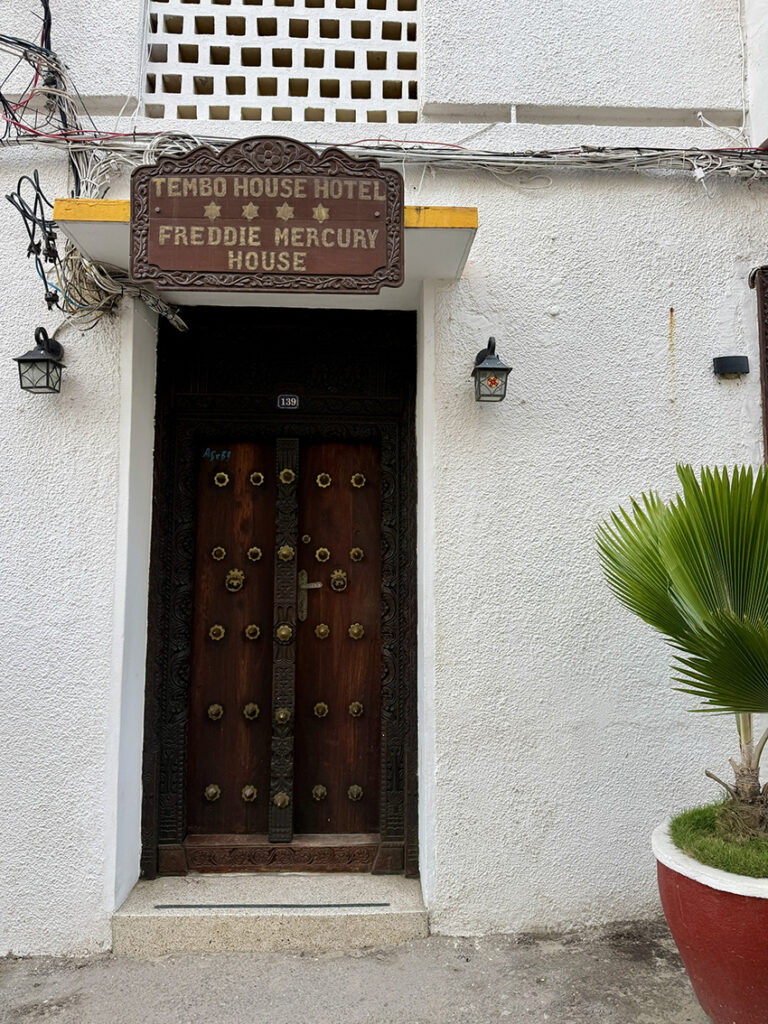
Freddie Mercury Museum
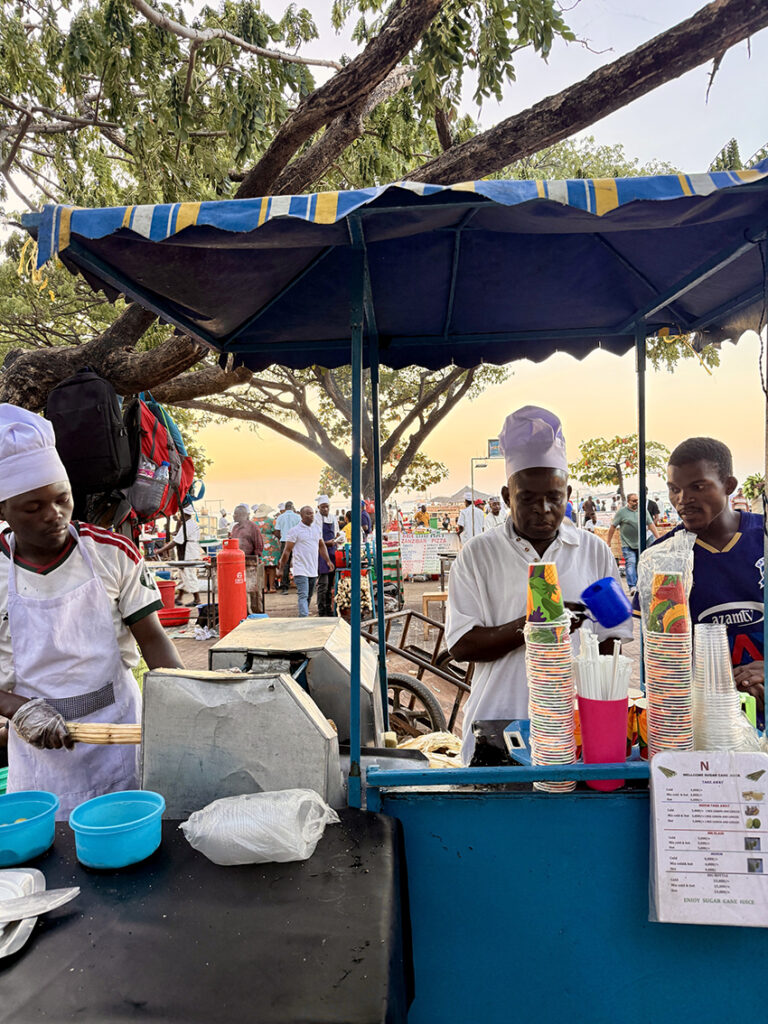
Sugar cane juice stall at Forodhani Gardens Night Market
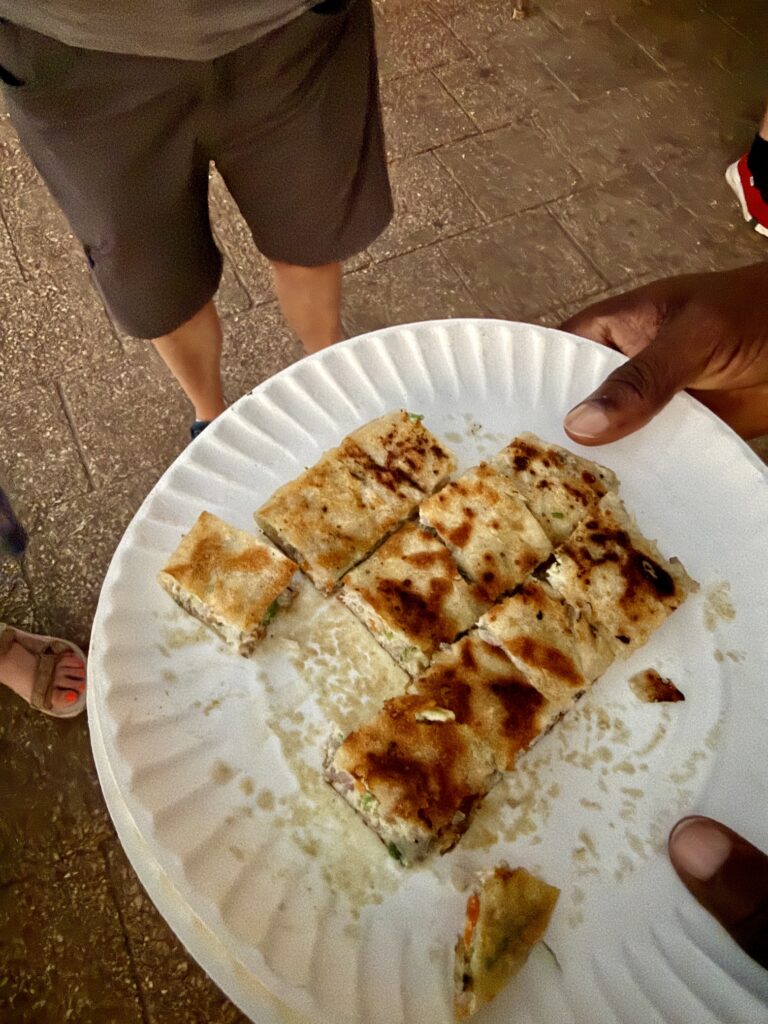
Zanzibar pizza
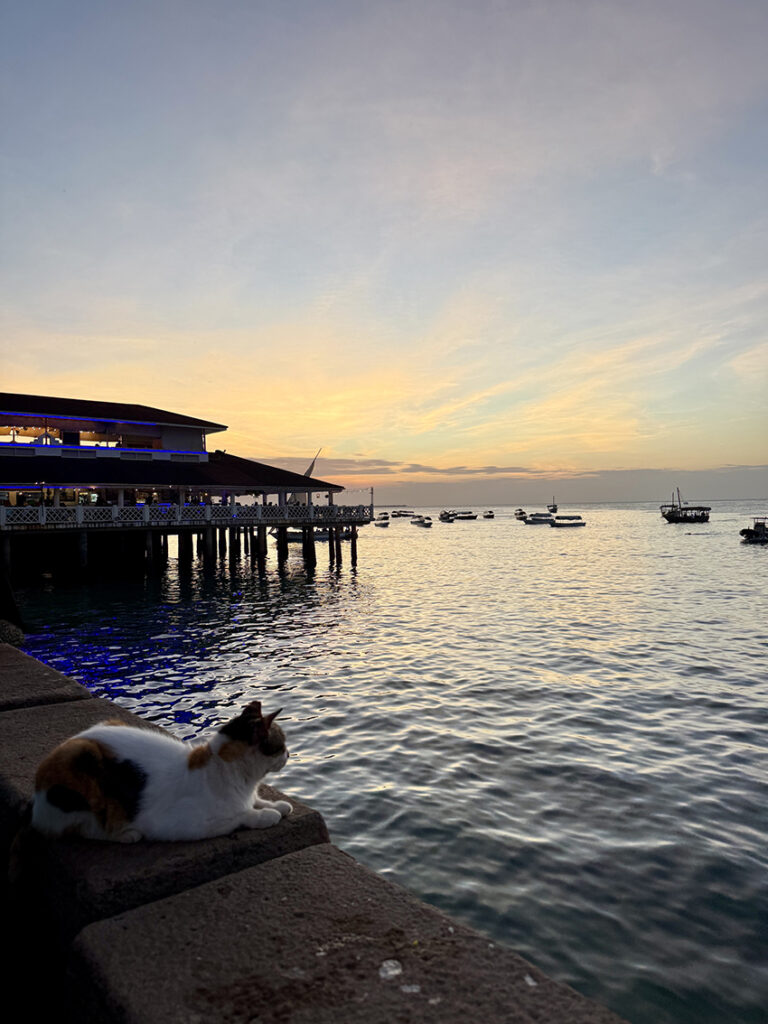
Enjoying the sunset over Stone Town
The next morning we transferred the 90-minute journey to Nungwi Beach where it was officially relax time. We stayed beachfront at Mnarani Beach Cottages (would recommend staying around Z Hotel for a more central hub), and it was here we witnessed the vastly changing tides through the day impacting both swimming and walking along the beach. Electricity would also come and go.
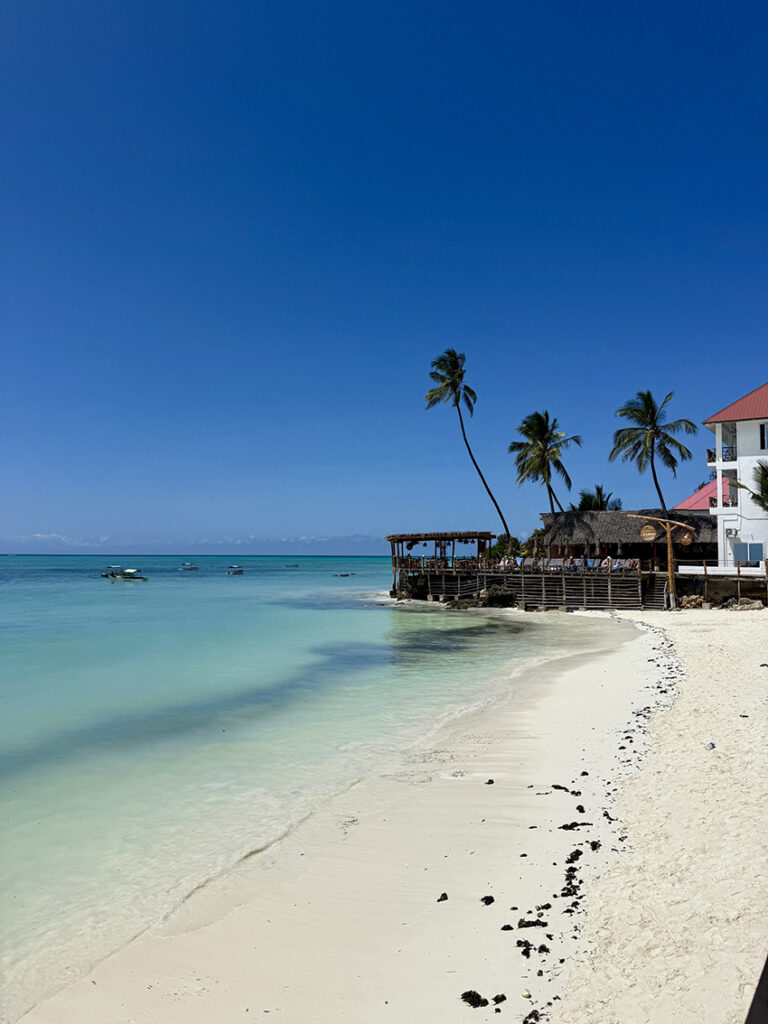
The beautiful whites sands and blue waters of Nungwi Beach
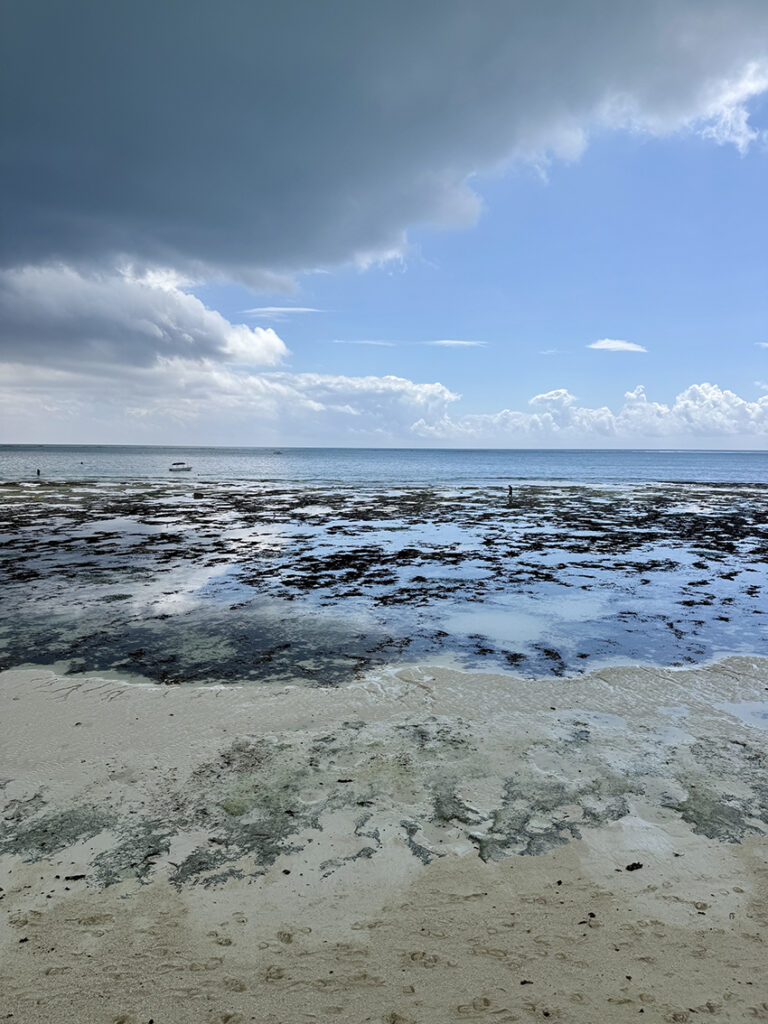
Low tide in the morning
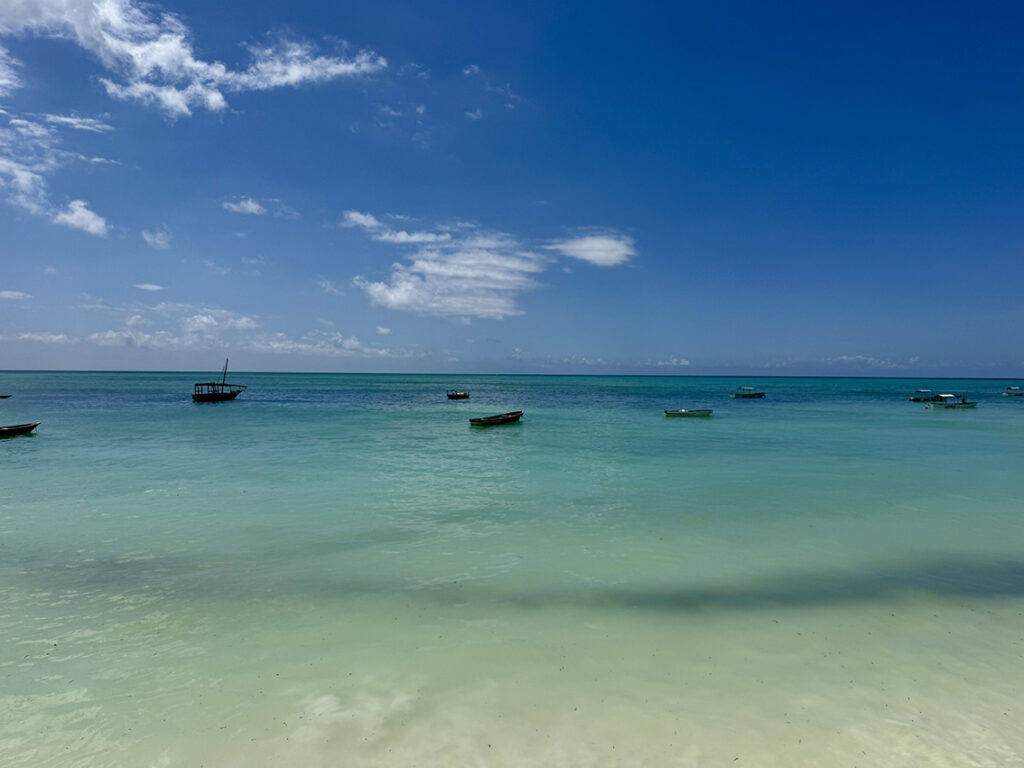
High tide
I spent a lot of my time on sun beds and hammocks, sampling the traditional massages and eating seafood (Sexy Fish was the standout).
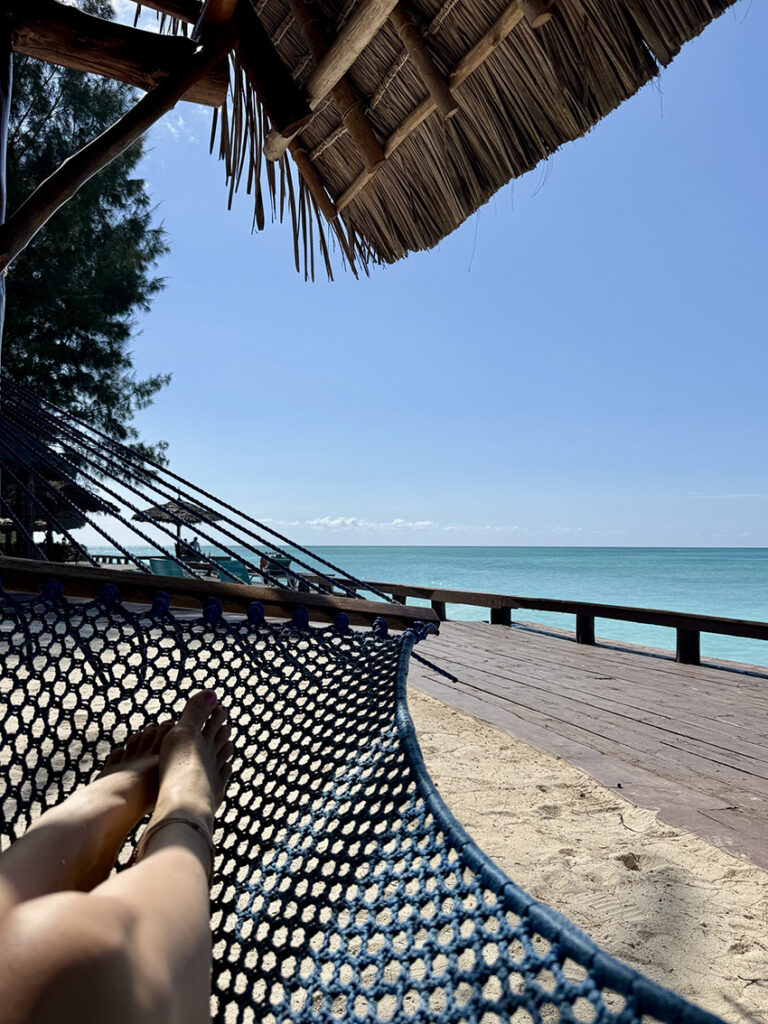
Hammock-time!
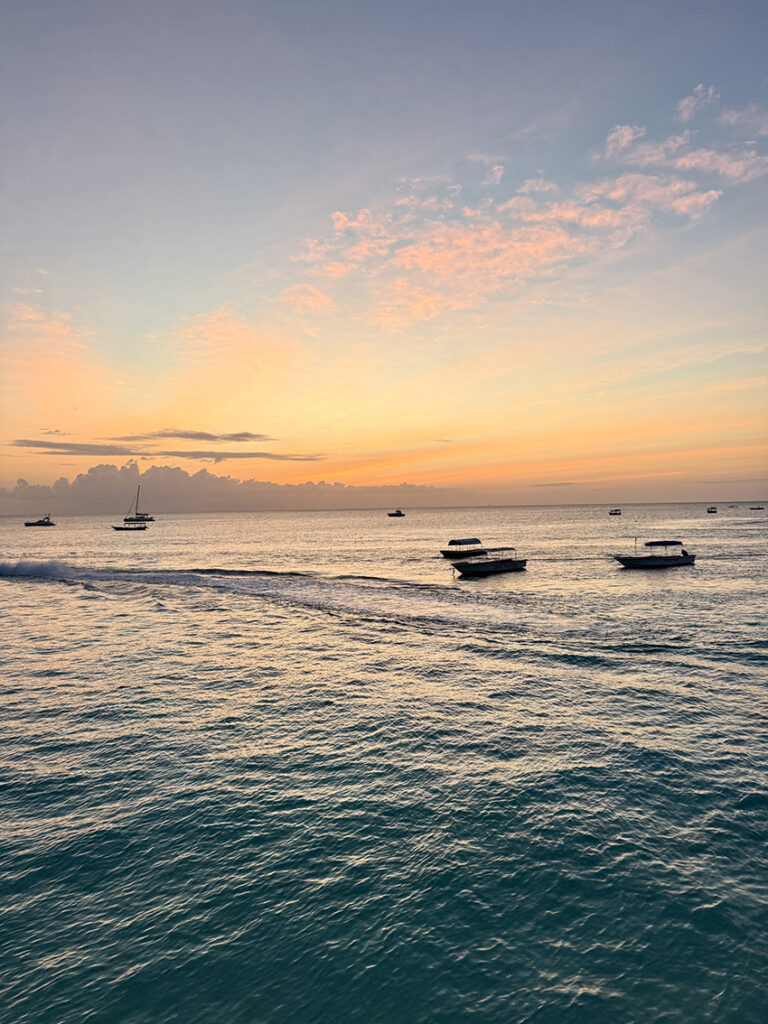
Sunsets over Nungwi Beach
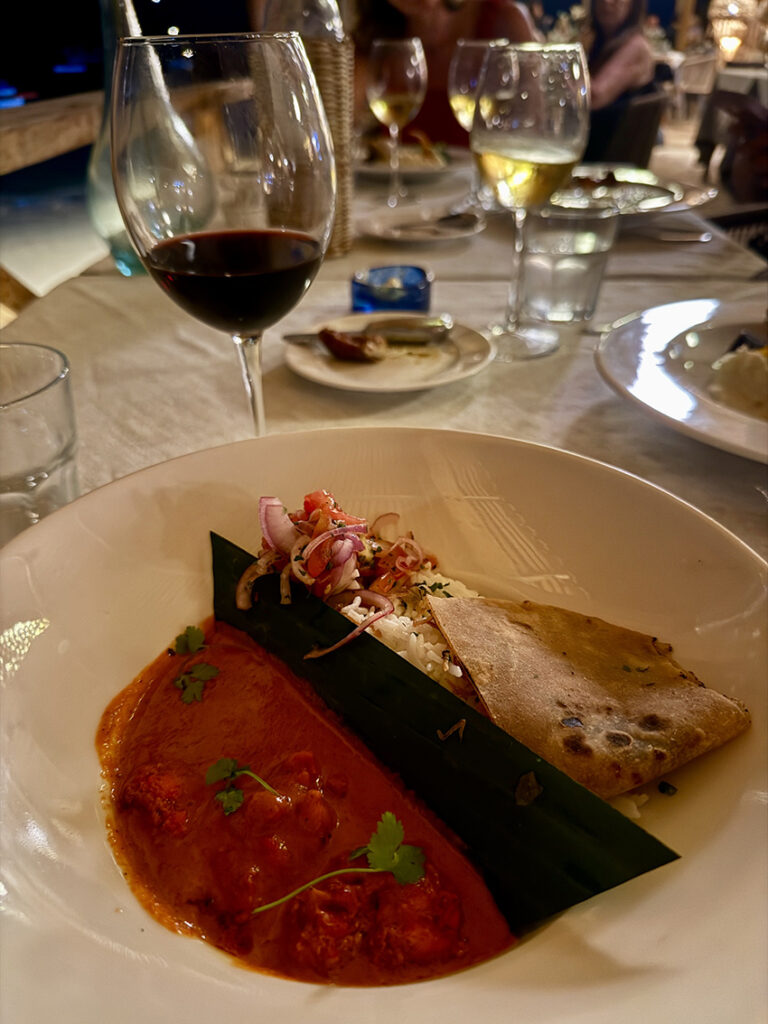
This lobster curry at Sexy Fish was incredible!
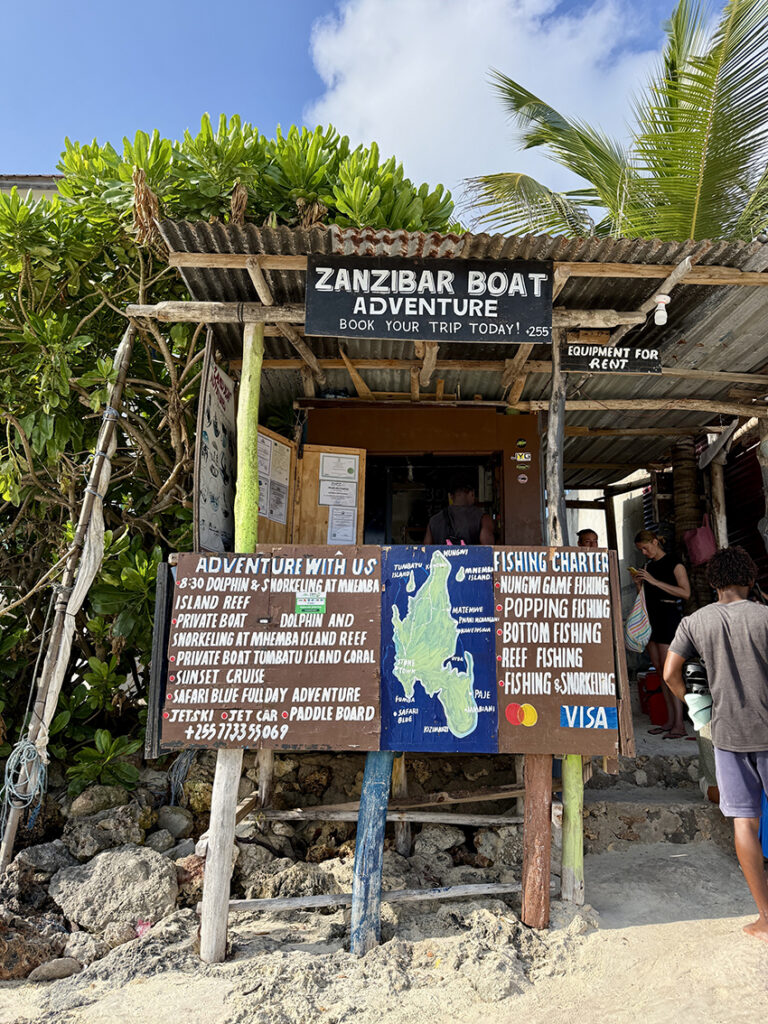
I visited the Nungwi Mnarani Aquarium and went on an experience to Mnemba Island with Zanzibar Boat Adventure. As soon as I booked it, I thought what was I thinking? Those thoughts were warranted when I was out on a small timber boat in rough seas with no life jackets.
I was escorted from my hotel to their shop where we met other travellers, picked up flippers and walked out to the boat due to low tide. First up we found the dolphins along with numerous other boats. I couldn’t believe people were actually jumping in with the swell, but it was probably a better option than being stuck beside the people throwing up next to me.
The next stop was a coral garden near Mnemba Island to snorkel. It was only small so it didn’t take long to explore. We then headed towards the sandbank for some fruit and time at leisure. We were warned against stepping onto the island due to it being privately-owned. The surrounding area is also popular for diving.
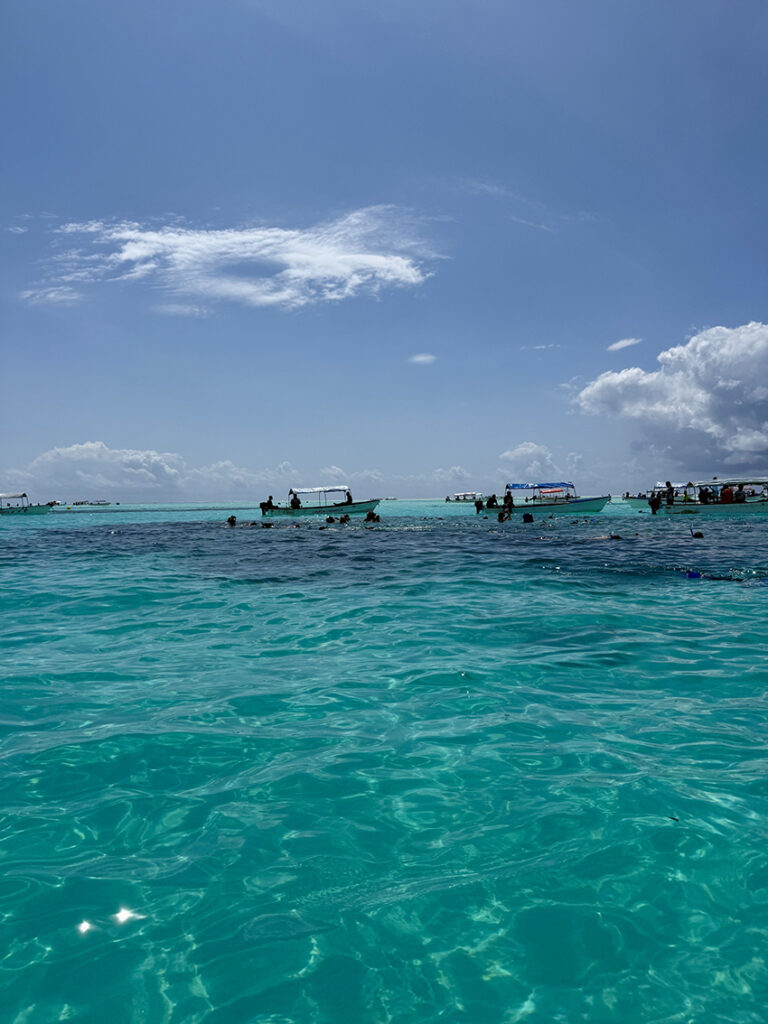
Snorkelling around Mnemba Island
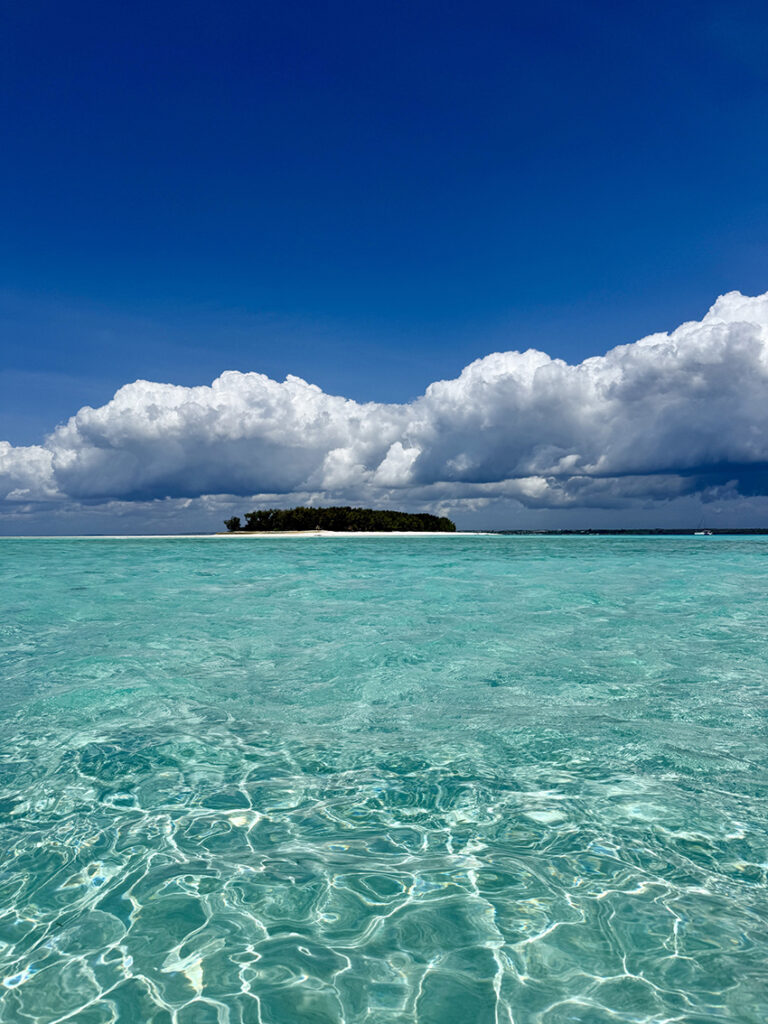
The crystal-clear waters of Mnemba Island
I can see the hype of Zanzibar as the white sand beaches are beyond beautiful and reminded me of the likes of Esperance back home. As a solo female traveller, it was sketchy at times especially walking the back streets alone, or along the beach with the constant harassment of the beach boys. We even had hotel staff trying to do the dodgy on paying the room bill. So, I guess you could say we couldn’t fully relax.
And, if you need an airport hotel before an early flight, the Golden Tulip is a great option.
I’m so proud of myself for making this wander happen. All the nerves and unknown were worth every encounter, every experience and meeting all the beautiful people along the way.
It was nice coming home to dust off and share all the stories of this wild and wonderful wander.
Until next time…
LWL xxx